
🚀 Imagine your project involves dozens of teams, millions of riyals, and complex timelines… and then you discover that a two-day delay in a single decision has cost you an entire month!
This is not an exaggeration, but a reality that many government entities and project managers in the private sector face today, who still rely on traditional methods for managing projects. Meanwhile, the world around them has shifted to smart digital management.
In an era where national initiatives are accelerating and mega-projects are growing, especially under Saudi Arabia’s Vision 2030, project management can no longer afford delays or chaos. Reports indicate that digital transformation has become a critical factor in increasing project efficiency, reducing waste, speeding up delivery, and improving decision-making quality. As a result, global spending on digital transformation is growing rapidly and is expected to reach trillions of dollars in the coming years.
📊 Today, entities using digital project management systems achieve clearer results:
✔ More precise control over timelines
✔ Greater transparency in performance tracking
✔ Data-driven decision-making with real-time insights
✔ Risk reduction before it occurs
✔ Higher efficiency in resource investment
💡 In short, project management is no longer just about plans, reports, and meetings; it has evolved into a fully integrated digital ecosystem that drives a project from concept to delivery with efficiency and proactivity. The real question that every executive and decision-maker must ask today is:
Is our project management system aligned with our ambitions, or are we trying to manage the future with outdated tools?
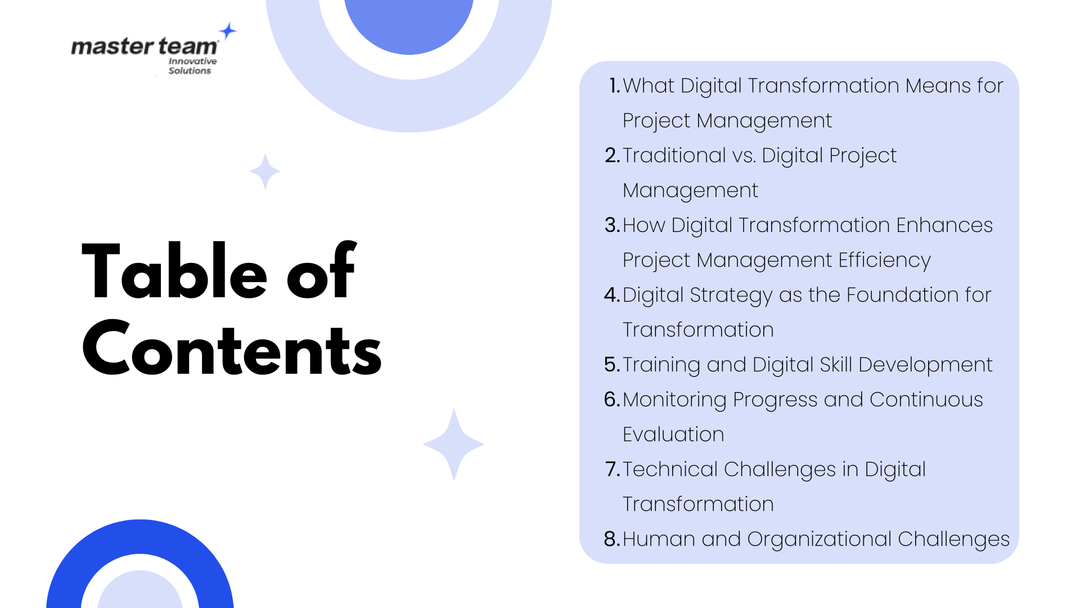
In this article, we will guide you through a clear and systematic journey to understand the role of digital transformation in enhancing the efficiency of project management systems. We will explore how government entities and project managers in the private sector can practically benefit from it to achieve tangible and sustainable results.
The Concept of Digital Transformation and Its Impact on Project Management
Digital transformation is the integration of digital technology into all aspects of business, with the goal of transitioning from analog processes to fully digital ones. Experts define digital transformation as a comprehensive application of digital technologies to reshape how organizations operate. Instead of using paper and traditional records, businesses today rely on smart systems and advanced tools (such as cloud platforms and artificial intelligence) to execute tasks with higher speed and accuracy.
Implementing digital transformation includes updating the technical infrastructure, changing the work culture, and training teams to use new tools. As a result, administrative and operational processes evolve into an integrated smart system, enhancing creativity and operational effectiveness. This also leads to improved customer experiences and faster service delivery. For example, digital project management systems allow for real-time tracking of resources and tasks, and predict risks before they occur.
The Difference Between Digital Transformation and Traditional
Transformation in Project Management
Traditional project management methods involve manual processes and static tools, whereas the digital methodology relies on smart software, automation, and real-time collaboration through digital platforms.
In the traditional system, project managers record tasks on paper or Excel sheets and communicate through frequent meetings and emails. This approach leads to time loss, delayed information flow, and low transparency. In contrast, digital systems (such as the P+ Project Management System) offer advanced features: they support intelligent planning with real-time schedules, predictive analytics, and allow teams to track progress through automated dashboards.
Digital systems also provide real-time collaboration tools that connect all team members and reduce the need for lengthy meetings. As a result, productivity increases, and time and cost wastage are minimized. Digital management reduces human error and automates repetitive tasks. Studies show that transitioning to digital systems can lead to faster, more accurate, and less costly project outcomes, giving organizations a competitive edge in the digital business environment.
To clarify the fundamental differences between traditional and digital transformation in project management, the following table outlines the key distinctions in terms of tools, workflow, efficiency levels, and the impact of each approach on project performance:
How Digital Transformation Contributes to Enhancing Project Management System Efficiency
Digital transformation enhances the efficiency of project management systems through process automation, improving team coordination, enabling data-driven decision-making, and connecting all project elements within a unified digital platform that ensures speed, accuracy, and transparency.
Project management efficiency is no longer solely reliant on the experience of the project manager; it directly depends on the strength of the digital systems in place. Digital transformation shifts project management from fragmented manual work to an integrated smart system that covers planning, execution, monitoring, control, and real-time management of resources and risks.
Through Digital Project Management Systems, government entities and companies in the private sector can reduce time wastage, control costs, enhance output quality, and increase governance and transparency, all while aligning with the goals of Saudi Vision 2030 and institutional digital transformation.
To understand how this practically occurs, we can break down the contribution of digital transformation to project management efficiency into the following areas:
1. Use of Modern Software in Project Management
2. Artificial Intelligence and Data Analytics in Project Management
3. Integration Between Digital Systems and Resource Management Tools
1. Establishing a Clear Digital Transformation Strategy: The Foundation for Successful Transformation and Sustainable Project Efficiency
The success of transitioning to digital tools is closely linked to developing a well-thought-out strategy that defines digital objectives and aligns them with the organization's action plan and preparedness.
A clear digital vision is the cornerstone of any successful transformation. This vision must align with the organization's overarching business goals, ensuring that each digital initiative contributes to achieving strategic objectives (such as improving efficiency or enhancing customer service). Achieving this requires involving senior leaders and stakeholders in the strategy formulation process to ensure organizational alignment and setting specific, measurable, attainable, relevant, and time-bound (SMART) performance indicators for each digital goal.
For example, digital planning might include creating a roadmap that gradually enhances training mechanisms, improves employee skills, updates the organization’s technical infrastructure, and re-engineers operational processes.
Experts also emphasize the importance of allocating the necessary physical and human resources, defining timelines for implementation, and establishing a phased evaluation mechanism to keep the transformation on track. Many companies rely on specialized consulting services to frame this comprehensive strategy. One study highlighted that a clear connection between business objectives and digital transformation increases the likelihood of successful implementation and long-term sustainability.
2. Training on the Use of Digital Tools: Empowering Teams to Boost Productivity and Accelerate Digital Transformation Adoption
Ongoing, targeted training on digital project management tools plays a key role in empowering teams to maximize their usage, improving their digital skills, and enhancing overall efficiency.
Even the best technical systems will not yield results unless employees are capable of using them effectively. Therefore, it is essential to invest in practical, continuous training that aligns with each employee's role and the organization's transformation goals.
Change management research has confirmed that digital project management systems succeed when employees effectively adopt them. This requires providing them with hands-on training, including workshops and live applications. Training helps teams understand new tasks and reduces resistance to change, as insufficient training support may push individuals back to traditional methods and neglect the new digital systems.
As such, best practices recommend organizing both internal and external training programs, alongside continuous technical support, ensuring that everyone masters using software such as P+ Project Management Systems or other new solutions efficiently.
Such training not only boosts knowledge but also enhances employee satisfaction and confidence in modern tools, leading to quick adoption of digital applications and increased team productivity.
3. Monitoring Progress and Continuous Evaluation: Ensuring Digital Transformation ROI and Correcting Course in a Timely Manner
The progress of digital transformation must be regularly monitored through Key Performance Indicators (KPIs) and advanced measurement tools to ensure goals are being met and the course is continuously evaluated.
The success of any digital transformation depends on how effectively its results are monitored. Instead of completing the implementation of a new system and waiting for outcomes, leading organizations define clear assessment indicators (such as increased productivity or system adoption rates) and regularly track them.
For instance, studies show that 81% of executives in digital transformation measure return on investment (ROI) through productivity. Additionally, guidelines suggest tracking indicators related to customer and employee experiences, execution speed, quality levels, and more. Advanced analytics tools and smart dashboards can be used to display this data in real-time, helping to detect deviations or obstacles early on.
When shortcomings are observed, plans are adjusted or training support is enhanced. Furthermore, progress monitoring motivates teams with rewards and celebrates small successes to strengthen commitment. This continuous cycle of measurement and improvement plays a significant role in enabling digital transformation to make a tangible impact (e.g., improving speed and process efficiency) and enhancing readiness for future demands.
Challenges That May Face Digital Transformation in Project Management
The challenges facing digital transformation in project management can be divided into two main categories: technical challenges related to system integration, data security, and infrastructure, and human and organizational challenges related to resistance to change, lack of digital skills, and weak transformation culture within the organization.
Although digital transformation is considered a key pillar for improving the efficiency of project management systems, its practical implementation faces real obstacles that can hinder the achievement of its goals if not managed methodically. Technical challenges often arise when trying to integrate digital project management systems with older or inflexible systems, leading to data isolation and weak information flow.
On the other hand, human and organizational challenges are related to individual behaviors and workplace culture, where employees may resist change due to fear of losing control or a lack of clarity regarding the benefits.
Recognizing these challenges from the outset and clearly categorizing them helps both government entities and project managers in the private sector to build more realistic digital transformation plans, increasing the chances of success for digital initiatives and achieving the expected ROI.
Here’s a clearer breakdown of the challenges you mentioned, further detailed into key areas:
1. Technical Challenges
Technical challenges include the difficulty of integrating legacy systems with modern digital solutions, data isolation, weak technical infrastructure, and information security risks, which can affect the efficiency of digital project management.
To better understand these challenges, they can be broken down into the following key obstacles that organizations face when implementing digital transformation:
- Difficulty in Integrating Legacy Systems with New Ones: Organizations often struggle to connect old ERP and CRM systems with modern project management platforms, leading to data duplication and delays in information flow between departments.
- Data Isolation and Weak Information Flow: Data stored on incompatible systems may remain isolated, limiting access to live data and real-time reports, which in turn affects accurate decision-making.
- Complexity of Technical Infrastructure and Updates: Legacy systems often require custom coding and the creation of software bridges to work with modern systems, a process that is both time-consuming and costly.
- Security Challenges: Lack of continuous updates on legacy systems increases exposure to cyber-attacks, making data protection and access control more difficult.
Recommended Solutions:
- Adopt intermediary solutions (Integration Platforms) to connect legacy and new systems via APIs.
- Gradually transition traditional systems to the cloud to ensure synchronization of financial data and resources.
- Use data converters and ready-to-integrate tools supporting standardized protocols to reduce the need for custom programming.
2. Human and Organizational Challenges
Human and organizational challenges include employee resistance to change, a lack of digital skills, poor internal communication, and the absence of effective change management. These challenges can hinder the adoption of digital project management systems and impact the overall success of digital transformation.
To address these challenges, they can be categorized into the following areas, which will help create effective strategies for managing teams during the digital transformation process:
- Resistance to Change: Employees may feel anxious or resistant to new digital systems, especially if they do not understand the goals and expected benefits. This can sometimes lead to reverting to traditional methods.
- Lack of Digital Skills: The absence of hands-on training for digital tools reduces teams' ability to use modern project management systems effectively, impacting execution quality and project speed.
- Weak Internal Communication and Education: Without a clear communication plan, employees may be uncertain about the future of their work and their role in the transformation, leading to increased resistance and reduced effectiveness of the digital project.
- Change Management and Motivation: Effective change management strategies, such as workshops, internal awareness sessions, and offering incentives for adopting digital systems, can increase employee acceptance and speed up the adoption of new tools.
- Building a Culture of Innovation and Continuous Support: Continuous communication, targeted training, and fostering a culture that encourages innovation and experimentation can turn human challenges into opportunities to boost efficiency, enhancing the team's readiness to implement digital solutions effectively.
Recommended Solutions:
- Implement a comprehensive communication plan that clearly explains the goals and expected benefits of digital transformation to all employees.
- Organize practical training programs tailored to each job role to develop the necessary digital skills for using project management systems.
- Involve employees early in the digital transformation process and listen to their concerns to ensure acceptance of change.
- Offer incentives and rewards to teams that effectively adopt digital systems and encourage excellence in performance.
- Create a supportive work environment for innovation and experimentation, with ongoing leadership support to ensure the long-term success of digital transformation.
Conclusion: Digital Transformation - Your Path to Excellence in Project Management
In light of the above, it is clear that digital transformation is a critical factor in enhancing project management by increasing productivity, accelerating processes, reducing errors and costs, and improving quality and transparency. However, achieving these benefits requires a clear strategy that addresses both technological and human aspects. A successful digital entry plan should include system upgrades, employee training, performance monitoring, and effective change management.
Undoubtedly, initiatives in Saudi Arabia, such as Vision 2030 and the various digital transformation agencies, prioritize digital transformation, emphasizing its importance in the national work ecosystem. With a methodical and integrated approach, Saudi institutions can enhance operational efficiency, ensure project success, and align with global trends.
Ultimately, excellence relies on proper execution: from early planning and strategy preparation to continuous support and overcoming both technological and human challenges with the best solutions. This way, project management becomes more agile, proactive, and capable of achieving its goals effectively, in line with the digital transformation that is now central to the competitiveness of modern organizations.
💡 Start your digital journey now with MasterTeam: Discover how advanced tools like P+ PMO Digital Solution, S+ Strategy Digital Solution and Diwan Executive Office Solution can transform your project management experience into a seamless, integrated, and efficient one. Visit the website to learn more!
Frequently Asked Questions:
1- How can Return on Investment (ROI) be measured from digital transformation?
ROI can be measured by comparing productivity and efficiency before and after the implementation of digital systems. This includes calculating time and cost savings, and analyzing its impact on project completion speed and result quality.
2- What role does Artificial Intelligence (AI) play in enhancing customer experience?
AI helps predict customer needs accurately, provide intelligent recommendations, and speed up response times to issues, thus improving customer satisfaction and the quality of services offered.
3- Can small businesses implement digital project management systems?
Yes, small businesses can adopt flexible, cloud-based digital tools that enable efficient project management without the need for heavy investments in infrastructure or specialized tech teams.
4- What are the best ways to encourage teams to adopt digital tools?
The best approach includes providing hands-on, role-specific training, continuous technical support, clear communication about the benefits of the tools, and offering rewards and incentives for effective use of the digital systems.
5- How do digital projects align with sustainability and governance goals?
Digital tracking of processes and resources allows for better control over costs and usage, documenting decisions, ensuring compliance with regulatory and environmental standards, and increasing transparency and efficiency.