
📉 تخيّل أنك تقود مشروعًا استراتيجيًا بقيمة ملايين الريالات، مع فريق عالي الكفاءة وخطة تنفيذ مدروسة بعناية... ومع ذلك، تأتي النتائج دون المستوى المطلوب!
تصل التقارير متأخرة، وتُتخذ القرارات بناءً على افتراضات بدلًا من بيانات حية، ولا تظهر المخاطر إلا بعد أن تتفاقم إلى أزمات كاملة.
هذا السيناريو ليس استثناءً بل واقعًا متكررًا لدى العديد من المؤسسات التي لا تزال تدير مشاريعها باستخدام أنظمة معزولة لا تتواصل فيما بينها، مما يترك الإدارة دون رؤية موحدة وشاملة.
⚙️ في عصر التحول الرقمي، لم تعد المشكلة في غياب أنظمة إدارة المشاريع أو أنظمة تخطيط موارد المؤسسات (ERP)، بل في أن كل نظام يعمل بمعزل عن الآخر.
فعندما يعمل نظام إدارة المشاريع بشكل مستقل عن النظام المالي، أو إدارة الموارد، أو سلاسل الإمداد، تتشتت البيانات، وتتآكل القدرة على اتخاذ القرار في الوقت الفعلي (Real-Time Decision Making).
📊 اليوم، لم تعد المؤسسات الأكثر نضجًا رقميًا تعتمد على أدوات منفصلة، بل على منظومات رقمية متكاملة تربط مباشرة بين:
🔹التخطيط الاستراتيجي وربط المبادرات بالأهداف
🔹إدارة المشاريع والبرامج والمحافظ (P3 / PPM)
🔹الموارد والميزانيات والتحكم في التكاليف
🔹الحوكمة التنفيذية والتقارير ودعم قرار القيادة
💡 هنا يتحول تكامل ERP مع أدوات إدارة المشاريع من مجرد خيار تقني إلى رافعة استراتيجية حقيقية. فهو يحوّل البيانات الخام إلى رؤى قابلة للتنفيذ، والمشاريع إلى أصول قابلة للقياس، والإدارة من ردة فعل إلى قيادة استباقية قائمة على التحليل، والحلول المدعومة بالذكاء الاصطناعي، والحوكمة الرقمية.
🔍 في هذا المقال، نقدم تحليلًا عمليًا ومتعمقًا يوضح كيف يعيد تكامل ERP مع أنظمة إدارة المشاريع الرقمية تشكيل مستقبل إدارة المشاريع من خلال:
🔹تحسين اتخاذ القرار في الوقت الفعلي
🔹زيادة الشفافية التشغيلية
🔹تقليل المخاطر والتحكم في التكاليف
🔹تسريع التنفيذ وتحقيق الكفاءة المؤسسية
كما نربط ذلك بأفضل الممارسات العالمية والسياق المحلي في المملكة العربية السعودية، مع تسليط الضوء على حلول رقمية متقدمة تدعم القطاعين العام والخاص، مثل الحل الرقمي P+ لمكاتب إدارة المشاريع من حلول ماستر تيم الرقمية، كأحد النماذج الداعمة للتحول الرقمي وتحقيق مستهدفات رؤية السعودية 2030.
مستقبل إدارة المشاريع في عصر الأنظمة المتكاملة (تكامل ERP)
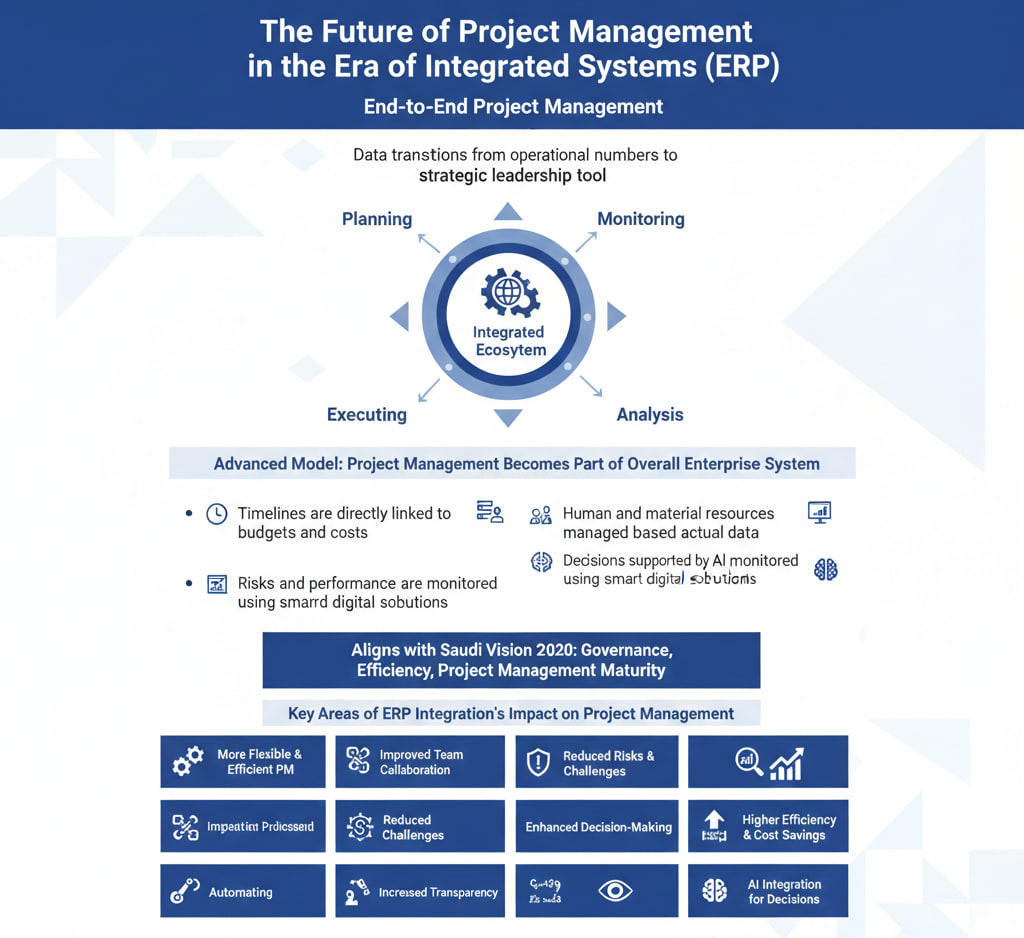
مستقبل إدارة المشاريع يتشكل الآن حول تكامل أنظمة ERP مع أدوات إدارة المشاريع الرقمية. هذا التكامل هو العامل الحاسم لتحقيق رؤية شاملة، واتخاذ قرار في الوقت الفعلي، والتحكم في التكاليف، وتقليل المخاطر عبر دورة حياة المشروع بأكملها (End-to-End Project Management).
لم تعد إدارة المشاريع الحديثة تعتمد على جداول البيانات التقليدية أو الأنظمة المعزولة. لقد تطورت إلى منظومة رقمية متكاملة تجمع التخطيط والتنفيذ والمراقبة والتحليل في منصة واحدة.
عندما يتكامل نظام إدارة المشاريع مع ERP، تتحول البيانات من مجرد أرقام تشغيلية إلى أداة قيادة استراتيجية تدعم الإدارة العليا، ومكاتب إدارة المشاريع (PMOs)، وفرق التنفيذ في الوقت الفعلي.
في هذا النموذج المتقدم، تصبح إدارة المشاريع جزءًا من النظام المؤسسي الشامل، حيث:
- ترتبط الجداول الزمنية مباشرة بالميزانيات والتكاليف.
- تُدار الموارد البشرية والمادية بناءً على بيانات فعلية، لا تقديرات.
- تُراقَب المخاطر والأداء باستخدام لوحات معلومات ذكاء أعمال (BI) ذكية.
- تُدعم القرارات بحلول رقمية مدعومة بالذكاء الاصطناعي.
يتماشى هذا التحول مباشرة مع متطلبات التحول الرقمي في المملكة العربية السعودية، ومع أهداف رؤية السعودية 2030، التي تركز على الحوكمة والكفاءة وتعزيز نضج إدارة المشاريع في القطاعين العام والخاص.
لفهم الصورة الكاملة لكيفية تأثير تكامل ERP على مستقبل إدارة المشاريع، نستعرض في الأقسام التالية أبرز المجالات التي يُحدث فيها هذا التكامل تحولًا جوهريًا في الأداء والنتائج.
أبرز مجالات تأثير تكامل ERP على إدارة المشاريع:
- تكامل ERP كأساس لإدارة مشاريع أكثر مرونة وكفاءة
- تحسين تعاون الفريق من خلال منصة موحدة لإدارة البيانات
- تقليل المخاطر والتحديات عبر التحليل التنبؤي والتنبيهات المبكرة
- تعزيز اتخاذ القرار ببيانات في الوقت الفعلي
- تحقيق كفاءة أعلى ووفورات في التكاليف من خلال إدارة ذكية للموارد
- أتمتة العمليات وتعزيز الكفاءة التشغيلية داخل المشاريع
- زيادة الشفافية ومراقبة الأداء في الوقت الفعلي
- دمج الذكاء الاصطناعي مع ERP لتحليل البيانات ودعم اتخاذ القرار
1. تكامل ERP: خطوة أساسية نحو إدارة مشاريع أكثر مرونة وكفاءة
يعزز تكامل أنظمة ERP مع أدوات إدارة المشاريع مرونة العمليات وكفاءتها من خلال توفير رؤية موحدة وفورية لجميع جوانب المشروع.
وهذا يتيح تتبعًا دقيقًا لتقدم المشروع وتحديثات فورية، مما يمكّن المديرين من تخصيص الموارد بالشكل الأمثل واتخاذ قرارات فورية بناءً على بيانات موثوقة.
من ناحية، يكسر تكامل ERP الحواجز بين بيانات الأقسام المختلفة، مما يتيح لمختلف الفرق الوصول إلى نفس المعلومات دون تأخير أو ازدواجية.
على سبيل المثال، وثّقت شركة Trimble أن تدفق البيانات في الوقت الفعلي بين نظام ERP وأداة إدارة المشاريع يزيد ثقة الفريق ويجعل المشاريع أكثر قدرة على التكيف. يمكن لمديري المشاريع رؤية التكاليف الفعلية لحظة بلحظة، مما يمكّنهم من التكيف بسرعة مع أي تغييرات.
وبهذه الطريقة، تتحول معظم تحديات إدارة المشاريع التقليدية إلى فرص لتحسين الأداء، مما يتيح إنجاز المشاريع بشكل أسرع وأكثر كفاءة.
2. تعزيز تعاون الفريق من خلال تكامل ERP
يسهّل تكامل ERP التواصل السلس والواضح بين جميع الفرق، مما يضمن أن تعمل الأقسام الهندسية والمالية والإدارية بنفس اللغة المعلوماتية.
عندما تُخزّن البيانات وتُحدَّث ضمن نظام ERP موحد، تصبح مشاركة المعلومات أسهل وأسرع، مما يلغي الحاجة إلى الجهود المكررة أو الأخطاء الناجمة عن التباين بين سجلات الأقسام.
فعلى سبيل المثال، تخيّل أن بإمكان فريقي المالية والهندسة الوصول إلى ميزانية المشروع وجدوله الزمني في آن واحد، دون انتظار تحديثات من قسم آخر. هذا المستوى من الشفافية يعزز التعاون ويسرّع إنجاز المهام.
تؤكد المصادر أن هذا التكامل يبني الثقة بين الفرق المختلفة.
وكما أشارت Trimble، فإن مزامنة التكاليف في الوقت الفعلي بين النظامين تعزز العلاقة بين فرق المالية والعمليات. ونتيجة لذلك، يمكن للفرق التنسيق بكفاءة أكبر، مما يسهم في تسليم المشاريع في الوقت المحدد وبجودة عالية.
3. تقليل المخاطر والتحديات من خلال التكامل التقني
يساعد تكامل ERP على تخفيف المخاطر المرتبطة بالمشاريع من خلال تمكين التنبيهات المبكرة والتحليل المستمر للأداء. فعندما يجمع النظام كميات هائلة من البيانات من جميع مصادر المشروع، يمكنه اكتشاف الانحرافات أو المشكلات قبل أن تتفاقم.
على سبيل المثال، تُظهر الدراسات أن تحليل البيانات في الوقت الفعلي يتيح للمديرين تحديد تجاوزات الميزانية أو التأخيرات في سير العمل مبكرًا، مما يمكّنهم من التدخل قبل أن تخرج المشكلات عن السيطرة. بالإضافة إلى ذلك، يعزز استخدام تقنيات الذكاء الاصطناعي وإنترنت الأشياء (IoT) هذه القدرات. أظهرت الأبحاث أن الأنظمة المدعومة بالذكاء الاصطناعي يمكنها تحديد الاختناقات أو تجاوزات التكاليف قبل حدوثها.
ونتيجة لذلك، تقل المفاجآت المالية أو التقنية، مما يوفر الوقت، ويقلل التكاليف غير المخطط لها، ويحسّن بشكل كبير فرص نجاح المشروع بأمان أكبر.
4. تحسين اتخاذ القرار ببيانات ERP في الوقت الفعلي
يدعم تكامل ERP اتخاذ قرارات استراتيجية دقيقة وسريعة من خلال توفير معلومات محدَّثة وتحليلات شاملة. تولّد أنظمة ERP تقارير فورية وبيانات تُعرض على لوحات معلومات متقدمة، مما يجعل جميع مؤشرات الأداء الرئيسية متاحة فورًا.
وهذا يتيح للقادة مراجعة الأداء الكامل للمشروع في أي لحظة وتعديل الخطط وفقًا لذلك لتحقيق الأهداف، بدلًا من الاعتماد على تقارير قديمة.
فعلى سبيل المثال، توضح مصادر متخصصة أن خوارزميات الذكاء الاصطناعي المدمجة في أنظمة ERP تحلل البيانات في الوقت الفعلي لتقديم رؤى وتوصيات قابلة للتنفيذ لتحسين الاستراتيجيات التشغيلية.
وفقًا لدراسة نشرتها DCKAP، فإن دمج معلومات دقيقة في النظام يمكّن الفرق من استخلاص رؤى عالية المستوى بسهولة أكبر. وهذا يعني أن القرارات الاستراتيجية تُتخذ استنادًا إلى بيانات حية وموثوقة. ونتيجة لذلك، تُبنى قرارات الشركة على أساس واقعي وتحليل أعمق، مما يساعد في الحفاظ على جودة المشروع وتماشيه مع الأهداف المؤسسية.
5. وفورات التكاليف من خلال تكامل ERP مع إدارة المشاريع
يساعد تكامل ERP على تحسين تخصيص الموارد والكفاءة التشغيلية، مما يؤدي إلى خفض كبير في التكاليف. فمن خلال المراقبة المستمرة للأنشطة والأصول، يمكن للنظام تحديد مجالات الهدر المالي أو الزمني بسهولة، وإعادة تخصيص الموارد لتقليل الهدر وتعزيز الأداء.
على سبيل المثال، يوفر تكامل نظام ERP رؤية مالية شاملة للمشاريع، مما يقلل الخسائر المالية بشكل كبير. بالإضافة إلى ذلك، تلغي الأتمتة المدمجة الحاجة إلى العمل اليدوي المفرط، مما يجعل المهام الروتينية مثل إدخال البيانات وإنشاء التقارير آلية بالكامل.
في مثال واقعي، أظهرت إحدى الدراسات أن أنظمة ERP المدعومة بالذكاء الاصطناعي يمكن أن تقلل التكاليف التشغيلية بنحو 30%. وبالتالي، تُعاد توجيه النفقات التي كانت تُهدر سابقًا على المهام المتكررة نحو تحسينات العمليات أو تدريب الفريق، مما يعزز العائد على الاستثمار (ROI) ويعزز الربحية طويلة المدى.
6. أتمتة العمليات وتحقيق الكفاءة التشغيلية
يلعب تكامل ERP دورًا حيويًا في أتمتة العديد من العمليات المتكررة داخل المشروع، مما يعزز بشكل كبير الكفاءة التشغيلية للمؤسسة. فبدلًا من أن يؤدي الموظفون مهامًا يدوية روتينية مثل إدخال البيانات أو إنشاء التقارير الدورية، يتولى النظام هذه المهام الآلية تلقائيًا.
على سبيل المثال، تدير تقنيات الذكاء الاصطناعي (AI) إدخال البيانات وتعزز دقة سجلات المخزون دون تدخل بشري. بالإضافة إلى ذلك، تُطلق سير العمل المبرمجة في النظام إجراءات محددة بمجرد استيفاء شروط معينة، مثل إصدار فاتورة أو إرسال إشعارات للأطراف المعنية، كل ذلك دون أي إدخال يدوي.
والنتيجة هي تحرير الفرق من عبء المهام الروتينية، مما يتيح لها التركيز على الأنشطة ذات القيمة المضافة مثل التخطيط والإبداع. ووفقًا للمصادر، لا تكتفي أتمتة العمليات بتوفير الوقت فحسب، بل تحسّن الدقة أيضًا وتقلل الخطأ البشري، مما يؤدي إلى زيادة كبيرة في كفاءة تنفيذ المشروع الإجمالية.
7. تعزيز الشفافية ومراقبة الأداء في الوقت الفعلي
يعزز تكامل ERP الشفافية في كل مرحلة من مراحل المشروع من خلال توفير وصول فوري للبيانات لجميع أصحاب المصلحة المعنيين. فعندما تُشارَك المعلومات على منصة واحدة، يمكن للمديرين والمشرفين وفرق التنفيذ جميعًا الاطلاع فورًا على مؤشرات الأداء وآخر التحديثات.
وهذا يقلل من المفاجآت في اللحظة الأخيرة، حيث يمتلك كل معني فهمًا دقيقًا لحالة المشروع ومراحله. يشير أحد المصادر المتخصصة إلى أن أنظمة ERP تمكّن من استخراج البيانات باستمرار من جميع الأقسام وعرضها في لوحات معلومات حية، مما يمنح الإدارة رؤية شاملة ومحدَّثة للمشروع.
علاوة على ذلك، يوفر دمج إدارة المهام مع ERP رؤى حول ما يعمل عليه كل فريق في نفس الوقت. يمكن للمشرفين تقييم المراحل الجارية والتقدم المحرز بسرعة في الوقت الفعلي. باختصار، يضمن هذا المستوى العالي من الشفافية بقاء جميع أصحاب المصلحة على اطلاع مستمر ومتوافقين مع الأهداف ذاتها، مما يسرّع سير العمل ويقلل الأخطاء التشغيلية.
8. تكامل ERP مع أدوات الذكاء الاصطناعي لتحليل البيانات
يعزز الذكاء الاصطناعي (AI) قدرات تكامل ERP من خلال تمكين تحليلات أعمق ورؤى تنبؤية من البيانات. فعندما تُدمج تقنيات الذكاء الاصطناعي ضمن أنظمة ERP، تصبح الأدوات قادرة على التعلم من البيانات التاريخية والتنبؤ بالاتجاهات المستقبلية، مما يحسّن دقة التخطيط.
على سبيل المثال، يوفر الذكاء الاصطناعي تحليلات تنبؤية تساعد في توقع اتجاهات المبيعات المستقبلية أو تحسين سلسلة الإمداد استباقيًا. تحدد خوارزميات التعلم الآلي باستمرار أوجه القصور في العمليات وتقترح تحسينات.
ومع معالجة هذه التقنيات للبيانات في الوقت الفعلي باستمرار، يتلقى صناع القرار توصيات ذكية تعزز التنفيذ. فعلى سبيل المثال، يمكن للنظام إرسال تنبيهات فورية لأصحاب المصلحة دون انتظار تقارير يدوية. والجدير بالذكر أن الشركات العالمية الرائدة قد دمجت بالفعل الذكاء الاصطناعي في أنظمة ERP الخاصة بها، حيث تشير الدراسات إلى أن نحو نصف المؤسسات تستخدم الذكاء الاصطناعي لتعزيز أنظمتها.
في المملكة العربية السعودية، تشجع خطط التنمية بشكل خاص على دمج الذكاء الاصطناعي في المؤسسات الحكومية والخاصة على حد سواء لتحسين الأداء، مما يجعل الجمع بين ERP والذكاء الاصطناعي خطوة محورية نحو إدارة مشاريع أذكى وأكثر استدامة.
الخلاصة: تكامل ERP كخطوة استراتيجية نحو مستقبل إدارة المشاريع
في الختام، لا يُعد تكامل أنظمة ERP مع أدوات إدارة المشاريع مجرد رفاهية تقنية، بل عاملًا أساسيًا يُشكّل مستقبل إدارة المشاريع. فمن خلال تعزيز التعاون بين الفرق، وتوفير تقارير تقدم فورية، وتقديم تحليلات بيانات دقيقة، تمكّن هذه الأنظمة المؤسسات من تنفيذ مشاريعها بجودة أعلى وفي وقت أقل.
علاوة على ذلك، تسهم أتمتة العمليات وتخفيف المخاطر في خفض التكاليف وتحسين العائد على الاستثمار. بعبارة أخرى، تكتسب الشركات التي تعتمد على هذه المنظومة المتكاملة أداة استراتيجية قوية لمواجهة تحديات المستقبل وتحقيق نمو مستدام.
سواء من خلال تقارير مالية مبسطة أو واجهات تفاعلية باللغتين العربية والإنجليزية، مثل تلك التي تقدمها حلول محلية كـالحل الرقمي P+ لمكاتب إدارة المشاريع، والحل الرقمي S+ للاستراتيجية، وحل ديوان لإدارة المكتب التنفيذي من ماستر تيم، يرتبط مستقبل إدارة المشاريع بشكل متزايد بالتكامل السلس بين البيانات والتقنية لتحقيق الأهداف المؤسسية بأقصى قدر من الكفاءة.
هل أنت مستعد لتحويل تجربة إدارة مشاريعك؟
تواصل مع ماستر تيم اليوم لاستكشاف كيف يمكن لـالحل الرقمي لمكاتب إدارة المشاريع (PMO)، و الحل الرقمي للاستراتيجية، و حل المكتب التنفيذي أن تساعد مؤسستك على تحقيق مستوى جديد من الكفاءة والنجاح. احجز مكالمة الآن!
الأسئلة الشائعة
1. كيف يمكن لتكامل ERP تحسين مرونة المشروع؟
يعزز تكامل ERP مرونة المشروع من خلال توفير منصة موحدة لتتبع جميع جوانب المشروع في الوقت الفعلي. فعندما تُدمج بيانات الأقسام المختلفة تلقائيًا، يصبح من الأسهل إعادة تخصيص الموارد أو تعديل الخطط بسرعة استجابة للمستجدات. يلغي التكامل استخدام الأنظمة غير المترابطة ويقلل الأخطاء، مما يتيح تنفيذ المشاريع بجداول زمنية مرنة وكفاءة عالية.
2. ما أبرز فوائد تكامل ERP في تقليل المخاطر؟
يقلل تكامل ERP المخاطر من خلال ضمان توفر المعلومات الصحيحة في الوقت المناسب. تكتشف الأنظمة المتكاملة فورًا الانحرافات مثل تجاوزات الميزانية أو التأخيرات وتُخطر المديرين فورًا، مما يمكّنهم من التدخل قبل تفاقم المشكلات. كما يعزز التكامل دقة البيانات ويقلل المعالجة اليدوية، مما يخفض خطر الخطأ البشري ويزيد من موثوقية المعلومات المالية والتقنية.
3. كيف يؤثر تكامل ERP على اتخاذ القرار الاستراتيجي في المشاريع؟
عندما تُدمج بيانات المشروع مع نظام ERP، تتيح التقارير التحليلية المفصلة والتحديثات الفورية لصناع القرار رؤية كاملة ودقيقة للمشروع. يستفيد المديرون من البيانات الحية والمعلومات المحدَّثة لدعم القرارات الاستراتيجية، سواء في تخصيص الموارد أو تعديل الأهداف. ومع الرؤى المدعومة بالذكاء الاصطناعي، يمكّن تكامل ERP أيضًا من التنبؤ بالاتجاهات المستقبلية واتخاذ إجراءات سريعة عند تغير ظروف المشروع.
4. كيف يساعد ERP في تحسين تخصيص الموارد وخفض التكاليف؟
تتيح أنظمة ERP المتكاملة مراقبة منتظمة للموارد المتاحة والمستخدمة، مما يؤدي إلى تخصيص أمثل وتقليل الهدر. يمكن إعادة توجيه الموارد الفائضة إلى المشاريع ذات الأولوية، ويساعد النظام في تحديد المجالات التي قد تتكبد فيها تكاليف عالية دون فوائد مقابلة. بالإضافة إلى ذلك، تقلل الأتمتة الوقت المستغرق في المهام الروتينية، مما يترجم إلى تكاليف تشغيلية إجمالية أقل.
5. ما الفوائد التي تجلبها أتمتة العمليات للمشاريع بعد تكامل ERP؟
توفر الأتمتة، بفضل تكامل ERP، وقتًا وجهدًا كبيرين للفرق من خلال نقل المهام المتكررة إلى النظام. فعلى سبيل المثال، تُنفَّذ مهام مثل إدخال البيانات والتقارير المالية بواسطة النظام بدلًا من الأفراد، مما يسرّع أوقات الإنجاز ويقلل الأخطاء. وهذا يتيح للفرق التركيز على الأنشطة الاستراتيجية مثل التخطيط والابتكار، مما يجعل تنفيذ المشروع أكثر سلاسة وكفاءة تشغيلية. ونتيجة لذلك، تتحسن جودة المخرجات، وتُنجَز المواعيد النهائية للمشروع بانضباط أكبر.