
كم عدد المبادرات الاستراتيجية التي أُطلقت داخل مؤسستكم دون أن تُحدث أثرًا ملموسًا في الأهداف العليا؟
في بيئات الأعمال التي تتطور بوتيرة غير مسبوقة، لم يعد التحدي في إطلاق المشاريع، بل في ضمان أن يُسهم كل مشروع فعليًا في تنفيذ الاستراتيجية الرقمية. ومع تسارع التحول الرقمي، أصبحت مواءمة المشاريع مع الأهداف المؤسسية عامل نجاح حاسمًا وليست ممارسة مكمّلة يمكن تأجيلها.
وفي سياق المملكة العربية السعودية وتنفيذ استراتيجية رؤية 2030، تزداد هذه الحقيقة وضوحًا. فقد برز التحول الرقمي كركيزة استراتيجية لبناء اقتصاد متنوع ومجتمع حيوي، ما يدفع المؤسسات إلى إعادة النظر في كيفية حوكمة مبادراتها الاستراتيجية وإدارتها وتنفيذها.
وفي ظل هذا السياق، تبرز الحلول الرقمية الاستراتيجية كجسر تقني ذكي يُمكّن القيادات من ترجمة الرؤية المؤسسية إلى مبادرات قابلة للقياس والتنفيذ، تربط بين الاستراتيجية المؤسسية والتنفيذ اليومي للمشاريع، وتعزز المواءمة الاستراتيجية للمشاريع على مستوى المؤسسة.
في هذا المقال، نستعرض كيف تُمكّن الحلول الرقمية الاستراتيجية المؤسسات من تحويل أهدافها المؤسسية إلى خطط تنفيذ واضحة، وربطها مباشرة بعمليات المشاريع اليومية، ومعالجة أبرز التحديات التي تواجه المؤسسات الحديثة في عام 2025.
ما هي الحلول الرقمية الاستراتيجية في أنظمة إدارة المشاريع؟
الحلول الرقمية الاستراتيجية عبارة عن منصات مؤسسية متقدمة تدمج التخطيط الاستراتيجي مع التنفيذ الفعلي للمشاريع على مستوى المؤسسة بأكملها. وقد صُممت هذه الحلول لربط الأهداف والرؤية العليا مباشرة بخطط التنفيذ، وتحويل التوجه الاستراتيجي إلى أهداف ومبادرات ونتائج أداء قابلة للقياس.
على عكس أدوات إدارة المشاريع التقليدية التي تركز بشكل أساسي على متابعة المهام والجدولة الزمنية، تُركّز أنظمة إدارة المشاريع الاستراتيجية على مواءمة المشاريع مع الأهداف المؤسسية. فهي تُمكّن المؤسسات من تحديد أهدافها الاستراتيجية في خطوات منظمة وقابلة للتنفيذ، وترحيلها عبر المبادرات والمشاريع، وربط كل هدف بمؤشرات الأداء الرئيسية (KPIs) ذات الصلة لقياس الأداء بدقة ودعم إدارة الأداء المؤسسي.
إضافة إلى ذلك، تدعم هذه المنصات أطر عمل معتمدة عالميًا مثل بطاقة الأداء المتوازن (BSC) وتكامل منهجية OKR مع مؤشرات الأداء الرئيسية (KPIs)، بما يضمن بقاء كل مبادرة متوافقة مع رؤية القيادة وأولويات المؤسسة. وعمليًا، تجعل منصات تنفيذ الاستراتيجية الاستراتيجية قابلة للتنفيذ والمتابعة المستمرة، من خلال ربط الأهداف المؤسسية بالأنشطة اليومية للمشاريع، وتمكين المتابعة اللحظية لمؤشرات الأداء والمواءمة الاستراتيجية على مستوى المؤسسة.
لماذا أصبحت المواءمة الاستراتيجية أولوية حاسمة في عام 2025؟
تؤكد تجارب المؤسسات العالمية أن المواءمة الاستراتيجية في إدارة المشاريع أصبحت عنصرًا أساسيًا للقيادة الاستراتيجية الفعالة. ففي بيئات تنافسية سريعة التغير، يجب على القيادات التنفيذية ضمان أن يُسهم كل جهد واستثمار مباشرة في التوجه العام للمؤسسة وأولوياتها.
ومن أبرز التحديات التي تواجه المؤسسات اليوم تزايد عدد المبادرات ذات الارتباط الضعيف بالأهداف الاستراتيجية. وغالبًا ما يؤدي هذا التباين إلى نتائج متناثرة، وانخفاض في عائد الاستثمار، ومشاريع تعمل بمعزل عن السياق العام. وتُظهر تقارير إدارة المشاريع باستمرار أن إهمال مواءمة الاستراتيجية مع التنفيذ قد يحوّل مشاريع منجزة بكفاءة إلى جهود ذات قيمة استراتيجية محدودة أو معدومة.
ونتيجة لذلك، برزت الحلول الرقمية الاستراتيجية كإطار عمل متكامل للتنفيذ والمواءمة. إذ توفر هذه المنصات نموذج تشغيل موحدًا يربط الاستراتيجية بالتنفيذ اللحظي عبر جميع مبادرات المؤسسة. وباختصار، في ظل تسارع التحول الرقمي، لم يعد تبني إدارة المشاريع القائمة على الاستراتيجية ترفًا، بل ضرورة لتحقيق الأهداف المؤسسية في عام 2025 وما بعده.
أبرز فوائد الحلول الرقمية الاستراتيجية للمؤسسات في عام 2025
في عام 2025، تُقدّم الحلول الرقمية الاستراتيجية قيمة مؤسسية واضحة من خلال تمكين المواءمة الاستراتيجية المباشرة في إدارة المشاريع، وتسريع اتخاذ القرار عبر البيانات اللحظية، وتعزيز الشفافية والمساءلة المؤسسية، وتحسين إدارة الموارد المالية والبشرية، ورفع معدلات نجاح المشاريع، ودعم الاستدامة والنمو المؤسسي على المدى الطويل. وهذا التحول يرتقي بإدارة المشاريع من وظيفة تشغيلية بحتة إلى رافعة استراتيجية قوية لتحقيق رؤية المؤسسة.
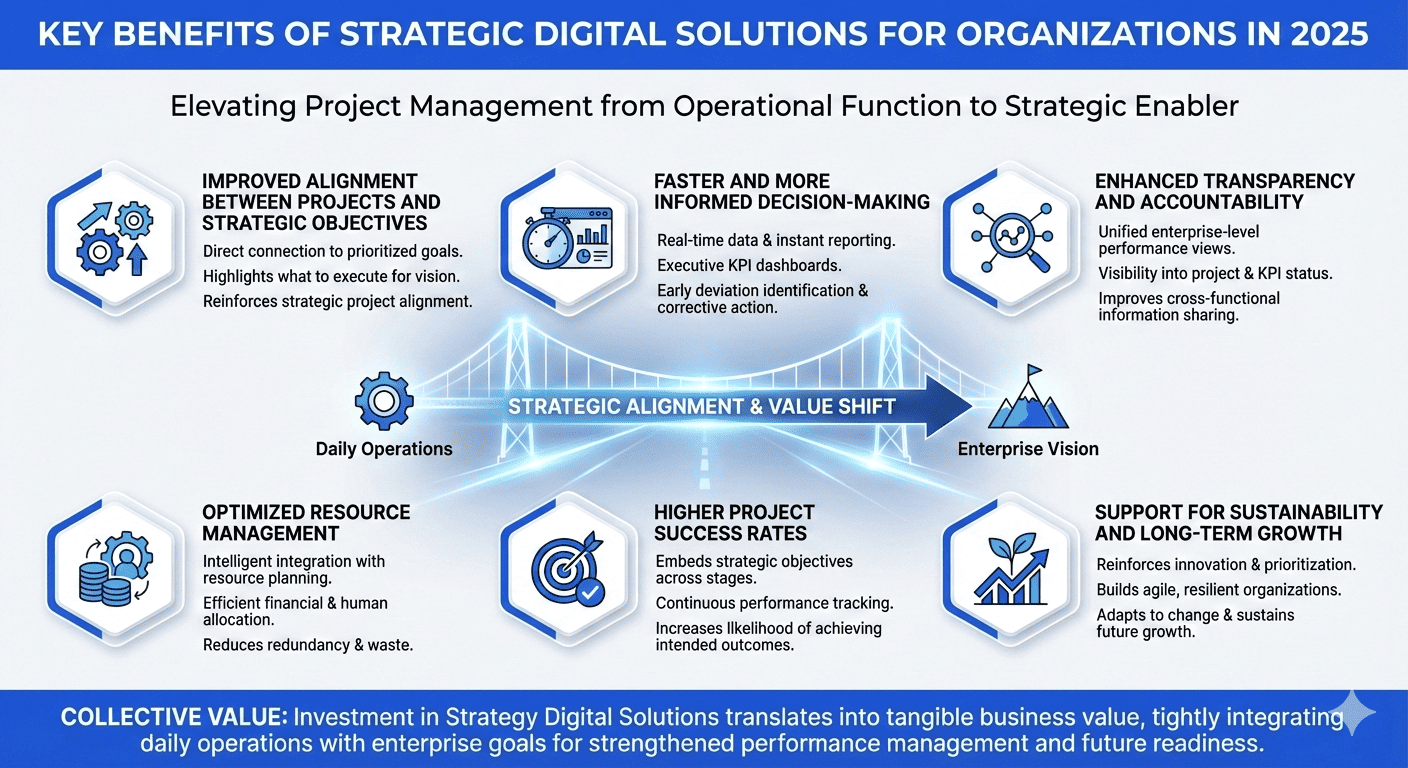
ومن أبرز هذه الفوائد:
- تحسين المواءمة بين المشاريع والأهداف الاستراتيجية
تضمن هذه الحلول ربط كل مشروع مباشرة بالأهداف الاستراتيجية ذات الأولوية، بما يوضح بجلاء ما يجب تنفيذه لتحقيق رؤية المؤسسة، ويعزز المواءمة الاستراتيجية للمشاريع.
- اتخاذ قرارات أسرع وأكثر استنارة
تُمكّن البيانات اللحظية والتقارير الفورية - المقدَّمة عبر لوحات مؤشرات الأداء التنفيذية - القيادات من اكتشاف الانحرافات مبكرًا واتخاذ الإجراءات التصحيحية دون تأخير، بما يدعم اتخاذ القرار الاستراتيجي القائم على البيانات.
- تعزيز الشفافية والمساءلة
توفر الرؤية الموحدة للأداء على مستوى المؤسسة اطلاعًا كاملاً على حالة كل مشروع ومؤشر أداء مرتبط به ضمن بيئة واحدة. وتُحسّن هذه الشفافية تبادل المعلومات بين الإدارات، وترفع مستوى المساءلة عن النتائج.
- تحسين إدارة الموارد
من خلال التكامل الذكي بين الأهداف الاستراتيجية وتخطيط الموارد، تضمن أنظمة إدارة الاستراتيجية الرقمية توزيع الموارد المالية والبشرية بكفاءة نحو المبادرات الأكثر تأثيرًا. ما يقلل من الازدواجية، ويحد من الهدر، ويحسّن كفاءة التنفيذ.
- رفع معدلات نجاح المشاريع
من خلال ترسيخ الأهداف الاستراتيجية في جميع مراحل التنفيذ، والمتابعة المستمرة للأداء الفعلي، تُعزز المؤسسات بشكل ملحوظ فرص إنجاز مشاريع تحقق النتائج المرجوة منها. وتُثبت منصات تنفيذ الاستراتيجية الحديثة باستمرار أن مواءمة إدارة المشاريع مع الاستراتيجية يرفع معدلات النجاح.
- دعم الاستدامة والنمو طويل الأمد
عبر تعزيز الابتكار وترتيب الأولويات، تخلق الحلول الرقمية الاستراتيجية ميزة تنافسية مستدامة، وتساهم في بناء مؤسسات أكثر مرونة وقدرة على التكيف مع التغيير ومواصلة النمو مستقبلاً.
وإجمالاً، تؤكد هذه الفوائد أن الاستثمار في الحلول الرقمية الاستراتيجية يترجم إلى قيمة أعمال ملموسة، حيث تتكامل العمليات اليومية بإحكام مع الأهداف المؤسسية، بما يعزز إدارة الأداء المؤسسي ويرفع القدرة على مواجهة تحديات المستقبل.
ما الفرق بين إدارة المشاريع التقليدية والحلول الرقمية القائمة على الاستراتيجية؟
يكمن الفرق الجوهري في مستوى التكامل مع استراتيجية المؤسسة. فإدارة المشاريع التقليدية تركز على إنجاز المشاريع ضمن قيود الوقت والتكلفة والجودة، في حين تُركّز الحلول الرقمية القائمة على الاستراتيجية على مواءمة المشاريع مع الأهداف المؤسسية وقياس أثرها الاستراتيجي.
في إدارة المشاريع التقليدية، ينصب التركيز عادة على أنشطة التخطيط التكتيكي، مثل إعداد الجدول الزمني، وضبط التكاليف، ومراقبة الجودة، دون وجود رابط منظم أو ممنهج بالأهداف الاستراتيجية على مستوى المؤسسة في الغالب. ونتيجة لذلك، قد تُنجز المؤسسات مشاريع ناجحة تشغيليًا لكنها محدودة القيمة الاستراتيجية.
في المقابل، تتعامل الحلول الرقمية الاستراتيجية مع كل مشروع باعتباره جزءًا من منظومة مؤسسية متكاملة. حيث تُوائم كل مبادرة مع أهداف استراتيجية محددة بوضوح، وتُربط بمؤشرات أداء قابلة للقياس، وتُتابع ضمن السياق الأوسع لـإدارة الأداء المؤسسي. ومن خلال هذا التحول، تتطور المشاريع من مجرد آليات لتنفيذ المهام إلى أدوات لقياس التقدم نحو الرؤية والأهداف الاستراتيجية طويلة الأمد.
ومن العوامل المميزة الأخرى الرؤية المؤسسية الشاملة من أعلى إلى أسفل. فالمنصات المرتكزة على الاستراتيجية تربط الخطط التشغيلية بالأهداف الاستراتيجية العليا من خلال أنظمة موحدة، لتحل محل التقارير المتناثرة الخاصة بكل مشروع، والتي يصعب توحيدها أو مواءمتها مع استراتيجية المؤسسة. وتُعزز هذه الرؤية الشاملة الحوكمة، وتُسرّع اتخاذ القرار، وترسّخ إدارة الاستراتيجية المؤسسية.
مقارنة: إدارة المشاريع التقليدية مقابل الحلول الرقمية القائمة على الاستراتيجية
كيف تعزز الحلول الرقمية الاستراتيجية متابعة مؤشرات الأداء والمواءمة الاستراتيجية؟
تُعزز الحلول الرقمية الاستراتيجية متابعة مؤشرات الأداء والمواءمة الاستراتيجية من خلال ربط مؤشرات الأداء التشغيلية مباشرة بالأهداف الاستراتيجية على مستوى المؤسسة، وبناء خرائط استراتيجية مترابطة، وتمكين المتابعة الموحدة للأداء عبر المشاريع والبرامج والمحافظ، واكتشاف الانحرافات الاستراتيجية مبكرًا، ودعم اتخاذ القرار التنفيذي من خلال لوحات مؤشرات الأداء التنفيذية اللحظية.
وتحوّل هذه المنصات إدارة الأداء من ممارسة تقارير متناثرة إلى منظومة مؤسسية متكاملة من خلال الآليات التالية:
- ربط مؤشرات الأداء بالأهداف الاستراتيجية المؤسسية
تُحدَّد مؤشرات الأداء الرئيسية (KPIs) لكل هدف استراتيجي، بما يضمن قياس الأداء ضمن سياق الغاية المؤسسية بدلاً من قياسه بمعزل عنها. ويعزز هذا النهج إدارة مؤشرات الأداء الاستراتيجية ويرسّخ المواءمة مع رؤية المؤسسة.
- بناء خرائط استراتيجية مترابطة
تُتيح المنصات الرقمية إنشاء خرائط استراتيجية ومؤشرات أداء توضح بصريًا العلاقات بين الأهداف الاستراتيجية والمبادرات والمشاريع ومقاييس الأداء. ما يمنح رؤية واضحة حول كيفية إسهام كل مبادرة في تحقيق الأهداف الأعلى.
- متابعة موحدة للأداء عبر المحافظ والبرامج والمشاريع
بدلاً من متابعة المشاريع بشكل منفصل، تتابع المؤسسات الأداء عبر المحافظ والبرامج، بما يدعم إدارة المحافظ والبرامج والمشاريع (P3)، ويوفر رؤية موحدة لـالأداء المؤسسي الشامل.
- مراقبة الأداء اللحظية
من خلال اللوحات اللحظية، تحصل فرق القيادة على رؤية مستمرة لتقدم المشاريع، واستغلال الموارد، وأداء التكاليف، بما يُمكّن من رقابة استباقية دون الاعتماد على التقارير الدورية المتأخرة.
- الاكتشاف المبكر للانحرافات الاستراتيجية
من خلال المقارنة المستمرة بين الأداء الفعلي والأهداف المخطط لها، يتم اكتشاف الانحرافات الاستراتيجية مبكرًا. وتتيح التنبيهات الآلية اتخاذ إجراءات تصحيحية في الوقت المناسب، بما يقلل المخاطر ويحمي النتائج الاستراتيجية.
- دعم القرار التنفيذي عبر لوحات موحدة
تُجمّع لوحات الاستراتيجية التنفيذية البيانات الاستراتيجية والتشغيلية في واجهة واحدة موثوقة، بما يُمكّن من اتخاذ قرارات دقيقة قائمة على البيانات على مستوى القيادة العليا ومجالس الإدارة.
ومن خلال هذا النهج المتكامل، تتجاوز المؤسسات مجرد قياس الأداء إلى الإدارة الفعلية لتنفيذ الاستراتيجية، حيث تتحول مؤشرات الأداء إلى أداة قيادية لدفع التنفيذ، لا مجرد مقاييس للمراقبة.
من التخطيط إلى التنفيذ: الحلول الرقمية الاستراتيجية كمحفز للنجاح
تدفع الحلول الرقمية الاستراتيجية نجاح المؤسسة من خلال تحويل الاستراتيجية إلى خطط تنفيذ واضحة، وتمكين المتابعة اللحظية للتنفيذ، واكتشاف المخاطر والانحرافات مبكرًا، وربط العمليات اليومية بالأهداف الاستراتيجية، وضمان تحقيق قيمة مؤسسية قابلة للقياس من المبادرات والمشاريع.
تُمكّن هذه الحلول المؤسسات من الانتقال بشكل منهجي من التخطيط إلى التنفيذ الفعّال عبر سلسلة مترابطة من الخطوات العملية:
- ترجمة الاستراتيجية إلى خطط تنفيذ واضحة
تبدأ العملية ببناء خرائط استراتيجية تحدد الأهداف العليا، والتي تُفكَّك بعد ذلك إلى مبادرات ومشاريع محددة. ويُربط كل مشروع بمؤشرات أداء واضحة تقيس التقدم والنجاح، بما يعزز مواءمة الاستراتيجية مع التنفيذ.
- نمذجة الأهداف والمبادرات قبل التنفيذ
تتيح المنصات الرقمية للمؤسسات نمذجة السيناريوهات الاستراتيجية قبل التنفيذ، ما يساعد القيادات على اختبار الأولويات، وتقييم أثر كل مبادرة، وتحديد العلاقات بدقة بين الأهداف والموارد، بما يدعم اتخاذ القرار الاستراتيجي القائم على البيانات.
- متابعة التنفيذ اللحظية
بمجرد بدء التنفيذ، تُحدَّث نسب الإنجاز ومقاييس الأداء تلقائيًا وبشكل لحظي. ما يمنح القيادات رؤية فورية لحالة المشروع دون انتظار التقارير الدورية المتأخرة، بما يعزز الرؤية المؤسسية للأداء.
- الاكتشاف المبكر للمخاطر والانحرافات
من خلال المقارنة المستمرة بين الأداء الفعلي والخطط المعتمدة، يتم اكتشاف الانحرافات الزمنية والمالية والاستراتيجية مبكرًا. ما يتيح اتخاذ إجراءات تصحيحية سريعة وفعالة، ويحمي نتائج تنفيذ الاستراتيجية الرقمية.
- ربط العمليات اليومية بالأهداف الاستراتيجية
تضمن الحلول الرقمية الاستراتيجية ربط الأنشطة التشغيلية اليومية مباشرة بالأهداف الاستراتيجية، بحيث يصبح كل جهد جزءًا من مسيرة المؤسسة الأوسع نحو تحقيق رؤيتها.
- ضمان تحقيق قيمة مؤسسية قابلة للقياس من المبادرات
من خلال التكامل الكامل بين التخطيط والتنفيذ وقياس الأداء، تتحول الاستثمارات والمبادرات إلى نتائج قابلة للقياس الكمي، بما يضمن ألا تُنجز المشاريع لمجرد الإتمام، بل لتحقيق قيمة استراتيجية مستدامة.
وبهذا النهج، تتطور المؤسسات من مجرد إدارة الخطط إلى قيادة منصات تنفيذ الاستراتيجية، حيث تصبح الحلول الرقمية الاستراتيجية محركًا أساسيًا للنجاح المؤسسي بدلاً من كونها أدوات تقنية منفصلة.
أبرز تحديات المواءمة الاستراتيجية وكيف تعالجها الحلول الرقمية
تعالج الحلول الرقمية الاستراتيجية التحديات الجوهرية للمواءمة الاستراتيجية من خلال سد الفجوة بين التخطيط والتنفيذ، وتوحيد الأولويات بين الإدارات، وتوفير رؤية شاملة للأداء المؤسسي، وضمان الوصول إلى بيانات دقيقة ولحظية. ما يُمكّن المؤسسات من تنفيذ استراتيجياتها بكفاءة وموثوقية وضبط أعلى.
تواجه العديد من المؤسسات - وخصوصًا الكبيرة منها ذات الإدارات المتعددة - تحديات متكررة تعيق تحقيق مواءمة فعالة بين الاستراتيجية والتنفيذ. وتحل الحلول الرقمية الاستراتيجية هذه المشكلات عبر نهج منظم وشامل على مستوى المؤسسة:
- الفجوة بين التخطيط والتنفيذ
تظهر هذه الفجوة عندما تبقى الخطط الاستراتيجية وثائق ساكنة ذات تأثير محدود على الإنجاز الفعلي للمشاريع. وتسد منصات تنفيذ الاستراتيجية هذه الفجوة عبر ربط الأهداف الاستراتيجية مباشرة بالمبادرات والمشاريع، والمتابعة الآلية للتقدم، وضمان انتقال سلس من التخطيط إلى التنفيذ دون فقدان التركيز أو الزخم.
- تعارض أولويات الإدارات
غالبًا ما ينتج التباين الاستراتيجي عن غياب رؤية موحدة لأهداف المؤسسة. وتوفر أنظمة إدارة الاستراتيجية المؤسسية إطار عمل مركزيًا يعرض جميع المشاريع ومؤشرات الأداء ضمن سياق استراتيجي واحد، بما يُمكّن الإدارات من فهم أولويات المؤسسة، وتنسيق الجهود، واتخاذ قرارات تصحيحية متوافقة مع الاستراتيجية العامة بدلاً من العمل في عزلة.
- محدودية الرؤية الشاملة للأداء المؤسسي
في النماذج التقليدية، تعتمد القيادات على تقارير متناثرة وغير مترابطة. وتتغلب المنصات الرقمية الاستراتيجية على هذا التحدي من خلال لوحات استراتيجية تنفيذية متقدمة توفر رؤية شاملة بزاوية 360 درجة للأداء الاستراتيجي وتقدم المشاريع واستغلال الموارد - بما يعزز الشفافية ويرسّخ حوكمة المشاريع القائمة على الاستراتيجية.
- تأخر البيانات أو عدم دقتها
كثيرًا ما يؤدي إدخال البيانات يدويًا والاعتماد على التقارير الدورية إلى رؤى متأخرة أو غير موثوقة. وتعالج أنظمة إدارة الاستراتيجية الرقمية هذه المشكلة من خلال التكامل المباشر مع الأنظمة التشغيلية والمالية، وتحديث مؤشرات الأداء لحظيًا، وتوفير بيانات موثوقة تدعم اتخاذ القرار الاستراتيجي الاستباقي القائم على البيانات.
ومن خلال توحيد التخطيط والتنفيذ ومراقبة الأداء ضمن منظومة واحدة، تُقلّل الحلول الرقمية الاستراتيجية من التعقيد المؤسسي، وتحد من تضارب الجهود، وتعزز السيطرة على الأداء الاستراتيجي. ونتيجة لذلك، تتحول المواءمة الاستراتيجية من تحدٍ مؤسسي مستمر إلى عملية قابلة للإدارة والقياس والتحسين المستمر.
الحل المتكامل: كيف توفر منصة S+ من ماستر تيم إطار عمل عملي للحلول الرقمية الاستراتيجية
تقدم منصة S+ من ماستر تيم إطار عمل شاملاً ومتكاملاً للحلول الرقمية الاستراتيجية، من خلال تحويل استراتيجية المؤسسة إلى أهداف قابلة للقياس، ومواءمتها مع المبادرات والمشاريع، ومتابعة مؤشرات الأداء لحظيًا، وتزويد القيادات بلوحات تنفيذية موحدة لضمان التوافق الكامل بين الرؤية والتنفيذ.
صُممت خدمة S+ (الحل الرقمي للاستراتيجية) كمنصة استراتيجية شاملة تعالج التحدي الجوهري الذي تواجهه المؤسسات، وهو: كيفية تحويل الاستراتيجية من وثيقة تخطيطية إلى واقع تنفيذي قابل للقياس والمساءلة.
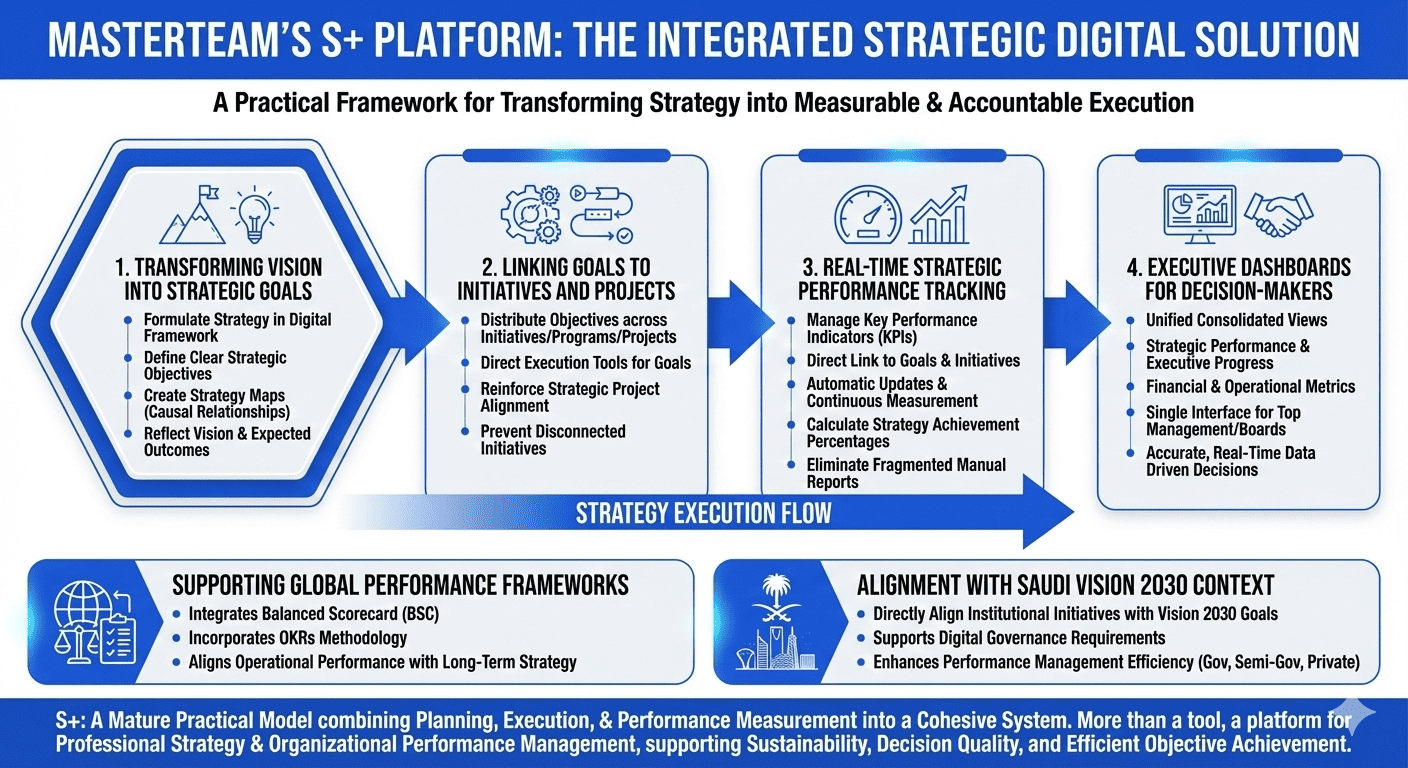
يقوم هذا الإطار العملي على عدة ركائز مترابطة:
- تحويل الرؤية إلى أهداف استراتيجية واضحة: تُمكّن S+ القيادات من صياغة استراتيجية المؤسسة ضمن إطار رقمي منظم بعناية. حيث تحدد الأهداف الاستراتيجية بوضوح وتضعها ضمن الخرائط الاستراتيجية، بما يعكس العلاقة السببية بين الرؤية والنتائج المتوقعة.
- ربط الأهداف بالمبادرات والمشاريع: تُتيح المنصة توزيع الأهداف الاستراتيجية عبر مبادرات وبرامج ومشاريع محددة. ما يجعل كل مشروع أداة تنفيذ مباشرة لهدف استراتيجي معروف، ويعزز مفهوم المواءمة الاستراتيجية للمشاريع، ويمنع نشوء مبادرات منفصلة عن السياق المؤسسي.
- متابعة الأداء الاستراتيجي لحظيًا: تدعم S+ إدارة مؤشرات الأداء الرئيسية (KPIs) من خلال ربطها مباشرة بالأهداف والمبادرات، مع تحديث تلقائي للنتائج. ويتيح هذا القياس المستمر احتساب نسب تحقيق الاستراتيجية باستمرار، ما يلغي الحاجة إلى تقارير يدوية متناثرة.
- دعم أطر عمل الأداء المعتمدة عالميًا: تدمج المنصة أطر عمل استراتيجية راسخة مثل بطاقة الأداء المتوازن (BSC) ومنهجية OKRs، بما يضمن التوافق بين الأداء التشغيلي والتوجه الاستراتيجي طويل الأمد.
- لوحات تنفيذية لصناع القرار: توفر S+ لوحات تنفيذية موحدة تجمع الأداء الاستراتيجي والتقدم التنفيذي والمقاييس المالية والتشغيلية في واجهة واحدة. ما يُمكّن الإدارة العليا ومجالس الإدارة من اتخاذ قرارات مبنية على بيانات دقيقة ولحظية.
- المواءمة مع سياق رؤية السعودية 2030: يتيح هذا الإطار للمؤسسات السعودية مواءمة مبادراتها المؤسسية مباشرة مع أهداف رؤية السعودية 2030، بما يدعم متطلبات الحوكمة الرقمية ويعزز كفاءة إدارة الأداء عبر القطاعات الحكومية وشبه الحكومية والخاصة.
تمثل خدمة S+ نموذجًا عمليًا ناضجًا للحلول الرقمية الاستراتيجية، يجمع بين التخطيط والتنفيذ وقياس الأداء ضمن منظومة متماسكة. فهي ليست مجرد أداة تقنية، بل منصة لإدارة الاستراتيجية والأداء المؤسسي بمنهجية احترافية تدعم الاستدامة، وتُحسّن جودة اتخاذ القرار، وترفع قدرة المؤسسة على تحقيق أهدافها الاستراتيجية بكفاءة.
الخاتمة: الحلول الرقمية الاستراتيجية كضرورة مؤسسية في عام 2025
في عام 2025، أصبحت الحلول الرقمية الاستراتيجية ضرورة مؤسسية لربط المشاريع بالأهداف، وتعزيز الحوكمة، وتحويل الاستراتيجية إلى نتائج قابلة للقياس.
تُظهر التجارب الحديثة أن إدارة المشاريع بمعزل عن الاستراتيجية تؤدي إلى مبادرات متناثرة وأثر مؤسسي ضعيف. في المقابل، تُمكّن الحلول الرقمية الاستراتيجية من دمج التخطيط والتنفيذ ومتابعة الأداء ضمن إطار موحد. ما يُمكّن القيادات من اتخاذ قرارات دقيقة، وتحسين كفاءة استثمار الموارد، وزيادة فرص نجاح المشاريع في تحقيق الأهداف الاستراتيجية، خصوصًا في سياق التحول الرقمي ومتطلبات رؤية السعودية 2030.
تدعم ماستر تيم المؤسسات الحكومية والخاصة بحلول شاملة تتضمن:
- الحل الرقمي لمكتب إدارة المشاريع P+
- الحل الرقمي للاستراتيجية S+
- حل ديوان لإدارة المكتب التنفيذي
تواصلوا مع ماستر تيم للانتقال من الرؤية إلى التنفيذ بثقة ووضوح.
الأسئلة الشائعة
1. ما الدور الذي تلعبه القيادة التنفيذية في نجاح الانتقال إلى الحلول الرقمية الاستراتيجية؟
تلعب القيادة التنفيذية دورًا محوريًا في تحديد الرؤية الاستراتيجية، وتوفير الدعم والموارد، وتهيئة البيئة المؤسسية اللازمة لتبني الحلول الرقمية الاستراتيجية. ويعتمد نجاح هذا التحول مباشرة على التزام القيادة ومتابعتها المستمرة لضمان تحقيق نتائج قابلة للقياس.
2. كيف تؤثر الحلول الرقمية الاستراتيجية على الحوكمة واتخاذ القرار على مستوى مجلس الإدارة؟
توفر الحلول الرقمية الاستراتيجية رؤية موحدة ولحظية للأداء المؤسسي من خلال اللوحات التنفيذية، بما يُمكّن مجلس الإدارة من اتخاذ قرارات دقيقة مبنية على بيانات موثوقة.
3. هل تتطلب الحلول الرقمية الاستراتيجية إعادة هيكلة كاملة للمؤسسة؟
لا، فقد صُممت الحلول الرقمية الاستراتيجية للتكامل بسلاسة مع الهياكل التنظيمية القائمة. وتتطلب المنصة فقط تعديلات محدودة في الأدوار أو العمليات لدعم التكامل وضمان المواءمة الاستراتيجية للمشاريع.
4. ما المعايير التي يجب اعتمادها لاختيار الحل الرقمي الاستراتيجي المناسب للمؤسسة؟
عند اختيار الحل الرقمي الاستراتيجي المناسب، ينبغي للمؤسسات مراعاة قدرته على دعم أطر عمل استراتيجية مثل بطاقة الأداء المتوازن (BSC) وOKRs، وسهولة تكامله مع الأنظمة القائمة، وفعاليته في متابعة مؤشرات الأداء الرئيسية (KPIs).