
🚨 هل تواجه صعوبة في تنسيق الفرق متعددة الوظائف؟
في بيئة الأعمال سريعة الوتيرة اليوم، يمكن أن تؤدي الفجوات في التواصل، وتضارب الأولويات، وعدم وضوح المسؤوليات بين الفرق المتنوعة إلى خسائر كبيرة في الإنتاجية - تصل إلى 30% سنويًا وفقًا لدراسات حديثة. وتؤثر هذه المشكلات على الالتزام بمواعيد التسليم، وجودة المشاريع، وتحقيق الأهداف الاستراتيجية.
ويكمن الحل في أدوات إدارة المشاريع الرقمية المتخصصة، التي توفر منصة مركزية موحدة تجمع المهام من مختلف الأقسام، وترتب أولوياتها بدقة، وتسهّل التعاون بين فرق التطوير والتسويق والمبيعات والإدارة. ومن خلال أتمتة سير العمل، وتتبع المهام، والتنبيهات الفورية، تستطيع الفرق متابعة التقدم باستمرار، وتقليل الاجتماعات غير الضرورية، وضمان تنفيذ المشاريع بكفاءة عالية.
يستعرض هذا المقال مفهوم الفرق متعددة الوظائف، والتحديات التي تواجهها، وكيف تعزز أدوات إدارة المشاريع التنسيق والإنتاجية، إلى جانب أمثلة عملية وتقنيات حديثة لإدارة المهام والتواصل بين الأقسام.
💡 تابع القراءة لتكتشف كيف تجعل فرقك متعددة الوظائف أكثر تنظيمًا وإنتاجية باستخدام أدوات إدارة المشاريع الرقمية.
ما هي الفرق متعددة الوظائف ولماذا تحتاج إلى أدوات إدارة المشاريع؟
تتكون الفرق متعددة الوظائف من أعضاء من تخصصات مختلفة (مثل التطوير التقني، والتسويق، والمبيعات، والهندسة) يتعاونون لتحقيق هدف مشترك.
تكمن قوة هذه الفرق في تنوع المهارات والقدرة على ابتكار حلول شاملة ومبتكرة، إلا أن هذا التنوع يخلق أيضًا تحديات إدارية فريدة. فتعدد التخصصات قد يتسبب في فجوات تواصل، وسوء فهم لمصطلحات كل فريق، وتضارب في الأولويات.
وقد وجدت دراسة حديثة أجرتها Pipeline App أن ما يصل إلى 75% من الفرق متعددة الوظائف تعاني من فشل جزئي بسبب غياب الحوكمة الواضحة، وضعف المساءلة، وتضارب الأهداف (Pipeline App، 2025). وغالبًا ما تؤدي الأساليب التقليدية، مثل الاجتماعات العشوائية أو القوائم الورقية، إلى ازدواجية العمل، والتأخير، والنزاعات الداخلية.
وتعالج أدوات إدارة المشاريع هذه المشكلات من خلال توفير منصة واحدة لتنسيق الفرق المتنوعة، وتوزيع المهام وتتبعها عبر الأقسام. فعلى سبيل المثال، تربط منصتا S+ للاستراتيجية وP+ لإدارة المشاريع من Master Team الأهداف بالمبادرات في الوقت الفعلي، وتفرض سير عمل معتمد للموافقات، وتعزز شفافية الحوكمة، وتسرّع التسليم، وتحسّن كفاءة المتابعة واتخاذ القرار.
بمعنى آخر، تحوّل هذه الأدوات بيئة العمل المجزأة إلى نظام متكامل يعرف فيه كل شخص دوره، وتكون فيه المسؤوليات واضحة، وتُحل المشكلات فورًا دون الاعتماد فقط على التواصل الشفهي أو الاجتماعات المتكررة.
ما هي أدوات إدارة المشاريع ولماذا هي ضرورية؟
أدوات إدارة المشاريع هي أنظمة برمجية مصممة لتخطيط المشاريع وتنظيمها وتنفيذها ومتابعتها من مرحلة الانطلاق وحتى الإغلاق.
وهدفها الأساسي هو تبسيط عمليات إدارة المشاريع وتحسينها. فهي تمكّن الفرق من تقسيم المشاريع إلى مهام واضحة، وإسنادها مع تحديد المواعيد النهائية والموارد، وتتبع الوقت والتكاليف والمشكلات والتغييرات المرتبطة بكل مهمة.
ومن أبرز ميزاتها إدارة المهام، وترابط المهام الفرعية، وتتبع الوقت، وإدارة التكاليف والميزانية، وتخصيص الموارد. كما توفر قنوات تعاون لأعضاء الفريق، تتيح مشاركة المستندات والتعليقات والموافقات الموحدة دون الاعتماد فقط على الاجتماعات وجهًا لوجه. فعلى سبيل المثال، تشير Zoho Projects إلى أن أفضل برامج إدارة المشاريع تسهّل التعاون عن بعد، ومشاركة الأفكار، وإدارة المستندات الرقمية.
باختصار، تُعد أدوات إدارة المشاريع العمود الفقري لأي فريق ناجح، إذ تنظم العمل من البداية إلى النهاية وتضمن استمرارية التواصل الفعال.
فوائد استخدام أدوات إدارة المشاريع للفرق متعددة الوظائف
يعزز استخدام أدوات إدارة المشاريع للفرق متعددة الوظائف التواصل الموحد، ووضوح المهام، ومتابعة التقدم، وتقليل الاجتماعات غير الضرورية، والتوافق مع الأهداف الاستراتيجية، ودعم العمل عن بعد والعمل الهجين.
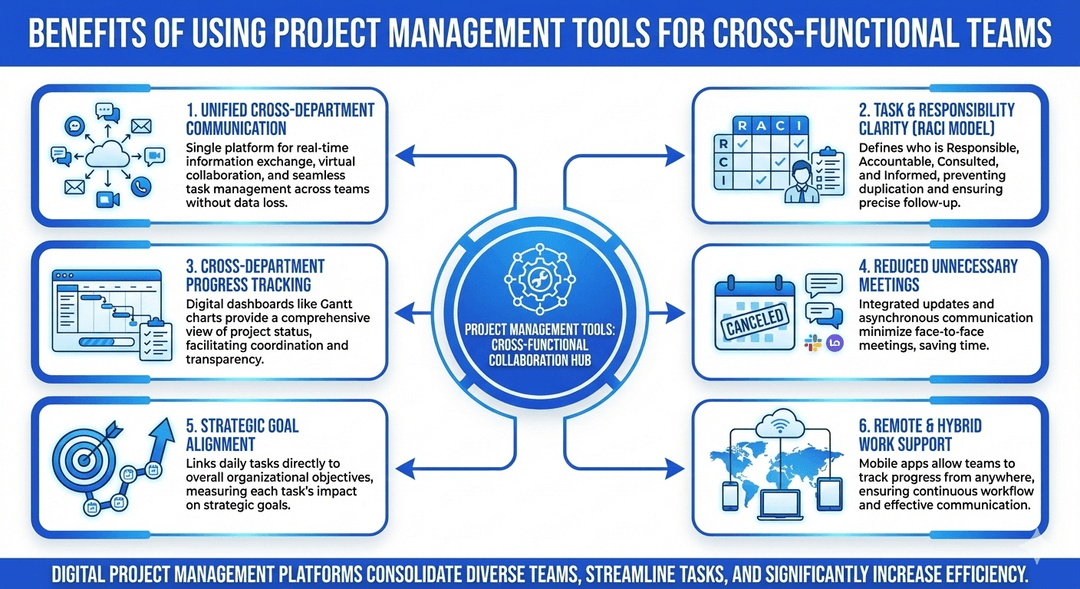
تجمع منصات إدارة المشاريع الرقمية الفرق المتنوعة، وتبسّط المهام، وترفع الكفاءة. ومن أبرز الفوائد:
- تواصل موحد بين الأقسام: توفر منصة واحدة تبادلًا فوريًا للمعلومات دون فقدان البيانات، بما يدعم التعاون الافتراضي وإدارة المهام.
- وضوح المهام والمسؤوليات (نموذج RACI): يحدد من هو المسؤول التنفيذي، ومن يتحمل المساءلة النهائية، ومن يجب استشارته، ومن يجب إبلاغه في كل مهمة، ما يمنع الازدواجية ويضمن متابعة دقيقة.
- متابعة التقدم بين الأقسام: توفر لوحات المعلومات الرقمية مثل مخططات جانت (Gantt) رؤية شاملة لحالة المشروع وتسهّل التنسيق.
- تقليل الاجتماعات غير الضرورية: تقلل التحديثات والتعليقات المدمجة من الاجتماعات وجهًا لوجه، بينما تدعم أدوات التواصل غير المتزامن مثل Slack أو Loom العمل عن بعد.
- التوافق مع الأهداف الاستراتيجية: يساعد ربط المهام اليومية بأهداف المؤسسة على قياس أثر كل مهمة على المشاريع الشاملة.
- دعم العمل عن بعد والعمل الهجين: تتيح تطبيقات الجوال للفرق متابعة التقدم من أي مكان، بما يضمن استمرارية سير العمل والتواصل.
الميزات الأساسية المطلوبة في أدوات إدارة المشاريع للفرق متعددة الوظائف
ينبغي أن توفر الأدوات الفعالة واجهات سهلة الاستخدام، وسير عمل قابل للتخصيص، وتكاملًا سلسًا مع أنظمة المؤسسة، وقوالب جاهزة للاستخدام، وإدارة تفصيلية للمهام، وأدوات تعاون، ولوحات معلومات مرئية.
- واجهة سهلة الاستخدام: تصميم بسيط ومتجاوب يشجع جميع أعضاء الفريق على تبني الأداة.
- سير عمل قابل للتخصيص ولوحات كانبان: سير عمل مرن لكل مشروع أو قسم مع تتبع مرئي للمهام.
- التكامل مع أنظمة المؤسسة: الاتصال بأنظمة CRM وERP والبريد الإلكتروني وأدوات التواصل (Slack، وواجهات برمجة التطبيقات) لضمان تدفق سلس للبيانات.
- قوالب مشاريع مشتركة: توحّد القوالب الجاهزة الممارسات وتسرّع بدء المشاريع.
- إدارة المهام والترابطات: تضمن المهام الفرعية والترابطات تسلسلًا صحيحًا عبر الأقسام.
- ميزات التعاون (التعليقات، الإشارات): تفاعل فوري، وشفافية، ومساءلة.
- لوحات معلومات مرئية (Gantt، Kanban): تتبع الجداول الزمنية للمشاريع وتدفق المهام بصريًا، مع إمكانية التعديل بالسحب والإفلات لتخطيط أفضل.
سيناريوهات واقعية لاستخدام أدوات إدارة المشاريع ضمن الفرق متعددة الوظائف
يمكن تطبيق أدوات إدارة المشاريع المتخصصة في عدة سيناريوهات واقعية، مثل: إطلاق منتج جديد بالتعاون بين فرق التطوير والتسويق، وإدارة حملة تسويقية مشتركة بين فريقي المحتوى والمبيعات، وتنفيذ مشاريع ترقية أنظمة تقنية المعلومات التي تشمل فرق الأمن السيبراني والتطوير والإدارة.
وتضمن هذه الأدوات وضوح المسؤوليات، وربط المهام بالأهداف الاستراتيجية، ومتابعة التقدم بين الأقسام، وتسريع عمليات اتخاذ القرار.
تواجه الفرق متعددة الوظائف تحديات كبيرة عند إدارة مشاريع تشمل تطوير البرمجيات والتسويق والمبيعات والأمن السيبراني، مثل تضارب الأولويات وغياب الشفافية بين الأقسام.
وباستخدام أدوات إدارة مشاريع متقدمة مثل حلول Master Team الرقمية المتكاملة، يمكن توحيد تتبع المهام وربطها بالأهداف الاستراتيجية، مع لوحة معلومات مركزية توفر تقدمًا فوريًا، وتقارير قابلة للتخصيص لتحليل الأداء، ونظام إشعارات لتنبيه الفرق بالتحديثات، ما يعزز التنسيق والكفاءة بين الفرق.
وفيما يلي أبرز السيناريوهات العملية التي توضح كيف تستفيد الفرق متعددة الوظائف من أدوات إدارة المشاريع:
- إطلاق منتج جديد (التطوير + التسويق) - تعزيز التعاون وتحقيق إطلاق مثالي
عندما تتعاون فرق التطوير والتسويق على إطلاق منتج جديد، تظهر الحاجة إلى تنسيق المهام بين الإصدارات التقنية والاستراتيجيات والحملات التسويقية.
وباستخدام منصة Master Team، يمكن ربط أهداف المشروع بمبادرات التنفيذ ومتابعة الأداء في الوقت الفعلي، بما يضمن توافق الإصدارات التقنية مع جدول الإطلاق. وهذا يقلل الفجوات بين الفرق، ويرفع سرعة التنفيذ، ويحسّن الرؤية والمتابعة.
- إدارة حملة تسويقية (فريق المحتوى + المبيعات) - تنظيم المهام وتحقيق نتائج واضحة
في الحملة التسويقية، يعمل فريقا المحتوى والمبيعات بسلاسة عبر منصة إدارة المشاريع. وتُنشأ مهام واضحة لكل مرحلة (إعداد المحتوى، مراجعة المنتج، الإطلاق، متابعة الاستجابة) وتُسند إلى الأدوار المسؤولة.
ويتيح هذا النظام متابعة مستمرة للتقدم، مع تحديثات موحدة على المنصة بدلًا من الرسائل والمكالمات العشوائية. وتُوزَّع المسؤوليات بوضوح باستخدام نموذج RACI، ما يعزز الشفافية ويمنع تضارب الأدوار.
- مشروع ترقية أنظمة تقنية المعلومات (الأمن السيبراني + التطوير + الإدارة) - ضمان دقة التنفيذ وتدفق المهام
في المشاريع التقنية المعقدة مثل ترقية أنظمة تقنية المعلومات، يُعد التنسيق الدقيق بين فرق الأمن السيبراني والتطوير والإدارة أمرًا ضروريًا. وتتيح مخططات جانت (Gantt) وتقارير الأداء في أدوات إدارة المشاريع مزامنة مهام الأمن مع مهام التطوير واختبار الجودة، بما يضمن تسلسلًا سلسًا للمهام ويمنع التعارضات.
ويحوّل تطبيق الحوكمة الذكية ضمن النظام المتكامل العمل بين الأقسام إلى تسلسل منظم من المراحل، ما يعزز السرعة والدقة في اتخاذ القرار.
أفضل الممارسات لإدارة الفرق متعددة الوظائف باستخدام أدوات إدارة المشاريع
تشمل أفضل الممارسات لإدارة الفرق متعددة الوظائف باستخدام أدوات إدارة المشاريع تحديد أهداف واضحة، وتوحيد سير العمل، وتقليل التواصل العشوائي، ومتابعة المهام بانتظام، والاستفادة من الأتمتة لتحسين الكفاءة وتسريع التنفيذ.
ولتحقيق أفضل النتائج مع الفرق متعددة الوظائف، ينبغي اتباع الممارسات التالية:
- تحديد أهداف واضحة ومتفق عليها: ربط المهام اليومية للفريق بالأهداف الاستراتيجية المشتركة لضمان فهم كل عضو لمسؤولياته بوضوح.
- استخدام لوحة معلومات مركزية: متابعة تقدم المشروع ومؤشرات الأداء الرئيسية (KPIs) في الوقت الفعلي عبر جميع الأقسام.
- وضع سير عمل موحد: اعتماد خطوات موحدة للتخطيط والتنفيذ مع إتاحة المرونة لتعديل التفاصيل بحسب دور كل قسم.
- تقليل التواصل العشوائي: استخدام النظام للتواصل اليومي وتوثيق جميع النقاشات والتحديثات مركزيًا.
- تحديث المهام بانتظام: تسجيل حالة المهام بشكل دوري لضمان أن تعكس لوحة المعلومات الوضع الفعلي للعمل.
- الاستفادة من الأتمتة: ربط الإجراءات وتنبيه الفريق تلقائيًا لتسريع العمليات ومنع الأخطاء اليدوية.
الأخطاء الشائعة التي يجب تجنبها عند إدارة الفرق متعددة الوظائف
يمكن أن تعيق الأخطاء الشائعة في إدارة الفرق متعددة الوظائف التقدم وتؤثر سلبًا على التنسيق بين الأقسام. ومن أبرزها الاعتماد فقط على التواصل الشفهي، وعدم تحديد المسؤوليات، واستخدام أدوات متعددة دون داعٍ، وإهمال تدريب الفريق بشكل مناسب على الأدوات الرقمية.
ولتجنب هذه الأخطاء وضمان إدارة فعالة للفرق متعددة الوظائف، ينبغي الانتباه إلى النقاط التالية:
- الاعتماد فقط على التواصل الشفهي: من الأخطاء الجوهرية عدم توثيق المهام والمعلومات على المنصة. فالتواصل المباشر دون تسجيل التفاصيل يؤدي إلى فقدان المعلومات وتذبذب الأولويات.
- غياب المسؤوليات الواضحة: كما ذُكر سابقًا، يمكن أن يؤدي غياب أدوار ومسؤوليات محددة بوضوح إلى ازدواجية العمل وتأخر التسليمات.
- استخدام أدوات متعددة دون داعٍ: يمكن أن يتسبب استخدام برامج كثيرة (واحد للتواصل، وآخر لإدارة المهام، وثالث لتتبع الوقت) في التشتت واحتكاك سير العمل. ووفقًا لبحث حديث أجرته Pipeline App، تؤدي التطبيقات المفرطة إلى ما يُعرف بـ"الاحتكاك الرقمي"، ما يهدر الوقت ويقلل الكفاءة.
- إهمال تدريب الفريق على الأداة: بدون تدريب مناسب، تصبح الأداة مجرد تطبيق آخر غير مستخدم. ويحذر الخبراء من أن منحنى التعلم غالبًا ما يكون أكبر عائق أمام تبني منصة جديدة بفاعلية.
الخاتمة: مستقبل إدارة المشاريع يبدأ اليوم - Master Team جزء من الحل
في ظل التحديات المتزايدة لتنفيذ المشاريع في بيئة الأعمال الطموحة بالمملكة العربية السعودية، أصبح اعتماد أنظمة متخصصة لإدارة المشاريع ضرورة لنقل الفرق متعددة الوظائف من فوضى التنسيق إلى الانضباط الرقمي. ويبدأ مستقبل إدارة المشاريع الآن، مع حلول مثل تلك التي تقدمها Master Team، والتي تجمع بين الذكاء الاصطناعي، والتحليلات الذكية، والأدوات المدعومة بالأتمتة الروبوتية للعمليات (RPA) لتعزيز الكفاءة المؤسسية وتحقيق الأهداف الاستراتيجية.
تمكّن Master Team السعودية المؤسسات من تحقيق أهدافها بدقة وسرعة، بما يتماشى مع رؤية السعودية 2030. ومن خلال منصات مثل حل P+ الرقمي لمكتب إدارة المشاريع و حل S+ الرقمي للاستراتيجية، تدمج المؤسسات الحوكمة الذكية والشفافية الكاملة، بما يضمن فهم كل فريق لدوره وعمله بتناغم نحو النجاح الجماعي. استكشف حل Diwan للمكتب التنفيذي لتكمل رحلة التحول الرقمي لديك اليوم.
الأسئلة الشائعة (FAQ)
1- لماذا يُعد التكامل بين أدوات إدارة المشاريع وأنظمة المؤسسة الأخرى مهمًا؟
يضمن التكامل بين أدوات إدارة المشاريع الرقمية وأنظمة المؤسسة مثل CRM وERP تدفقًا سلسًا للمعلومات ويمنع تكوّن جزر معزولة من البيانات.
2- هل يمكن لأدوات إدارة المشاريع تحسين الإنتاجية عبر الفرق متعددة الوظائف؟
نعم. توفر أدوات إدارة المشاريع المتقدمة لوحات معلومات مركزية، ومخططات جانت (Gantt)، وأطر RACI لتوزيع الأدوار والمسؤوليات بوضوح.
3- ما دور الأتمتة في تحسين أداء الفرق متعددة الوظائف؟
تساعد الأتمتة على تقليل المهام اليدوية والعمليات الروتينية، مثل إرسال الإشعارات التلقائية أو تحديث حالة المهام. وهذا يرفع سرعة التنفيذ، ويقلل الأخطاء البشرية، ويتيح للفرق التركيز على الأنشطة عالية القيمة، مع ضمان بقاء سير العمل متوافقًا مع أهداف المشروع ورؤية المؤسسة.
4- كيف تساعد أدوات إدارة المشاريع في متابعة التقدم عبر مختلف الأقسام؟
توفر هذه الأدوات لوحات معلومات فورية، وجداول زمنية، ومؤشرات أداء رئيسية (KPI)، ما يمنح رؤية شاملة للتقدم في كل قسم (التطوير، التسويق، المبيعات، وغيرها). ويستطيع قادة الفرق رصد التأخيرات مبكرًا، واتخاذ إجراءات تصحيحية، وضمان تحقيق الأهداف الاستراتيجية مع تنسيق الجهود بفاعلية بين الفرق المتعددة.