
تخيل أن مؤسستك استثمرت الملايين في الخطط الاستراتيجية، وأمضت وقتًا طويلاً في صياغة رؤى طموحة، لتكتشف بعد ذلك أن هذه الخطط لم تُنفذ بفاعلية.
والواقع أن العديد من القادة في السعودية يواجهون هذا التحدي بعينه: خطط استراتيجية متميزة تبقى مجرد وثائق ساكنة، بينما تتعثر المبادرات والمشاريع أثناء التنفيذ، فتعجز مستويات الأداء عن تحقيق نتائج حقيقية وذات أثر ملموس.
فما الحل؟ الأمر لا يقتصر على التخطيط فحسب، بل يتعلق بربط الاستراتيجية بالبيانات والمشاريع والأهداف التشغيلية اليومية ضمن نظام ديناميكي يقيس الأداء في الوقت الفعلي، ويوجّه اتخاذ القرار، ويمنع نشوء فجوات بين الأهداف المخطط لها والتنفيذ الفعلي. وهنا يأتي دور الحلول الرقمية الاستراتيجية التي لا تضع الاستراتيجية على رف الإدارة، بل تحوّلها إلى محرك عملي للنجاح المؤسسي.
وفي هذا السياق، ومع تسارع وتيرة التحول الرقمي في السعودية في ظل رؤية 2030، التي تضع التنفيذ والقياس والمساءلة في صميم الأداء الحكومي والمؤسسي، يصبح فهم كيفية الاستفادة من أدوات الحلول الرقمية الاستراتيجية لتحقيق نتائج حقيقية أمرًا بالغ الأهمية.
وفي الأقسام التالية، سنكشف كيف تنتقل الاستراتيجية من وثيقة تخطيط إلى أداة تنفيذ قوية من خلال:
- تحويل الأهداف الاستراتيجية إلى مؤشرات أداء قابلة للقياس
- مواءمة الأهداف عبر المستويين التشغيلي والاستراتيجي
- تعزيز الأداء التشغيلي وتحسين التجربة المؤسسية
- ربط مشاريع التنفيذ بالاستراتيجية الفعلية
- مراقبة الأداء في الوقت الفعلي عبر لوحات المعلومات التنفيذية
- تعزيز الحوكمة الاستراتيجية والمساءلة
إذا كنت قائدًا في مؤسسة عامة أو خاصة في السعودية، وتسعى إلى أن ترى استراتيجيتك تتحول فعليًا إلى نتائج قابلة للقياس، فإن هذه الرحلة عبر الحلول الرقمية الاستراتيجية ستمنحك خارطة طريق واضحة وقابلة للتنفيذ.
كيف تقود الحلول الرقمية الاستراتيجية النجاح المؤسسي
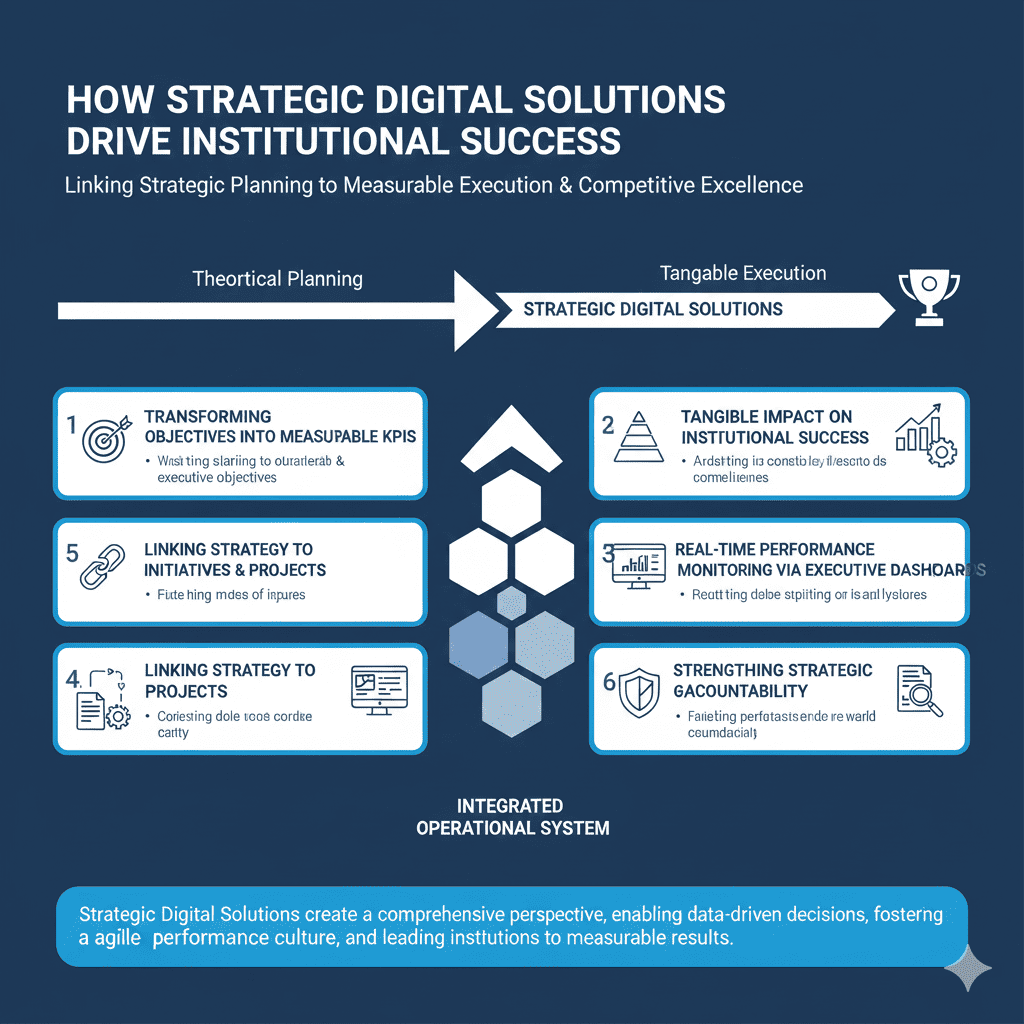
تُعد الحلول الرقمية الاستراتيجية محركًا رئيسيًا للنجاح المؤسسي، إذ تربط بشكل منهجي بين التخطيط الاستراتيجي والتنفيذ الفعلي. فهي تحوّل الأهداف والرؤية إلى أطر قابلة للقياس، وتضمن تحويل الأهداف الاستراتيجية إلى مؤشرات أداء رئيسية قابلة للقياس، ومواءمة الأهداف على المستويات الاستراتيجية والتشغيلية والتنفيذية، وتحقيق أثر ملموس من خلال التنفيذ. كما تربط المبادرات والمشاريع بالاستراتيجية، وتُمكّن من مراقبة الأداء في الوقت الفعلي عبر لوحات المعلومات التنفيذية، وتعزز الحوكمة الاستراتيجية والمساءلة، مما ينتج عنه نظام تشغيلي متكامل يقود الأداء المؤسسي نحو نتائج قابلة للقياس وتميز تنافسي.
في عصر التحول الرقمي، لم يعد امتلاك خطط استراتيجية مكتوبة كافيًا. فقد أظهرت الدراسات أن العديد من الشركات تواجه تحديات في تحقيق أثر حقيقي من مبادراتها الرقمية، بسبب ضعف الروابط بين الاستراتيجية والتنفيذ الفعلي، وغياب قياس واضح للأداء يخدم الأهداف الأكبر للمؤسسة.
توفر الحلول الرقمية الاستراتيجية للمؤسسات القدرة على الانتقال من التخطيط الاستراتيجي النظري إلى تنفيذ ميداني ملموس. ولا تقتصر هذه الحلول على أتمتة العمليات فحسب، بل تخلق منظورًا شاملاً يربط الأهداف رفيعة المستوى، ومؤشرات الأداء الرئيسية، والمشاريع، والمبادرات، والإدارة اليومية.
وتوفر هذه الحلول بيئة موحدة للبيانات الاستراتيجية، تُمكّن القادة من فهم الأداء في الوقت الفعلي واتخاذ قرارات أكثر استنارة وبدقة أعلى، مما يعزز الكفاءة التشغيلية ويحوّل البيانات إلى قيمة حقيقية. ومن خلال هذه الأنظمة، تكتسب المؤسسات مرونة أكبر في التكيف مع التغيرات الداخلية والخارجية، وتتجنب تراكم الدين الاستراتيجي الناتج عن تنفيذ جزئي أو غير منظم للخطط.
كما تسهم هذه الحلول في ترسيخ ثقافة أداء مؤسسي من خلال توحيد الأهداف عبر المستويات المختلفة، والحد من تضارب الأولويات، وتفعيل آليات الرقابة والمساءلة لدعم تنفيذ الاستراتيجية بنجاح وثبات.
ومن أبرز العناصر التي تجعل الحلول الرقمية الاستراتيجية محفزًا للنجاح:
- تحويل الأهداف الاستراتيجية إلى مؤشرات أداء رئيسية قابلة للقياس
- مواءمة الأهداف الاستراتيجية والتشغيلية والتنفيذية
- الأثر الملموس للحلول الرقمية الاستراتيجية على النجاح المؤسسي
- ربط الاستراتيجية بالمبادرات ومشاريع التنفيذ
- تمكين مراقبة الأداء في الوقت الفعلي عبر لوحات المعلومات التنفيذية
- تعزيز الحوكمة الاستراتيجية والمساءلة.
1. تحويل الأهداف الاستراتيجية إلى مؤشرات أداء رئيسية قابلة للقياس
يعني تحويل الأهداف الاستراتيجية إلى مؤشرات أداء رئيسية (KPIs) تحديد مقاييس كمية أو نوعية واضحة تتيح للمؤسسة تقييم تقدمها نحو تحقيق أهدافها الاستراتيجية، بدلاً من الاكتفاء بتدوينها على الورق. وتُعد هذه العملية أساسية لأي نظام فعال لتنفيذ الاستراتيجية الرقمية، إذ تخلق بوصلة أداء يمكن تتبعها ومراجعتها باستمرار لتحديد ما إذا كانت الخطط تحقق الأثر المرجو.
في البداية، تُعرَّف الأهداف الاستراتيجية بأنها غايات طويلة المدى تهدف إلى تحقيق رؤية المؤسسة أو رسالتها. غير أن هذه الأهداف تبقى غير قابلة للقياس والتقييم ما لم تتحول إلى مؤشرات أداء رئيسية قابلة للقياس يمكن رصدها وتحليلها دوريًا.
وتُستخدم هذه المؤشرات كأدوات رصد وتوجيه، تُظهر ما إذا كانت المؤسسة تسير على المسار الصحيح نحو تحقيق أهدافها الكبرى، وتُمكّن القادة من اتخاذ قرارات مبنية على البيانات بدلاً من الاعتماد على التقديرات أو الافتراضات.
فعلى سبيل المثال، إذا كان الهدف الاستراتيجي هو تحسين جودة الخدمة المقدمة للعملاء، يمكن ترجمة هذا الهدف إلى مؤشر أداء مثل معدل رضا العملاء (%) أو زمن الاستجابة لطلبات الدعم (بالساعات).
وبهذه الطريقة، تتحول المفاهيم الاستراتيجية إلى مؤشرات تترجم الأداء الفعلي إلى أرقام قابلة للمقارنة والتحليل، مما يساعد على تحديد الفجوات وإجراء التحسينات اللازمة في الوقت المناسب.
2. مواءمة الأهداف الاستراتيجية والتشغيلية والتكتيكية
تعني مواءمة الأهداف الاستراتيجية مع الأهداف التشغيلية والتكتيكية ضمان انسجام الرؤية رفيعة المستوى للمؤسسة مع الأنشطة اليومية للفرق وخطط العمل التفصيلية. وهذا يضمن ألا تبقى الأهداف الاستراتيجية مجرد كلمات مكتوبة، بل تُترجم إلى أهداف عملية وقابلة للتنفيذ في مختلف الإدارات والوحدات داخل المؤسسة.
وتضمن هذه المواءمة أن تخدم الأنشطة التشغيلية والعمليات اليومية الأهداف الشاملة للمؤسسة، مما يخلق انسجامًا مؤسسيًا بين مستويي التخطيط والتنفيذ، ويمنع تضارب الأولويات بين الفرق والإدارات.
وتُعد مواءمة الأهداف عبر المستويات المختلفة أحد أهم عناصر النجاح في إدارة الأداء الاستراتيجي. فالهدف الاستراتيجي القوي والواضح وحده لا يكفي لتحقيق النتائج ما لم يُترجم إلى أهداف تشغيلية وتكتيكية متسقة معه.
وفي غياب هذه المواءمة، غالبًا ما تجد المؤسسات نفسها أمام مبادرات مجزأة وأهداف منفصلة، تستهلك الموارد دون أن تُفضي فعليًا إلى النتائج الاستراتيجية المرجوة.
ولهذا السبب، تعتمد المؤسسات المتقدمة على أطر عمل مثل الأهداف المتسلسلة (Cascading Goals)، التي تربط الاستراتيجية رفيعة المستوى بأهداف تشغيلية واضحة، ثم تُترجمها إلى مؤشرات أداء رئيسية قابلة للقياس على مستوى الإدارات والفرق. ويُعزز هذا النهج التكامل بين الاستراتيجية والعمليات اليومية، ويضمن أن يتحرك كل مستوى في المؤسسة نحو الأهداف الشاملة ذاتها.
3. الأثر العملي للحلول الرقمية الاستراتيجية على النجاح المؤسسي
يتجلى الأثر العملي لـالحلول الرقمية الاستراتيجية في تعزيز الكفاءة التشغيلية، وزيادة الإنتاجية، وتحسين جودة الأداء، وتسريع اتخاذ القرار، وتحقيق نمو مستدام.
ولا تقتصر هذه الحلول على دعم الرقمنة التقنية، بل تحوّل المؤسسات نحو نماذج أعمال أكثر مرونة وقدرة تنافسية. ويُمكّن هذا التحول المؤسسات من التكيف مع تغيرات السوق السريعة وتحقيق النتائج الاستراتيجية المرجوة بشكل ملموس.
وعندما تُدمج الحلول الرقمية الاستراتيجية بشكل كامل ضمن نظام المؤسسة، تتجاوز الفوائد الرقمنة الجزئية للعمليات، لتمتد إلى تحويل الأداء المؤسسي بأكمله نحو كفاءة عالية وتحسين مستمر.
ومن أبرز الآثار العملية لهذه الحلول تحسين تجربة العمل وتجربة المستفيدين على حد سواء، سواء كانوا عملاء في القطاع الخاص أو مواطنين في القطاع العام. ويتحقق ذلك من خلال تيسير الخدمات الرقمية، وتقليل الأخطاء البشرية بفضل الأتمتة، وتوفير بيانات فورية لدعم اتخاذ القرار.
علاوة على ذلك، تُظهر التحليلات أن الاعتماد على البيانات وتحليلات الأداء كجزء أساسي من الحلول الرقمية الاستراتيجية يُمكّن المؤسسات من استخلاص رؤى استراتيجية قيّمة واتخاذ قرارات أكثر دقة وفاعلية، مما يعزز قدرتها على مواجهة التحديات التشغيلية والحفاظ على تنافسيتها في السوق.
4. ربط الاستراتيجية بالمبادرات ومشاريع التنفيذ
يعني ربط الاستراتيجية بالمبادرات ومشاريع التنفيذ إدماج الأهداف الاستراتيجية كجزء أساسي من تصميم المبادرات والمشاريع وتنفيذها داخل المؤسسة. وهذا يضمن ألا تكون المشاريع مجرد أنشطة معزولة، بل آليات تنفيذية تدفع المؤسسة نحو أهدافها الشاملة.
ويضمن هذا الربط تقييم كل مشروع أو مبادرة بناءً على مساهمته في تنفيذ الاستراتيجية وتحقيق النتائج المرجوة، بدلاً من النظر إليه كمهمة فنية أو تشغيلية منفصلة عن التخطيط الاستراتيجي.
وفي سياق إدارة الأداء المؤسسي وتنفيذ الاستراتيجية، لا يكفي امتلاك خطة استراتيجية قوية، بل يجب ترجمة هذه الخطة إلى مبادرات ومشاريع قابلة للتنفيذ ومتوافقة صراحة مع الأهداف الاستراتيجية.
ويشير مفهوم المبادرات الاستراتيجية إلى خطوات واسعة النطاق وقابلة للتنفيذ تسد الفجوة بين التخطيط الاستراتيجي والتنفيذ الفعلي. وتعمل هذه المبادرات كجسر بين ما تم وضعه في الخطة الاستراتيجية وما يتحقق فعليًا على أرض الواقع.
ويبدأ النهج الحديث لربط المبادرات بالمشاريع بتحديد ما إذا كان المشروع يخدم هدفًا استراتيجيًا محددًا قبل تخصيص الموارد. ثم يُدمج هذا الرابط ضمن أدوات إدارة الأداء. وعندما تمتلك الفرق فهمًا واضحًا للعلاقة بين المشروع والأهداف الاستراتيجية، تتوفر لديها أيضًا معايير واضحة لقياس النجاح واتخاذ قرارات مبنية على البيانات، بدلاً من تنفيذ مشاريع قد تحمل قيمة تشغيلية قصيرة المدى دون أن تخدم الغاية الاستراتيجية الأكبر.
ومن الأمثلة العملية على هذا الربط استخدام منصات التنفيذ الاستراتيجي، مثل منصة S+ من ماستر تيم، التي تربط الأهداف الاستراتيجية مباشرة بعمليات المشاريع. وتتيح هذه الأنظمة للمؤسسات تتبع مساهمة كل مبادرة في تحقيق مؤشرات الأداء الرئيسية المحددة مسبقًا، وتوفر لوحات معلومات فورية تُظهر تقدم المشاريع مقارنة بالأهداف الاستراتيجية.
5. تمكين مراقبة الأداء في الوقت الفعلي عبر لوحات المعلومات التنفيذية
لوحات المعلومات التنفيذية هي أدوات عرض مرئية تقدم مؤشرات الأداء الرئيسية والبيانات التشغيلية والاستراتيجية في الوقت الفعلي، مما يُمكّن القادة من مراقبة الأداء لحظة بلحظة (مراقبة الأداء في الوقت الفعلي)، ومقارنة النتائج الفعلية بالأهداف، واتخاذ قرارات سريعة وفعالة مبنية على بيانات دقيقة ومحدّثة باستمرار.
وتُعد لوحات المعلومات التنفيذية من أهم أدوات الحلول الرقمية الاستراتيجية، إذ توحّد البيانات من مصادر متعددة داخل المؤسسة، مثل أنظمة تخطيط موارد المؤسسات (ERP)، وأنظمة تتبع الأداء، وقواعد البيانات التشغيلية، وتعرضها في واجهة موحدة سهلة الفهم.
وتمكّن هذه اللوحات الإدارة العليا من الحصول على رؤية شاملة ومتكاملة لأداء المؤسسة، مما يُغني عن التقارير التقليدية التي تستغرق وقتًا في إعدادها وتتأخر نسبيًا في إيصال المعلومات.
ومن أبرز نقاط قوة هذه اللوحات تكامل البيانات في الوقت الفعلي، الذي يتيح للقادة رصد تغيرات الأداء لحظة وقوعها، مثل تذبذبات المبيعات، أو مؤشرات جودة الخدمة، أو الانحرافات عن الخطة التشغيلية أو الاستراتيجية.
ومن الفوائد العملية الأخرى أن هذه اللوحات تعزز الشفافية والمساءلة، إذ تصبح البيانات والمقاييس متاحة بسهولة لصناع القرار. وهذا يدفع الفرق نحو الأداء الأمثل، ويجعل من المراقبة والتحسين جزءًا مستمرًا من عملية التنفيذ اليومية، بدلاً من كونه نشاطًا دوريًا فقط.
6. تعزيز الحوكمة الاستراتيجية والمساءلة
يعني ترسيخ الحوكمة الاستراتيجية والمساءلة تطبيق أطر عمل وسياسات واضحة تضبط عمليات اتخاذ القرار، وتحدد المسؤوليات، وتُشرف على تنفيذ الاستراتيجية داخل المؤسسة. ويعزز هذا النهج الشفافية والثقة والمساءلة المؤسسية في تنفيذ الأهداف الاستراتيجية.
وترتبط هذه الهياكل الحوكمية ارتباطًا مباشرًا بتحسين الأداء المؤسسي، وضمان توافق التنفيذ مع الأهداف الأوسع، بعيدًا عن القرارات العشوائية أو التقديرية.
وفي سياق إدارة الأداء الاستراتيجي، لا تُعد الحوكمة مفهومًا نظريًا فحسب، بل عنصرًا مؤسسيًا بالغ الأهمية يضمن التوازن بين الصلاحية والمسؤولية داخل المؤسسة. ويشمل هذا الإطار تحديدًا واضحًا للأدوار، مثل مالكي مؤشرات الأداء، ومُصدري التقارير، والمراجعين، وصناع القرار. وهذا الوضوح يُرسّخ ثقافة مؤسسية قوية قائمة على المساءلة والشفافية.
وفي المؤسسات التي تطبق حوكمة استراتيجية فعالة، يحدث تحسن ملموس في الأداء المؤسسي، إذ تُبنى القرارات على بيانات موثوقة وتقارير دقيقة. وهذا يقلل من المخاطر التشغيلية، ويعزز القدرة على إدارة التحديات بكفاءة. كما تعمل الحوكمة كشبكة حماية ضد القرارات التي تُتخذ دون الالتزام بمعايير محددة مسبقًا أو استنادًا إلى بيانات غير موثوقة، مما يدعم المساءلة عبر مختلف المستويات الإدارية.
علاوة على ذلك، تشير الدراسات إلى أن حوكمة الأداء الاستراتيجي، لا سيما عند دمجها مع أطر قياس الأداء مثل بطاقة الأداء المتوازن (BSC)، تعزز بشكل كبير المراقبة المنهجية لتنفيذ الاستراتيجية. ومن خلال تحديد مؤشرات أداء لحوكمة الشركات، مثل مستويات مشاركة مجلس الإدارة في الاجتماعات أو سرعة اتخاذ القرار، يمكن للمؤسسات وضع مقاييس واضحة لأداء الإدارة والقيادة وتقييمها بشكل دوري.
أفضل شركة للحلول الرقمية الاستراتيجية في السعودية: من التخطيط إلى التنفيذ الفعال
تُعد ماستر تيم إحدى الشركات الرائدة المتخصصة في تقديم الحلول الرقمية الاستراتيجية في السعودية، إذ تحوّل التخطيط الاستراتيجي إلى تنفيذ فعال وقياس مستمر.
ومن خلال منصة S+ الاستراتيجية المتكاملة، تساعد ماستر تيم المؤسسات السعودية على مواءمة الأهداف التشغيلية مع الاستراتيجية، وتتبع مؤشرات الأداء الرئيسية، وتحقيق نتائج ملموسة مرتبطة مباشرة برؤية المؤسسة ورؤية السعودية 2030.
وتقدم ماستر تيم منصة رقمية شاملة تُعرف باسم S+، وهو نظام لإدارة الاستراتيجية مدعوم بالتقنية، يُمكّن المؤسسات من الجمع بين التخطيط والتنفيذ والمراقبة ضمن بيئة عمل ذكية ومرنة.
وقد صُمم هذا الحل لتلبية احتياجات القيادات التنفيذية، وفرق الاستراتيجية، ومديري المشاريع، من خلال ربط الأهداف الاستراتيجية بمؤشرات الأداء التشغيلية، وتوفير لوحات معلومات تنفيذية ذكية تساعدهم على تتبع التقدم في الوقت الفعلي واتخاذ القرارات بناءً على بيانات دقيقة.
وتدعم منصة S+ أطر القياس الاستراتيجي المعترف بها عالميًا، مثل بطاقة الأداء المتوازن (BSC) والأهداف والنتائج الرئيسية (OKRs)، مما يجعلها مناسبة لمختلف القطاعات، بما في ذلك الجهات الحكومية والمؤسسات الكبرى في السعودية.
وتُستخدم المنصة لمراقبة الأداء الاستراتيجي ومقارنته بالأداء الفعلي في الوقت الفعلي. كما تتيح تكاملاً سلسًا مع أنظمة المؤسسة القائمة، مثل أنظمة تخطيط موارد المؤسسات (ERP)، مما يحقق مواءمة شاملة بين الاستراتيجية والعمليات.
ولا تقتصر خدمات ماستر تيم على نظام S+ فقط، بل تمتد لتشمل دعمًا شاملاً للتحول الرقمي داخل المؤسسات من خلال:
- حلول مكتب إدارة المشاريع الرقمي مثل منصة P+ لإدارة المشاريع وبرامج العمل والمبادرات.
- تحليلات بيانات وذكاء أعمال متقدمة لدعم اتخاذ القرار الاستراتيجي.
- دعم حوكمة الشركات والمساءلة من خلال أنظمة تكامل قابلة للتخصيص.
ويجعل هذا المزيج من الأدوات والخدمات من ماستر تيم شريكًا مثاليًا للمؤسسات السعودية التي تسعى للانتقال من التخطيط النظري إلى التنفيذ الفعلي، وتحقيق قيمة استراتيجية واضحة، وتسهيل أهداف النمو والتنافسية في القطاعين الخاص والعام، بما يتماشى مع متطلبات رؤية السعودية 2030.
الخاتمة: تحويل الرؤية إلى إنجازات - الحلول الرقمية الاستراتيجية مفتاح النجاح
في مواجهة التحديات التي تواجهها المؤسسات اليوم، من تسارع تغيرات السوق إلى ضغوط التحول الرقمي، لم تعد الاستراتيجيات تُقاس بمدى جمال صياغتها على الورق، بل بقدرتها على الانتقال من التخطيط إلى التنفيذ الفعلي وتحقيق نتائج قابلة للقياس.
وفي هذا المقال، أوضحنا كيف تعمل الحلول الرقمية الاستراتيجية كجسر حيوي بين التخطيط والأداء، وتحوّل الرؤية إلى واقع ملموس من خلال أدوات وتقنيات تُمكّن من مراقبة الأداء في الوقت الفعلي، ومواءمة الأهداف عبر المستويات المؤسسية، وربط المشاريع والمبادرات بالأهداف الاستراتيجية.
فالمؤسسات التي تتبنى هذه الحلول لا تكتفي بكتابة الاستراتيجيات، بل تحقق أثرًا حقيقيًا، بدءًا من مؤشرات الأداء القابلة للقياس، مرورًا بحوكمة الشركات القوية، ووصولاً إلى لوحات المعلومات التنفيذية الذكية التي تحوّل البيانات إلى وقود لاتخاذ قرارات سريعة، وثقافة مؤسسية راسخة في الشفافية والمساءلة.
وإذا كنت قائدًا في مؤسسة تسعى للتميز وتحقيق نتائج استراتيجية قوية، فإن الدخول إلى عالم التحول الرقمي لم يعد خيارًا، بل ضرورة لتحقيق نجاح مؤسسي حقيقي. وهذا يقودنا إلى الحل الأمثل الذي يجمع بين التخطيط والتنفيذ والتحسين المستمر ضمن إطار واحد.
هل أنت مستعد لتحويل استراتيجيتك من خطة إلى نتائج حقيقية؟
تواصل معنا الآن لتكتشف كيف يمكن لمنصة S+ أن تكون محركك نحو التميز المؤسسي، من التخطيط إلى التنفيذ ونتائج الأداء الملموسة.
الأسئلة الشائعة:
1- ما هي الحلول الرقمية الاستراتيجية؟
الحلول الرقمية الاستراتيجية هي أنظمة من الأدوات والتقنيات الرقمية تُستخدم لربط التخطيط الاستراتيجي بالأداء الفعلي داخل المؤسسة. وتحوّل هذه الحلول الأهداف والرؤية إلى عمليات قابلة للقياس والتنفيذ. وتعتمد على منصات ذكية تجمع البيانات وتحللها وتقدم رؤى دقيقة تساعد على اتخاذ القرار وتحسين الأداء المؤسسي، بما يضمن تنفيذ الاستراتيجية بشكل شامل وفعال.
2- كيف تساعد المنصات الرقمية في تحسين تنفيذ الاستراتيجية؟
تُسهّل المنصات الرقمية تنفيذ الاستراتيجية من خلال توفير بيئة موحدة تربط الأهداف رفيعة المستوى بالمؤشرات التشغيلية (KPIs) وسير العمل اليومي. وتتيح هذه المنصات تتبع الأداء في الوقت الفعلي، وتطبيق مؤشرات الأداء الاستراتيجي بطريقة متكاملة مع تنفيذ المبادرات والمشاريع، مما يعزز تطبيق الاستراتيجية الرقمية ويجعل كل عملية قابلة للقياس وخاضعة للتحسين المستمر.
3- كيف تساعد المنصات الرقمية في تحسين تنفيذ الاستراتيجية في المؤسسات المعقدة؟
في المؤسسات الكبيرة والمعقدة، تساعد المنصات الرقمية المتقدمة على تنسيق العمل بين مختلف الوحدات من خلال ربط الأهداف الاستراتيجية بالأهداف التشغيلية والنتائج الرقمية ضمن نظام واحد. وتُمكّن هذه المنصات الفرق من تتبع مؤشرات الأداء المشتركة، وتحليل الفجوات، وتقديم رؤى تنبؤية تدعم اتخاذ القرار السريع بناءً على بيانات دقيقة، مما يعزز تنفيذ الاستراتيجية بكفاءة وشفافية في البيئات المعقدة.