
في عالم تتسارع فيه وتيرة التحول الرقمي، لم يعد كافيًا أن تمتلك المؤسسات خططًا استراتيجية مدوّنة على الورق؛ فالنجاح الحقيقي يُقاس بقدرتك على تحويل الأهداف إلى نتائج ملموسة وتتبع الأداء في الوقت الفعلي لضمان أن تتماشى كل خطوة مع رؤيتك الشاملة.
في المملكة العربية السعودية، وفي ظل رؤية 2030، تواجه المؤسسات تحديًا جوهريًا: فجوة بين مؤشرات الأداء الرئيسية (KPIs) وخططها الاستراتيجية، حيث تميل الأساليب التقليدية لإدارة الأداء إلى التركيز على ما يسهل قياسه بدلًا من ما يحقق قيمة حقيقية.
تقدّم الحلول الرقمية الاستراتيجية إجابة عملية لهذا التحدي، من خلال دمج الأهداف والرؤية مع مؤشرات الأداء ضمن منصة ذكية واحدة. وهذا يمنح القادة القدرة على تتبع الأداء في الوقت الفعلي وتحويل الاستراتيجية إلى قوة تنفيذ فعّالة.
سيستعرض هذا المقال كيف يمكن لهذه الحلول أن تعزز تتبع مؤشرات الأداء الرئيسية والمواءمة الاستراتيجية، مع تسليط الضوء على أفضل الممارسات في هيكلة المؤشرات وربطها بالمبادرات والمشاريع، بالإضافة إلى كيفية دعم الذكاء الاصطناعي والتحليلات المتقدمة لاتخاذ القرارات الاستراتيجية.
إذا كنت تسعى لضمان تحقيق مؤسستك لأهدافها الاستراتيجية بكفاءة وشفافية، فإن منصة S+ من ماستر تيم توفر جميع الأدوات الرقمية التي تحتاجها، من لوحات المعلومات التنفيذية الذكية إلى ربط كل مؤشر أداء رئيسي بالاستراتيجية، مما يتيح لك قياس الأداء في الوقت الفعلي وتحقيق نتائج ملموسة.
كيف تعزز الحلول الرقمية الاستراتيجية تتبع مؤشرات الأداء الرئيسية والمواءمة الاستراتيجية؟
تعزز الحلول الرقمية الاستراتيجية تتبع مؤشرات الأداء الرئيسية والمواءمة الاستراتيجية من خلال تحويل الأهداف رفيعة المستوى إلى مؤشرات قابلة للقياس، وهيكلة هذه المؤشرات عبر المستويين الاستراتيجي والتشغيلي، وربطها بالمبادرات والمشاريع، وتمكين مراقبة الأداء في الوقت الفعلي، والاستفادة من التحليلات المتقدمة والذكاء الاصطناعي لدعم اتخاذ القرار. كما تعزز هذه الحلول الحوكمة والمساءلة الاستراتيجية، مع التركيز على قياس الأثر الاستراتيجي الحقيقي، لا مجرد تحقيق مؤشرات الأداء.
تبدأ قوة الحلول الرقمية الاستراتيجية بتحويل الأهداف الاستراتيجية إلى مؤشرات أداء رئيسية قابلة للقياس، حيث يرتبط كل مؤشر بهدف استراتيجي محدد. وهذا يقلل من تكاثر المؤشرات غير المرتبطة بالقيمة، ويضمن أن يسهم كل إجراء في الرؤية الأوسع. بعد ذلك، تُهيكل مؤشرات الأداء عبر المستويين الاستراتيجي والتشغيلي، بمعنى ربط مؤشرات الأداء الاستراتيجية بالمؤشرات التشغيلية، وتتابعها عبر الإدارات والمبادرات، مما يمنع أي تعارض بين أهداف المؤسسة.
تتمثل الخطوة التالية في ربط مؤشرات الأداء الرئيسية بالمبادرات والمشاريع الاستراتيجية، مما يتيح تتبع مساهمة كل مشروع في تحقيق الأهداف وقياس الأثر الحقيقي للتنفيذ على الاستراتيجية. ومن خلال لوحات المعلومات التنفيذية الذكية، يمكن للإدارة مراقبة الأداء في الوقت الفعلي، ومقارنة الأداء الفعلي بالأهداف المحددة، واتخاذ إجراءات تصحيحية سريعة عند الحاجة.
وتوفر التحليلات المتقدمة والذكاء الاصطناعي الوكيل طبقة إضافية من القوة، من خلال تقديم تحليلات تنبؤية وأنظمة إنذار مبكر للانحرافات الاستراتيجية. وهذا يدعم اتخاذ القرار الاستراتيجي استنادًا إلى بيانات دقيقة وموثوقة.
وأخيرًا، تعزز هذه الحلول الحوكمة والمساءلة الاستراتيجية من خلال تحديد مالكي كل مؤشر أداء، ودعم مجالس الإدارة والقيادة العليا، وضمان الشفافية، والتركيز على قياس الأثر الاستراتيجي الحقيقي بدلًا من مجرد تحقيق المؤشرات. وهذا يساعد على ربط الأداء بالقيمة المؤسسية، وقياس نضج الأداء، ومواءمته مع الاستراتيجية.
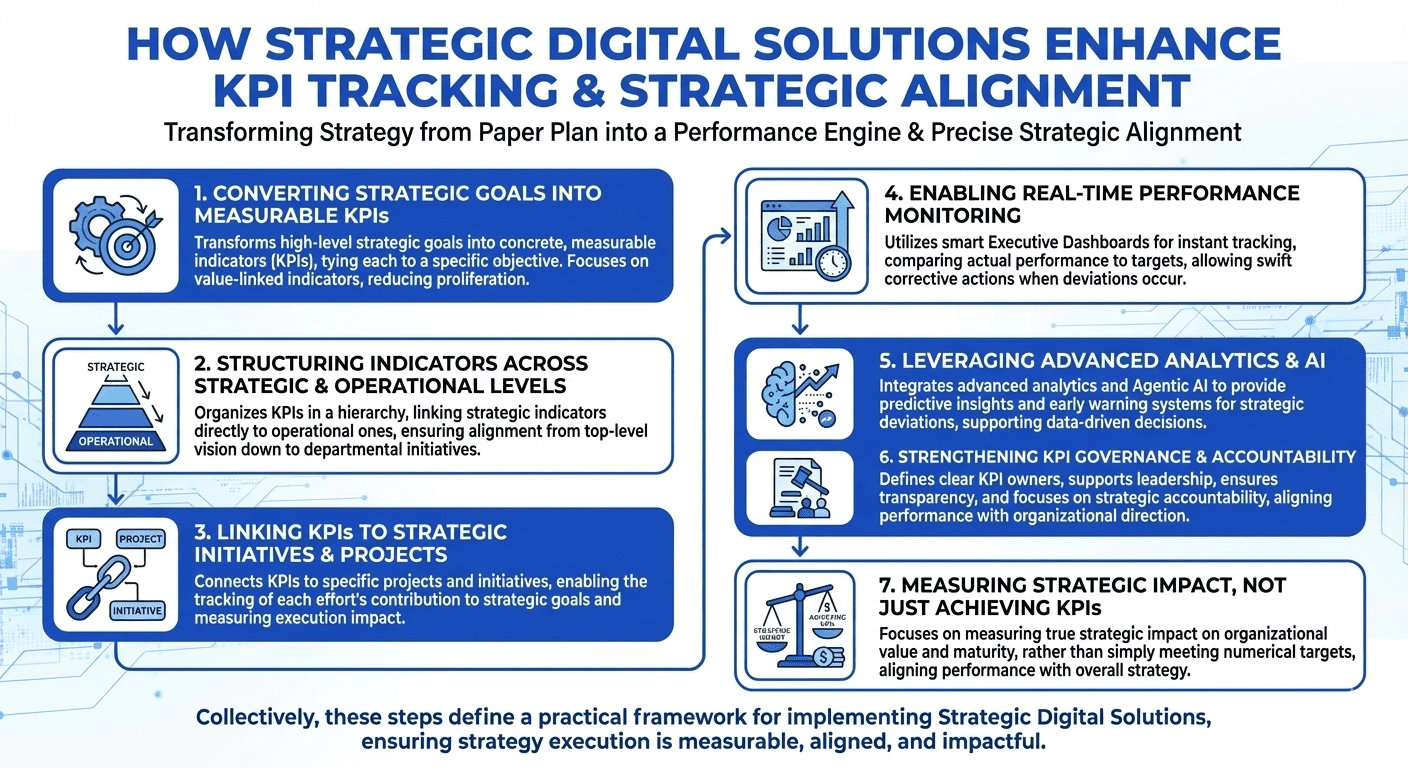
ولتوضيح كيف يمكن لأي مؤسسة تطبيق هذه الحلول الرقمية الاستراتيجية عمليًا، سنستعرض الخطوات التفصيلية التالية التي تحوّل الاستراتيجية من مجرد خطة على الورق إلى محرك أداء حقيقي بمواءمة استراتيجية دقيقة:
- تحويل الأهداف الاستراتيجية إلى مؤشرات أداء رئيسية قابلة للقياس
- هيكلة مؤشرات الأداء عبر المستويين الاستراتيجي والتشغيلي
- ربط مؤشرات الأداء الرئيسية بالمبادرات والمشاريع الاستراتيجية
- تمكين مراقبة الأداء في الوقت الفعلي من خلال لوحات المعلومات التنفيذية
- الاستفادة من التحليلات المتقدمة والذكاء الاصطناعي لتعزيز المواءمة
- تعزيز حوكمة مؤشرات الأداء والمساءلة الاستراتيجية
- قياس الأثر الاستراتيجي، لا مجرد تحقيق مؤشرات الأداء
1. تحويل الأهداف الاستراتيجية إلى مؤشرات أداء رئيسية قابلة للقياس (KPIs)
تبدأ عملية ربط الاستراتيجية بالأداء بتحويل الأهداف والرؤية رفيعة المستوى إلى مؤشرات أداء رئيسية (KPIs) محددة وقابلة للقياس. ويتطلب التنفيذ الفعّال للاستراتيجية إنشاء مؤشرات أداء تكشف التقدم نحو هذه الأهداف الشاملة. وفي الخطوات المعيارية لإدارة الأداء، يُوصى أولًا بتحديد الأهداف الاستراتيجية، ثم تحديد المتغيرات التي ستُظهر تقدمها الفعلي.
وفي أطر عمل مثل بطاقة الأداء المتوازن (BSC)، يُنشأ ما يُعرف بـ"خريطة الاستراتيجية" لربط الأهداف المالية والتشغيلية وأهداف العملاء والتعلم، وفق علاقة سببية. ويُربط كل "هدف رئيسي" استراتيجي بمؤشرات مباشرة، كمية أو نوعية، مما يساعد على منع تكاثر مؤشرات الأداء التي لا تضيف قيمة حقيقية.
وتحويل هذه الأهداف إلى مقاييس واضحة وقابلة للقياس الكمي يتيح تتبعًا دقيقًا للتقدم، ويساعد صناع القرار على اتخاذ خيارات مبنية على البيانات. كما تساعد هذه العملية في تحديد فجوات الأداء مبكرًا، قبل أن تتفاقم. واستخدام مثل هذه المؤشرات الاستراتيجية يضمن مواءمة الأنشطة التشغيلية مع الأهداف رفيعة المستوى، مما يعزز التتبع المستمر للأداء ويحسّن الفعالية العامة لتنفيذ الاستراتيجية.
2. هيكلة مؤشرات الأداء الرئيسية عبر المستويين الاستراتيجي والتشغيلي
تُهيكل مؤشرات الأداء الرئيسية وفق تسلسل هرمي يربط المستويين الاستراتيجي والتشغيلي داخل المؤسسة، بما يقي من تعارض الأهداف بين مختلف الوحدات.
تتطلب مواءمة الأداء بناء هرم قياس يبدأ من القاعدة بالخطط التشغيلية ويرتقي إلى القمة حيث تقع الأهداف الاستراتيجية. وفي هذا النموذج، تُقسَّم الأهداف رفيعة المستوى إلى أطر إدارية وتشغيلية (خطط تشغيلية)، تتفرع بعد ذلك إلى مؤشرات أداء لكل إدارة وفريق.
وبهذه الطريقة، تُعرض على كل قائد داخل المؤسسة مؤشرات أداء خاصة بإدارته أو جهته، تكمّل الأهداف المؤسسية الأوسع عبر مواءمة تنازلية. ويتيح هذا الربط الهرمي لكل إدارة تحقيق أهدافها الفردية دون المساس بالأهداف العامة للمؤسسة، مما يمنع أي تعارض داخلي في المصالح.
وتؤكد التقارير أن هذا التسلسل الهيكلي في مؤشرات الأداء يضمن فهمًا واضحًا لمساهمات كل وحدة، محولًا لوحة الأداء إلى رؤية شاملة ومتماسكة تغذي عمليتي التخطيط والتتبع بفعالية.
3. ربط مؤشرات الأداء الرئيسية بالمبادرات والمشاريع الاستراتيجية
تُربط مؤشرات الأداء الرئيسية بالمبادرات والمشاريع لضمان مساهمة كل مشروع في تحقيق الأهداف الاستراتيجية للمؤسسة.
لا يكفي قياس مؤشرات الأداء بمعزل عن الأنشطة الأساسية. بل يجب ربط كل مؤشر أداء استراتيجي بمبادرات ومشاريع محددة. وبدلًا من أن تحتفظ الإدارات بمبادرات دون سياق واضح، تدمج المنصات الذكية أدوات إدارة المشاريع مع المبادرات الاستراتيجية.
فعلى سبيل المثال، توفر منصة S+ تتبعًا فوريًا لكل مشروع استراتيجي من خلال ربطه بنظام مكتب إدارة المشاريع (PMO). وهذا يمنح رؤية واضحة لكيفية مساهمة كل مبادرة في الأهداف العامة. ويساعد هذا التكامل القادة على معرفة من يُنجز ماذا بالضبط وضمن الإطار الزمني المحدد، مما يتيح لهم تعديل الموارد أو الأولويات فورًا إذا جاءت النتائج دون التوقعات.
وتعزز الحلول الرقمية مثل S+ مفهوم المساءلة الاستراتيجية، حيث يقيس المديرون الأثر الحقيقي للتنفيذ بدلًا من التركيز فقط على إنجاز الأنشطة. ويشير خبراء التخطيط إلى أنه باستخدام التحليلات المتقدمة والذكاء الاصطناعي المتكامل مع إدارة المشاريع، يمكن الحصول على تنبيهات مبكرة حول المشاريع التي قد لا تحقق قيمتها المتوقعة، مما يتيح اتخاذ إجراءات تصحيحية قبل أن تنحرف المسارات الاستراتيجية.
4. تمكين مراقبة الأداء في الوقت الفعلي من خلال لوحات المعلومات التنفيذية
تتيح لوحات المعلومات التنفيذية تتبعًا شاملًا في الوقت الفعلي لمؤشرات الأداء الرئيسية ومقارنتها بالأهداف، مما يدعم تعديل الاتجاه الاستراتيجي في الوقت الفعلي.
تُعد لوحات المعلومات التنفيذية أدوات مركزية تمنح القيادة رؤية فورية لمؤشرات الأداء الرئيسية عبر المؤسسة. وبدلًا من انتظار التقارير الدورية المتأخرة، توفر هذه اللوحات عرضًا موحدًا للبيانات الاستراتيجية، مع ظهور جميع المقاييس بوضوح على الشاشة الرئيسية.
فعلى سبيل المثال، تعرض لوحة الرئيس التنفيذي جميع مؤشرات الأداء الحرجة، مما يساعد صناع القرار على تبني نهج مبني على البيانات. ومن أبرز مزايا هذه اللوحات الذكية ارتباطها التلقائي بمصادر بيانات متعددة مثل أنظمة تخطيط موارد المؤسسات (ERP)، وأنظمة التتبع، وقواعد بيانات المشاريع، مما يعكس حالة الأداء الفعلية في أي لحظة.
وبهذه الطريقة، يمكن مقارنة النتائج الحالية مباشرة بالأهداف المخططة، مما يتيح تحديد الانحرافات بسرعة ومعالجتها قبل أن تتفاقم. وتشير الدراسات إلى أن الحلول الرقمية الحديثة تتيح للفرق مراقبة العمل في الوقت الفعلي، مما يقلل الفجوات بين التخطيط والتنفيذ، ويضمن تحقيق مؤشرات أداء واقعية.
5. الاستفادة من التحليلات المتقدمة والذكاء الاصطناعي لتعزيز المواءمة
تلعب التحليلات التنبؤية والذكاء الاصطناعي المتقدم دورًا محوريًا في تقديم تنبيهات مبكرة وتوصيات ذكية لدعم اتخاذ القرار وضمان مواءمة الأداء مع الأهداف الاستراتيجية.
ومع تزايد حجم البيانات وسرعة التغيير، لم يعد كافيًا الاكتفاء بمراقبة ما حدث بالفعل؛ بل أصبح التنبؤ بما قد يحدث أمرًا أساسيًا. وتتيح التحليلات التنبؤية استشراف الأداء من خلال توقع الاتجاهات المستقبلية وإدارة المخاطر قبل وقوعها. فعلى سبيل المثال، يمكن للأنظمة المتقدمة توقع أثر بعض التغييرات على الأهداف المستقبلية، مما يتيح للقيادة تعديل الاتجاه الاستراتيجي قبل حدوث أي انحراف.
وتعمل هذه الأنظمة كأنظمة إنذار مبكر، ترسل تنبيهات فورية عند اكتشاف أي انحراف في أداء مشروع معين، مما يمكّن الفرق من اتخاذ إجراءات تصحيحية سريعة.
وفي الوقت نفسه، يرتقي الذكاء الاصطناعي، بما في ذلك الذكاء الاصطناعي الوكيل، بمستوى الدعم التنفيذي من خلال تحليل كميات هائلة من البيانات والمستندات لاستخراج رؤى رئيسية وتقديم توصيات قابلة للتنفيذ للقيادة. وتعتمد المؤسسات الرائدة على أطر عمل تشغيلية تستفيد من قدرات الوكلاء الأذكياء على اتخاذ قرارات مستقلة ضمن حدود محددة، مع ترك القرارات الاستراتيجية الحاسمة للقادة البشريين.
وبهذه الطريقة، يتطور الأداء من مجرد مراقبة مؤشرات الأداء الرئيسية إلى أن يصبح نظامًا ذكيًا ذاتي التعلم يدعم تنفيذ الاستراتيجيات بفعالية وكفاءة وبشكل استباقي.
6. تعزيز حوكمة مؤشرات الأداء الرئيسية والمساءلة الاستراتيجية
تتطلب إدارة الأداء الفعّالة هيكل حوكمة قويًا يحدد مالكي كل مؤشر أداء رئيسي ويوضح إجراءات الرقابة والمساءلة، بما يعزز الشفافية والثقة في تحقيق الأهداف الاستراتيجية.
يضمن إطار الحوكمة عدم بقاء أي مؤشر أداء رئيسي دون مالك أو هدف واضح. وتبدأ الحوكمة بتعيين مالكين لكل مؤشر أداء رئيسي (KPI)، على المستويين الاستراتيجي والتشغيلي، وإنشاء هيكل تنظيمي لمراقبة الأداء، مثل مكتب إدارة الأداء (PMO).
وتوصي المصادر المتخصصة بإنشاء وحدة مراقبة مركزية تنظّم عملية إنشاء مؤشرات الأداء وتربطها بالأهداف المؤسسية، مع ضمان تحديثها باستمرار مع تطور الاستراتيجية. ويدعم هذا الهيكل مجالس الإدارة والقيادة التنفيذية من خلال توفير تقارير شاملة ودورية حول تنفيذ الاستراتيجية، مما يعمّق المساءلة المؤسسية. ولكل فريق وشخص مسؤول مقاييس واضحة، وتُراقب النتائج بشفافية أمام صناع القرار وأصحاب المصلحة الداخليين.
كما تسهم الحوكمة في تعزيز الشفافية العامة من خلال توفير لوحات معلومات تنفيذية وتقارير واضحة للجهات الرقابية وأصحاب المصلحة. وفي السياق السعودي، تدعم الحلول الرقمية الاستراتيجية تطبيق معايير حوكمة الأداء بما يتماشى مع رؤية 2030، من خلال تعيين مالك لكل مؤشر أداء وتوضيح مساهمته في تحقيق الأهداف الوطنية.
7. قياس الأثر الاستراتيجي، لا مجرد تحقيق مؤشرات الأداء
لا يقتصر النجاح الاستراتيجي على مجرد "تحقيق الأرقام"، بل يتعلق بالقيمة الحقيقية التي تضيفها مؤشرات الأداء الرئيسية إلى الأهداف الاستراتيجية للمؤسسة، مع التركيز على الأثر والنتائج الإيجابية العميقة.
وكثيرًا ما تخلط المؤسسات بين تحقيق الإنجازات وضمان تحقق الأثر الحقيقي لرؤيتها. فالاحتفاء بالمؤشرات الخضراء على لوحات المعلومات قد يعطي "شعورًا زائفًا بالتقدم"، خاصة إذا لم تعكس الأرقام تغييرًا استراتيجيًا فعليًا. لذلك يجب أن تخدم مؤشرات الأداء الاستراتيجية (KPIs) الأهداف المؤسسية الأكبر، لا أن تحل محلها.
بعبارة أخرى، لا ينبغي أن تكون مؤشرات الأداء الرئيسية غاية في حد ذاتها، بل أداة لتقييم ما إذا كانت المؤسسة تحقق قيمتها فعليًا. ولهذا الغرض، تُربط مؤشرات الأداء بـالقيمة المؤسسية، مثل تحسين رضا العملاء أو تعزيز الاستدامة، إلى جانب تطوير مؤشرات أداء نوعية لقياس الجوانب غير الكمية. كما تُستخدم منهجيات تقييم نضج الأداء لتقييم مدى تكامل وشفافية عملية قياس الأداء والتعلم منها.
وباختصار، يجب أن تؤدي مؤشرات الأداء الرئيسية إلى أثر استراتيجي؛ فإذا أظهرت الأرقام أي قصور، تكون الخطوة التالية هي البحث عن السبب الجذري واتخاذ إجراءات تصحيحية، لا مجرد الاحتفاء بالرقم المحقق.
كيف تعزز الحلول الرقمية الاستراتيجية في المملكة العربية السعودية، مثل منصة S+ من ماستر تيم، تتبع مؤشرات الأداء الرئيسية والمواءمة الاستراتيجية؟
تمكّن منصة S+ من ماستر تيم المؤسسات السعودية من تحويل استراتيجياتها إلى مؤشرات أداء رئيسية (KPIs) قابلة للقياس، ومراقبة التنفيذ في الوقت الفعلي، وضمان المواءمة بين الأهداف الاستراتيجية والتشغيلية، مما يضمن تحقيق أثر استراتيجي ملموس يتماشى مع رؤية السعودية 2030.
توفر S+ بيئة متكاملة تجمع بين تخطيط الاستراتيجية، وتتبع الأداء، والتنفيذ، بما يتيح ربط كل هدف استراتيجي بمؤشرات أداء رئيسية محددة ومبادرات تنفيذية. وتدعم المنصة أطر عمل عالمية لقياس الأداء مثل بطاقة الأداء المتوازن (BSC) ومنهجيات الأهداف والنتائج الرئيسية (OKRs)، مع تكامل سلس مع التحليلات الذكية وأدوات إعداد التقارير.
وبفضل لوحات المعلومات التنفيذية، يمكن للقادة تتبع الأداء في الوقت الفعلي، ومقارنة النتائج بالأهداف، وتوقع المخاطر أو الانحرافات المحتملة قبل حدوثها. ويعزز هذا التكامل بين الاستراتيجية والعمليات الشفافية، ويقوّي المساءلة، ويحوّل البيانات إلى أدوات قوية لاتخاذ القرار عبر المؤسسة.
مزايا منصة S+ من ماستر تيم:
- تحويل الأهداف رفيعة المستوى إلى مؤشرات أداء رئيسية قابلة للقياس.
- مواءمة الأهداف التشغيلية مع الاستراتيجية لضمان مواءمة استراتيجية-تشغيلية شاملة.
- دعم أطر عمل عالمية لقياس الأداء مثل BSC وOKRs.
- توفير لوحات معلومات تنفيذية لمراقبة الأداء في الوقت الفعلي.
- توقع الانحرافات الاستراتيجية باستخدام التحليلات التنبؤية.
- إنشاء تقارير وتحليلات دقيقة لدعم اتخاذ القرار الاستراتيجي.
- تكامل كامل مع المبادرات الاستراتيجية وخطط التنفيذ المؤسسية.
- تعزيز الشفافية والمساءلة عبر جميع الإدارات والمبادرات.
الخاتمة: تحويل الاستراتيجية إلى أداء فعّال ومواءمة حقيقية
في هذا المقال، استعرضنا كيف تعزز الحلول الرقمية الاستراتيجية تتبع مؤشرات الأداء الرئيسية (KPIs) وتحقق المواءمة الاستراتيجية من خلال عملية متكاملة. بدءًا من تحويل الأهداف رفيعة المستوى إلى مؤشرات أداء قابلة للقياس، مرورًا بهيكلة هذه المؤشرات وربطها بالمبادرات والمشاريع، وصولًا إلى مراقبة الأداء في الوقت الفعلي باستخدام لوحات المعلومات التنفيذية، والاستفادة من التحليلات المتقدمة والذكاء الاصطناعي، مع إرساء الحوكمة والمساءلة، وقياس الأثر الاستراتيجي الحقيقي.
وتحوّل هذه المنهجية إدارة الأداء من مهمة روتينية إلى محرك استراتيجي يدعم اتخاذ القرار ويضمن تحقيق القيمة الحقيقية للمؤسسة، بما يتماشى مع أهداف رؤية السعودية 2030، ويعزز التنافسية المؤسسية والشفافية.
إذا كنت تسعى لتمكين مؤسستك من تحقيق الأداء الاستراتيجي بكفاءة وشفافية، فإن منصة S+ من ماستر تيم توفر جميع الأدوات الرقمية اللازمة: من لوحات المعلومات التنفيذية إلى ربط كل مؤشر أداء باستراتيجيتك، ومراقبة الأداء في الوقت الفعلي، والتحليلات التنبؤية لدعم اتخاذ قرارات استراتيجية دقيقة وفعّالة.
ابدأ اليوم في تحويل استراتيجيتك إلى أداء ملموس مع S+ من ماستر تيم.
الأسئلة الشائعة:
1- ما الفرق بين إدارة الأداء وتتبع مؤشرات الأداء الرئيسية؟
إدارة الأداء إطار شامل يربط الاستراتيجية بالأهداف والمبادرات، بينما يركز تتبع مؤشرات الأداء الرئيسية على قياس النتائج الفعلية لكل هدف. والربط بين الاثنين يضمن وضوح الأداء وكفاءة تنفيذ الاستراتيجية.
2- هل يمكن استخدام S+ لدعم اتخاذ القرار في المؤسسات الحكومية والخاصة على حد سواء؟
نعم، تدعم منصة S+ كلا القطاعين من خلال دمج البيانات التشغيلية والاستراتيجية في مكان واحد، وتوفير لوحات معلومات في الوقت الفعلي وتحليلات متقدمة، مما يعزز اتخاذ القرار استنادًا إلى معلومات دقيقة وشفافة.
3- كيف تسهم الحلول الرقمية الاستراتيجية في تحسين شفافية الحوكمة المؤسسية؟
توفر الحلول الرقمية الاستراتيجية لوحة مراقبة موحدة تحدد مالكي مؤشرات الأداء ومسؤولياتهم، وتنشئ تقارير دقيقة ودورية، مما يعزز الشفافية والمساءلة والثقة في تنفيذ الأهداف الاستراتيجية.