
تخيل أن مشروعك يواجه تأخيرًا حرجًا... ولا يكتشف فريقك المشكلة إلا بعد فوات الأوان!
يتكرر هذا السيناريو يوميًا في مئات المؤسسات، ليس بسبب نقص الخبرة، بل بسبب غياب الرؤية اللحظية لما يحدث داخل المشاريع. فالإدارة التقليدية التي تعتمد على تقارير متأخرة تُبطئ اتخاذ القرار، وتسبب ارتباكًا في الأولويات، وتؤدي إلى تداخل المهام، وتسمح بتراكم الأخطاء دون ملاحظتها.
وهنا يأتي دور المراقبة اللحظية. فهي تتيح للمديرين متابعة كل تفصيل لحظة حدوثه، بدءًا من تقدّم المهام وأداء الفريق، وصولًا إلى مؤشرات المخاطر وتوزيع الموارد.
تستطيع الأنظمة الرقمية الحديثة، ومنها أدوات إدارة المشاريع من ماستر تيم، جمع البيانات من مختلف الإدارات، ومعالجتها فوريًا، وتحويلها إلى لوحات معلومات تفاعلية للمشاريع، لتمنح المؤسسات رؤية دقيقة وشاملة خلال ثوانٍ معدودة.
في هذا المقال، سنستكشف بعمق كيفية عمل هذه الأنظمة، ولماذا أصبحت المراقبة اللحظية ضرورة استراتيجية، وما الذي يجعلها من أقوى عوامل نجاح المشاريع الحديثة.
اكتشف كيف يمكن لماستر تيم أن يرتقي بإدارة مشاريعك من خلال أحدث أدوات المراقبة اللحظية.
تعرّف على حل P+ الرقمي لمكتب إدارة المشاريع لإشراف مبسّط على المشاريع، وحل S+ الرقمي للاستراتيجية للمواءمة الاستراتيجية، وحل ديوان للمكتب التنفيذي لدعم القرار التنفيذي.
ما هي المراقبة اللحظية للمشاريع؟
تشير المراقبة اللحظية للمشاريع إلى القدرة على متابعة سير العمل في المشروع لحظة بلحظة، عبر تدفق مستمر من البيانات التي تُجمع وتُحلَّل فوريًا دون انتظار التقارير الدورية.
يعتمد هذا النهج على أنظمة إدارة المشاريع الرقمية التي تسحب المعلومات من مختلف الفرق والإدارات، وتحوّلها فورًا إلى مؤشرات واضحة للتقدّم والمخاطر والموارد والمواعيد النهائية.
وعلى عكس الإدارة التقليدية التي تعتمد على تحديثات أسبوعية أو شهرية، توفر المراقبة اللحظية رؤية تشغيلية فورية للمشروع، مما يتيح للفرق اكتشاف الانحرافات قبل تفاقمها، وضمان بقاء المشروع على المسار الصحيح.
كما توفر هذه الأنظمة لوحات معلومات تفاعلية للمشاريع تعرض مؤشرات الأداء الرئيسية (KPIs) والمهام والبيانات التشغيلية بدقة عالية، لتمنح المديرين أساسًا متينًا لاتخاذ قرارات أسرع وأكثر دقة.
باختصار، توفر المراقبة اللحظية رؤية شاملة على مدار الساعة طوال أيام الأسبوع، مما يمكّن المؤسسات من إدارة المشاريع بكفاءة أكبر والاستجابة بشكل استباقي بدلًا من رد الفعل.
لماذا المراقبة اللحظية للمشاريع ضرورة لا خيار
أصبحت المراقبة اللحظية للمشاريع ضرورة حتمية، إذ لم تعد التقارير الدورية كافية لمواكبة التغيرات المتسارعة. ففي بيئات الأعمال سريعة الوتيرة، وخصوصًا في السوقين السعودي والخليجي، لم يعد التأخر في اكتشاف الانحرافات أو المخاطر أمرًا مقبولًا.
يزيد ضعف التنسيق بين الفرق وغياب المعلومات الموحدة من احتمالية تضارب القرارات وفشل المشروع. إضافة إلى ذلك، فإن الحجم الهائل من البيانات التي تولّدها المشاريع الرقمية الحديثة لا يمكن إدارته يدويًا.
علاوة على ذلك، أصبحت توقعات العملاء وأصحاب المصلحة تفرض رؤية فورية لسير المشروع، في حين تُظهر الدراسات أن غياب الرؤية والتنسيق يؤدي إلى خسائر سنوية كبيرة. وهذا ما يجعل المراقبة اللحظية حجر الزاوية في توفير بيانات دقيقة عبر لوحات المعلومات اللحظية، بما يضمن اتخاذ قرارات أسرع وأكثر موثوقية.
أبرز الأسباب التي تجعل المراقبة اللحظية أمرًا بالغ الأهمية:
- عدم كفاية التقارير الدورية: تخلق التحديثات الأسبوعية أو الشهرية فجوات بين الواقع وتصور الإدارة.
- بيئات أعمال متسارعة: لا تحتمل المشاريع في الأسواق السعودية والخليجية أي تأخير في اكتشاف الانحرافات أو المخاطر.
- ضعف التنسيق بين الفرق: يؤدي غياب المعلومات الموحدة إلى قرارات متضاربة وارتفاع مخاطر الفشل.
- أحجام هائلة من البيانات: تولّد المشاريع الرقمية بيانات يصعب إدارتها يدويًا أو بالطرق التقليدية.
- ارتفاع توقعات أصحاب المصلحة: يتوقع الجميع تحديثات فورية عن التقدم بدلًا من التقارير المتأخرة.
- خسائر ناتجة عن ضعف الرؤية: تُظهر الدراسات العالمية، خاصة في قطاع الإنشاءات، أن ضعف التنسيق يؤدي إلى خسائر سنوية كبيرة.
- أساس متين لاتخاذ القرار الدقيق: توفر المراقبة اللحظية لوحة معلومات تعكس الواقع لحظة بلحظة، مما يحسّن جودة القرارات ويقلل الأخطاء.
كيف تعمل أنظمة المراقبة الرقمية للمشاريع
تجمع أنظمة المراقبة الرقمية للمشاريع بيانات لحظية من الفرق ومختلف الأنظمة المؤسسية، وتعالجها تلقائيًا باستخدام الذكاء الاصطناعي في إدارة المشاريع، وتعرض النتائج على لوحات معلومات تفاعلية للمشاريع مع تحديثات تلقائية وتنبيهات ذكية.
تعمل هذه الأنظمة من خلال عدة آليات رئيسية:
- التكامل مع الأنظمة المؤسسية: الربط مع منصات تخطيط موارد المؤسسات (ERP) وإدارة علاقات العملاء (CRM) لجمع بيانات حية عن المهام والموارد.
- تحليل البيانات بالذكاء الاصطناعي (AI Insights): استخلاص الأنماط والرؤى القابلة للتنفيذ لدعم اتخاذ القرارات المدروسة.
- لوحات معلومات تفاعلية للمشاريع: عرض كل المعلومات في واجهة واحدة سهلة القراءة مع رسوم بيانية وجداول ديناميكية.
- تحديثات المزامنة التلقائية: تحديث البيانات باستمرار كلما تم تحديث المهام أو إحراز تقدم.
- تنبيهات ذكية: إشعارات فورية عند تجاوز مؤشرات الأداء للحدود المحددة.
- رؤية موحدة وشاملة: تمكين الفرق من التعاون بفعالية وتحقيق أقصى درجات التنسيق والكفاءة.
فوائد المراقبة اللحظية للمشاريع
توفر أنظمة المراقبة اللحظية للمشاريع مزايا استراتيجية تمكّن المؤسسات من اتخاذ قرارات أسرع وأكثر دقة. فهي تتيح الاكتشاف الفوري للانحرافات، وتعزز التنسيق بين الفرق، وتحسّن جودة التسليم، وتزيد الشفافية، وتتنبأ بالمخاطر، وتُحسّن التخطيط المستقبلي.
تشمل أبرز الفوائد ما يلي:
- اتخاذ قرارات أسرع: يتم تحليل مجموعات البيانات الكبيرة بسرعة باستخدام الذكاء الاصطناعي في إدارة المشاريع، مما يوفر للمديرين رؤى فورية لاتخاذ قرارات دقيقة دون انتظار أيام.
- الاكتشاف الفوري للانحرافات والأخطاء: تكشف التنبيهات الذكية عن المشكلات المحتملة عند أول إشارة لها، مما يتيح اتخاذ إجراءات تصحيحية قبل تفاقم المشكلات.
- تعزيز التنسيق بين الفرق: تمنع مصادر البيانات الموحدة والمرئية ازدواجية الجهود وتحسّن كفاءة الفريق بشكل عام.
- تحسين جودة تسليم المشاريع: تضمن مراقبة مؤشرات الجودة والامتثال تحقيق المعايير المطلوبة، مع تطبيق خطط تصحيحية فورية عند الحاجة.
- زيادة الشفافية مع أصحاب المصلحة: تبني مشاركة المعلومات لحظة بلحظة الثقة وتعزز المساءلة بين جميع الأطراف.
- تقليل المخاطر والتنبؤ المبكر: تتيح التحليلات التنبؤية للفرق توقع المشكلات المحتملة وتطبيق إجراءات وقائية.
- تخطيط مستقبلي أفضل: يتيح تحليل البيانات التاريخية واللحظية توزيعًا أدق للموارد وجدولة أفضل للمهام القادمة.
أبرز خصائص أدوات المراقبة اللحظية للمشاريع
لكي تكون أنظمة المراقبة اللحظية للمشاريع فعّالة، يجب أن تتمتع بخصائص تقنية متقدمة تضمن تتبعًا دقيقًا للأداء، وتعزز تعاون الفرق، وتوفر تحليلات تنبؤية، وتدير المخاطر بشكل استباقي، وتتكامل بالكامل مع الأنظمة المؤسسية.
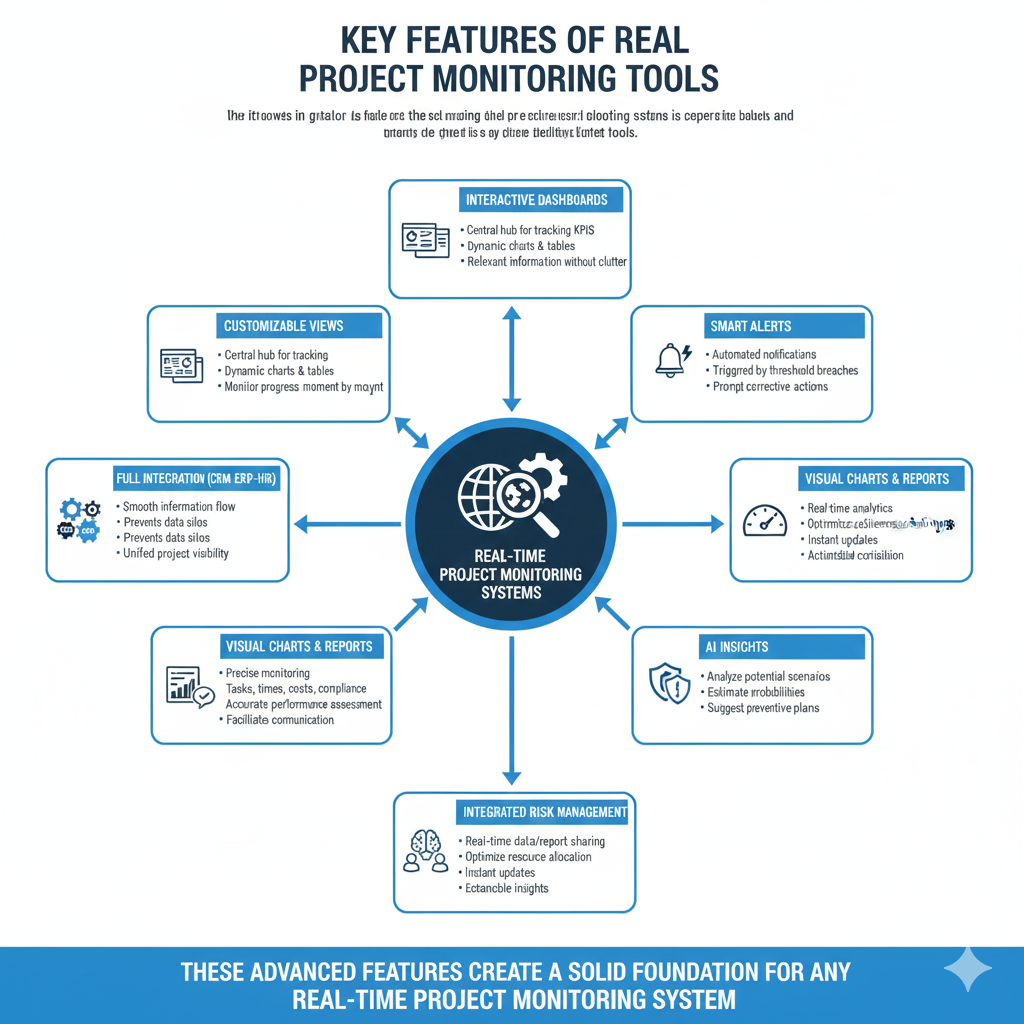
تشمل الخصائص الأساسية ما يلي:
- لوحات معلومات تفاعلية: تعمل كمركز رئيسي لتتبع مؤشرات الأداء الرئيسية (KPIs)، حيث تجمع البيانات من مصادر متعددة وتحوّلها إلى رسوم بيانية وجداول ديناميكية. ويمكن للمديرين وصناع القرار متابعة التقدم لحظة بلحظة بدقة.
- عروض قابلة للتخصيص: توفر المنصات عروضًا مخصصة لكل دور أو فريق، بما يضمن حصول كل صاحب مصلحة على المعلومات ذات الصلة دون ازدواجية أو ازدحام في البيانات.
- تنبيهات ذكية: يتم إطلاق إشعارات تلقائية فورية عندما يتجاوز أي مؤشر أداء الحدود المحددة مسبقًا، مما يتيح اتخاذ إجراءات تصحيحية سريعة.
- التكامل الكامل مع الأنظمة المؤسسية (CRM، ERP، أنظمة الموارد البشرية): يضمن تدفقًا سلسًا للمعلومات بين الإدارات، ويمنع تكوّن جزر البيانات المعزولة، ويعزز رؤية موحدة للمشروع.
- تتبع مؤشرات الأداء الرئيسية: يوفر مراقبة دقيقة لتنفيذ المهام وأوقات الإنجاز والتكاليف والامتثال للمعايير، مما يتيح للإدارة تقييم الأداء بدقة.
- رسوم بيانية وتقارير مرئية: توفر تمثيلات مرئية لتقدم المشروع، وتلخص الإنجازات والتحديات مع تسهيل التواصل بين الفرق.
- أدوات التعاون: تُبقي مشاركة البيانات والتقارير اللحظية جميع أعضاء الفريق على اطلاع فوري، مما يعزز التنسيق والعمل الجماعي.
- رؤى الذكاء الاصطناعي: تتنبأ التحليلات المتقدمة بالجداول الزمنية، وتُحسّن توزيع الموارد، وتوفر رؤى قابلة للتنفيذ لاتخاذ قرارات استباقية.
- وحدات متكاملة لإدارة المخاطر: تحلل سيناريوهات المخاطر المحتملة، وتقدّر الاحتمالات، وتقترح خططًا وقائية للحد من التأثيرات السلبية على المشروع.
وتشكّل هذه الخصائص المتقدمة مجتمعة أساسًا متينًا لأي نظام مراقبة لحظية للمشاريع، مما يمكّن المؤسسات من إدارة المشاريع الرقمية بكفاءة، وتقليل الأخطاء، وتحقيق الأهداف الاستراتيجية بدقة.
سيناريوهات واقعية توضح قوة المراقبة اللحظية للمشاريع
تثبت المراقبة اللحظية للمشاريع فعاليتها من خلال اكتشاف التأخيرات قبل حدوثها، وإدارة توزيع الموارد بين الفرق، وتتبع المشاريع متعددة المواقع، وتحليل أداء الفريق فوريًا من خلال تتبع مؤشرات الأداء الرئيسية.
في أحد المشاريع الرقمية، مكّنت لوحات المعلومات التفاعلية للمشاريع المدير من تحديد التأخيرات في المهام الحرجة مقارنة بالجدول الزمني المخطط له. مما سمح بإعادة توزيع الموارد فورًا، وتفادي أي تأخير في الإطلاق.
وفي سيناريو آخر، كشفت البيانات اللحظية عن تفاوت في توزيع المهام بين الفرق. وتم معالجة هذه الفروقات قبل أن تؤثر على سير العمل أو كفاءة الفريق. أما بالنسبة للمشاريع الكبيرة متعددة المواقع، فقد وحّد النظام البيانات وراقب جميع المواقع على منصة واحدة، مما عزز التنسيق وحسّن استخدام الموارد عبر المواقع.
إضافة إلى ذلك، قيّم التحليل الحي لـمؤشرات الأداء الرئيسية أداء الفريق باستمرار، مما مكّن الإدارة من اتخاذ قرارات مناسبة التوقيت بشأن التدريب والحوافز.
توضح هذه الأمثلة كيف تحسّن المراقبة اللحظية للمشاريع اتخاذ القرار، وتعزز التنسيق، وتضمن سير المشاريع بسلاسة وفعالية.
1. اكتشاف تأخيرات الجدول الزمني قبل حدوثها
تستطيع أنظمة المراقبة اللحظية للمشاريع تحديد التأخيرات المحتملة في الجدول الزمني قبل وقوعها، مما يمكّن المديرين من التدخل فورًا، وتصحيح المسار، وضمان الالتزام بالمواعيد النهائية.
في أحد المشاريع الواقعية، استخدم فريق تطوير لوحة معلومات حية للمشروع لتتبع معدلات إنجاز الميزات لحظيًا. ولاحظ المدير أن بعض الميزات متأخرة عن الجدول الزمني المخطط له، مما أطلق إنذارًا مبكرًا.
وبفضل هذه الرؤية الفورية، أُعيد توزيع المهام وتم تخصيص موارد إضافية للفرق المتأخرة، مما منع أي تأخير في الإطلاق. يوضح هذا المثال كيف تتيح التحليلات اللحظية للمديرين توقع مشكلات التوقيت والتدخل قبل تراكمها، مما يحافظ على سير المشروع ويحسّن كفاءة التنفيذ.
2. إدارة التوزيع غير المتوازن للموارد بين الفرق
تستطيع أنظمة المراقبة اللحظية اكتشاف عدم التوازن في توزيع الموارد بين الفرق، مما يتيح إعادة توزيع المهام وتحسين أداء المشروع بشكل عام.
في أحد السيناريوهات، كشفت لوحات المعلومات أن عددًا كبيرًا من المهام كان مركزًا على فريق واحد، بينما كان لدى فريق آخر عبء عمل ضئيل أو معدوم. وأشارت مؤشرات التحذير في النظام إلى إرهاق بعض الفرق، مما دفع المدير إلى إعادة توزيع المهام فورًا بين الفرق المتاحة.
تعتمد هذه الأنظمة على التتبع اللحظي للقدرات الفردية ومعدلات الإنجاز، وتصدر تنبيهات ذكية عند اكتشاف تباينات غير معتادة في استخدام الموارد. ويضمن الاكتشاف المبكر لعدم التوازن سير عمل سلسًا وكفاءة عالية، ويقلل من مخاطر الاختناقات التي قد تؤثر على نتائج المشروع.
3. مراقبة المشاريع الكبيرة متعددة المواقع
تتيح أدوات المراقبة اللحظية للمؤسسات تتبع المشاريع الكبيرة الموزعة على مواقع متعددة، من خلال توحيد البيانات لتوفير رؤية شاملة وتحكم كامل في كل موقع.
بالنسبة للمشاريع الموزعة جغرافيًا، تصبح إدارة العمليات وتتبع التقدم أمرًا معقدًا. لذا تجمع لوحات المعلومات الموحدة البيانات الحية من جميع المواقع في منصة مركزية واحدة، لتمنح المديرين رؤية فورية لحالة المهام، وأعداد القوى العاملة، وتقدم توريد المواد، وأداء الفرق دون انتظار تقارير منفصلة.
كما تتيح هذه الأنظمة مقارنة مؤشرات الأداء الرئيسية الموحدة عبر المواقع، وتساعد في تحديد الفروقات في الإنتاجية أو جودة العمل. ويتيح التتبع اللحظي للموارد إعادة نشر المعدات أو الأفراد بسرعة عند الحاجة، بما يضمن استمرارية العمليات دون تعطل في الجدول الزمني. ويوحّد هذا النهج الإشراف عبر جميع المواقع، مما يجعل جميع البيانات مرئية ومحدّثة، ويحسّن التنسيق، ويقلل الأخطاء التشغيلية.
4. تحليل أداء الفريق لحظيًا عبر مؤشرات الأداء الرئيسية
تتيح المراقبة اللحظية تقييمًا فوريًا لأداء الفريق من خلال مؤشرات الأداء الرئيسية، مما يمكّن المديرين من اتخاذ إجراءات فورية لتحسين الإنتاجية والجودة.
تعرض لوحات المعلومات المتخصصة معدلات إنجاز المهام لكل موظف أو إدارة لحظيًا. وعند اكتشاف ارتفاع في معدلات الأخطاء أو انخفاض في الأداء، يمكن للمديرين التدخل فورًا، عبر إعادة توزيع المهام أو تنظيم تدريب إضافي للفرق المتأثرة للحفاظ على جودة العمليات.
يتيح هذا التحليل المتكامل تقييمًا موضوعيًا للموظفين استنادًا إلى بيانات ملموسة، مما يدعم اتخاذ قرارات مدروسة بشأن المكافآت أو تطوير المهارات. فعلى سبيل المثال، في الأقسام الفنية بالمستودعات أو المستشفيات، دفعت التقارير الحية التي أظهرت ارتفاعًا في الأخطاء إلى تنظيم جلسات تدريب عاجلة، للحفاظ على جودة العمل واستمراريته.
ومن خلال توفير رؤى مباشرة ودقيقة، تعزز أنظمة المراقبة الذكية أداء الفرق متعددة الوظائف، وتمكّن المديرين من اتخاذ قرارات مدروسة بشأن التطوير والدعم.
أفضل الممارسات للاستخدام الفعّال لأنظمة المراقبة اللحظية للمشاريع
يضمن تطبيق أفضل الممارسات في المراقبة اللحظية للمشاريع استفادة المؤسسات القصوى من هذه الأدوات الرقمية، بما يحسّن دقة اتخاذ القرار، وكفاءة سير العمل، والتعاون بين الفرق متعددة الوظائف.
ولتحقيق إدارة رقمية فعّالة للمشاريع، من الضروري التركيز على أهداف واضحة، وسير عمل موحّد، وتدريب الفرق على التعامل مع البيانات اللحظية. ويضمن اتباع هذه الممارسات الاستفادة الكاملة من أدوات ماستر تيم، وتحويل المعلومات الرقمية إلى قرارات دقيقة وقابلة للتنفيذ.
تشمل أبرز الممارسات ما يلي:
- تحديد مؤشرات أداء رئيسية واضحة وقابلة للقياس من البداية: وضع أهداف ومقاييس أساسية خلال مرحلة التخطيط لضمان اعتماد النظام على بيانات دقيقة ومتسقة. مما يضمن استناد جميع التقييمات اللاحقة إلى أساس متين.
- توحيد سير العمل قبل اعتماد الأداة: تحديد إجراءات وإرشادات وتوثيق واضح لمنع التباين في تفسير البيانات بين الفرق، بما يضمن اتباع جميع الفرق للمعايير والمقاييس نفسها.
- تدريب الفرق على قراءة البيانات وتفسيرها: ينبغي على المديرين تعليم الموظفين كيفية استخدام لوحات المعلومات وتفسير الرسوم البيانية، وإشراكهم في جلسات عملية. مما يبني الثقة في الأداة الجديدة ويعزز ثقافة الاعتماد على البيانات، ويزيد من فعالية النظام.
- تطبيق تنبيهات ذكية وغير مزعجة: ينبغي أن تُطلق المؤشرات الحرجة فقط إشعارات فورية، لتجنب إرهاق المستخدمين بالتنبيهات مع ضمان أن يوفر كل تنبيه قيمة حقيقية لاتخاذ القرار في الوقت المناسب.
- مراجعة التقارير اليومية والأسبوعية بانتظام: تساعد متابعة الملخصات اليومية والأسبوعية للمهام المتأخرة والمشكلات المحتملة المديرين على تعديل الخطط بسرعة، ودمج الرؤى مع التحليلات اللحظية، وتحسين جودة القرارات.
- التركيز على أهداف واضحة وتواصل مستمر وتدريب عملي: يوصي الخبراء بالالتزام بهذه المبادئ عند نشر أي نظام مراقبة حديث لضمان تبني الفريق الكامل له وتحقيق أقصى استفادة من البيانات اللحظية.
أبرز التحديات في تطبيق المراقبة اللحظية وكيفية التغلب عليها
قد يواجه تطبيق أنظمة المراقبة اللحظية للمشاريع عدة تحديات، منها مقاومة الموظفين للتغيير، وعدم وضوح البيانات الأولية، وضعف التكامل بين الأنظمة، وسوء استخدام التحليلات أو تفسيرها بشكل خاطئ، وغياب الشفافية والتواصل. وإذا لم تُعالج هذه القضايا بشكل استراتيجي، فقد تعيق تبني النظام وتقلل من فعالية المراقبة اللحظية.
وفيما يلي نظرة تفصيلية على كل تحدٍ والحلول العملية لضمان الاستخدام الفعّال لأنظمة المراقبة اللحظية، مع تعزيز دقة اتخاذ القرار وكفاءة الفريق:
- مقاومة الموظفين للتغيير: قد يشعر بعض الموظفين بالتهديد أو القلق تجاه المراقبة المستمرة وأتمتة المهام. وللتغلب على ذلك، يجب توضيح فوائد النظام بشكل واضح وإشراك الفرق في عملية التطبيق. مما يقلل الخوف ويزيد من قبول النظام الجديد.
- عدم وضوح أو دقة البيانات الأولية: تؤدي البيانات المدخلة الناقصة أو غير الدقيقة إلى تحليلات غير موثوقة. والحل هو وضع سياسات صارمة لحوكمة البيانات وإجراء مراجعات دورية لضمان جودة البيانات وموثوقية النتائج.
- ضعف التكامل مع الأنظمة الحالية: عندما تكون أدوات المراقبة غير متوافقة مع الأنظمة المؤسسية الحالية، قد ينتج عن ذلك معلومات متضاربة أو ناقصة. ويمكن للتحليل الدقيق لسير العمل وتطوير واجهات برمجة تطبيقات (APIs) أو حلول وسيطة ضمان تدفق سلس للبيانات.
- سوء استخدام التحليلات أو تفسيرها الخاطئ: قد يُساء فهم نتائج التحليل إذا لم تكن الفرق ماهرة في قراءة البيانات الرقمية. ومن الضروري تطوير كفاءات الفرق في تفسير البيانات وتوفير دعم من الخبراء لمراجعة التحليلات وتفسيرها بشكل صحيح.
- غياب الشفافية والتواصل: يمكن أن يعيق عدم وضوح أهداف المراقبة اللحظية عملية التبني. ويبني التواصل الواضح حول فوائد النظام وبرامج التدريب المستمرة الثقة، بما يضمن تحقيق أقصى استفادة من الأداة.
مستقبل المراقبة اللحظية للمشاريع: إلى أين تتجه التقنية؟
يتجه مستقبل المراقبة اللحظية للمشاريع نحو مزيد من الذكاء والتحليلات التنبؤية، واتخاذ القرار الآلي، والتكامل العميق بين الأنظمة، وتقنيات متقدمة مثل التوائم الرقمية والمساعدات الصوتية. وتهدف هذه الابتكارات إلى تمكين المؤسسات من إدارة المشاريع بكفاءة أكبر واتخاذ قرارات استباقية مبنية على البيانات.
تشمل أبرز التطورات القادمة ما يلي:
- الذكاء الاصطناعي التنبؤي: سيتمكن الذكاء الاصطناعي من توقع التأخيرات أو الانحرافات قبل حدوثها من خلال تحليل أنماط الأداء التاريخية واللحظية، مما يمكّن المديرين من التدخل بشكل استباقي قبل أن تتحول المشكلات الصغيرة إلى أزمات كبرى.
- التوائم الرقمية: تُنشئ هذه التقنية نسخًا افتراضية دقيقة للمشاريع، مما يتيح للمؤسسات اختبار سيناريوهات متعددة مثل نقص الموارد أو تغييرات الخطط في بيئة محاكاة قبل تطبيقها على أرض الواقع. مما يعزز التخطيط ويقلل المخاطر.
- اتخاذ القرار الآلي: ستتولى الأنظمة المهام الروتينية مثل إعداد تقارير الحالة، وترتيب أولويات المهام، وتوزيع الموارد تلقائيًا، مما يقلل عبء العمل الإداري ويزيد الاستجابة للتغيرات.
- المساعدات الصوتية: سيحصل المديرون على تحديثات فورية للمشروع عبر الأوامر الصوتية، مما يمكّنهم من السؤال عن تقدم أي مرحلة والحصول على إجابات فورية دون الرجوع إلى لوحات المعلومات التقليدية.
- تكامل محسّن بين الأنظمة: ستتكامل أدوات المراقبة اللحظية بسلاسة مع أنظمة مؤسسية أخرى، مثل الموارد البشرية والمحاسبة وتخطيط موارد المؤسسات (ERP) وإدارة علاقات العملاء (CRM)، مع احتمال الاستفادة من ابتكارات مثل تقنية البلوك تشين لضمان سلامة البيانات وأمنها.
- توصيات ذكية من البيانات الحية: ستتجاوز أنظمة الجيل القادم مجرد جمع البيانات، وتقدم اقتراحات ذكية مثل تنبيهات استباقية أو خطط عمل بديلة تلقائيًا، مما يجعل إدارة المشاريع أكثر استقلالية وفعالية.
- تخطيط استراتيجي محسّن: باستخدام هذه الأدوات المستقبلية، يمكن للمؤسسات بناء سيناريوهات متقدمة، وتقدير الموارد بدقة أكبر، ومعالجة التحديات قبل ظهورها، مما يرفع مستوى الحوكمة والتنافسية في المشاريع الحديثة.
الخاتمة: البيانات اللحظية بوابة النجاح في المشاريع الحديثة
في نهاية المطاف، تكمن أهمية المراقبة اللحظية للمشاريع في قدرتها على أن تكون بوابة نحو إدارة مشاريع أكثر استباقية وحداثة. فهي توفر الوضوح والسرعة والدقة اللازمة للتعامل مع التغيرات التشغيلية اليومية، مما يمكّن المديرين من تتبع الأداء اللحظي لكل مؤشر رئيسي، وتقليل المخاطر، وتعزيز التنسيق بين الفرق لضمان تسليم المشاريع بأعلى جودة.
ومع الحلول الرقمية من ماستر تيم، أصبح بإمكان الشركات السعودية الآن الإشراف على مشاريعها لحظيًا باستخدام أدوات متقدمة تدمج بيئات الأعمال مع التحليلات المدعومة بالذكاء الاصطناعي، مما يمكّن الفرق من اتخاذ قرارات استراتيجية فورية وموثوقة.
ونشجع كل مؤسسة وقائد مشروع على تقييم أنظمتهم الحالية والاستثمار في تطويرها بأدوات حديثة توفر معلومات دقيقة في الوقت المناسب. فالمستقبل يعتمد على القدرة على اتخاذ قرارات فورية، والمراقبة اللحظية هي المفتاح لتحقيق ذلك.
اكتشف كيف يمكن لحلول ماستر تيم أن ترتقي بإدارة مشاريعك، واختبر اليوم قوة الإشراف الرقمي المتكامل!
الأسئلة الشائعة
1. لماذا تُعد المراقبة اللحظية مهمة لنجاح إدارة المشاريع الرقمية؟
توفر المراقبة اللحظية رؤية فورية لمؤشرات أداء المشروع، مما يمكّن صناع القرار من التصرف بسرعة وبشكل استراتيجي. كما تحسّن التنسيق بين الفرق وتقلل الأخطاء الإدارية، مما يعزز الجودة العامة لإدارة المشاريع الرقمية.
2. كيف تحسّن أدوات التتبع اللحظي اتخاذ القرار داخل المؤسسات؟
توفر أدوات التتبع اللحظي للمديرين بيانات حية عن التقدم والمخاطر والموارد. ويحلل الذكاء الاصطناعي هذه البيانات لتقديم رؤى قابلة للتنفيذ فورًا، مما يتيح اتخاذ قرارات دقيقة وسريعة دون انتظار التقارير التقليدية.
3. ما أبرز خصائص أنظمة إدارة المشاريع لمراقبة الأداء اللحظي؟
تشمل الخصائص الرئيسية: لوحات معلومات تفاعلية لتتبع مؤشرات الأداء الرئيسية، وتنبيهات ذكية عند تجاوز الحدود الحرجة، وتكامل كامل مع أنظمة ERP وCRM، وتتبع مستمر لمؤشرات الأداء، ودعم العمل التعاوني من خلال التقارير المشتركة.
4. كيف تؤثر المراقبة اللحظية على كفاءة الفرق متعددة الوظائف؟
تعزز المراقبة اللحظية التعاون وتوحّد فهم الأهداف والتقدم بين الفرق. ومن خلال توفير منصة موحدة للمهام والبيانات، تقلل من التعارضات وترفع كفاءة الفرق متعددة الوظائف في إدارة المشاريع الرقمية.