
🚀 تخيّل أنك تدير مشروعًا ضخمًا يتطلب تنسيقًا بين فرق متعددة، وموارد كبيرة، ومواعيد نهائية ضيقة... ومع تزايد التحديات، تتسارع التغييرات، ويبدو التنسيق بين المهام متأخرًا أو عشوائيًا.
📌 تُظهر الدراسات أن المشاريع التي تُدار باستخدام أساليب منهجية وتُدعم بأدوات متكاملة تحقق نجاحًا أكبر بكثير من تلك التي تعتمد فقط على الجهود الفردية أو الأساليب التقليدية. وتكمن القوة في إدراك أن إدارة المشاريع ليست مجرد ترتيب للمهام، بل هي عملية متكاملة تضمن التنسيق عبر جميع جوانب المشروع - من التخطيط إلى الإغلاق - لضمان تنفيذ سلس ومترابط.
📊 مع تزايد حجم المشاريع وتعدد أصحاب المصلحة، لم يعد السؤال الجوهري «هل نحتاج إلى إدارة مشاريع؟» بل «كيف نضمن تنفيذًا فعالًا للعمليات لتحقيق أهداف المشروع ضمن قيود الوقت والميزانية؟»
💡 إدارة المشاريع ليست مجرد عملية إدارية؛ إنها العامل الحاسم لنجاح المشاريع المعقدة. فهي تساعد على:
✔ مواءمة الأهداف والموارد ضمن إطار منظم
✔ تتبع الأنشطة وضمان الترابط عبر جميع مراحل المشروع
✔ التعامل مع التغييرات بمرونة واحترافية لضمان تحقيق النتائج المرجوة
✔ تعزيز الشفافية والمساءلة في جميع جوانب المشروع
⏳ في هذا المقال، سنتناول منهجيات إدارة المشاريع التي تشكل الأساس لنجاح أي مشروع. سنستكشف كيف تتكامل الأنشطة المختلفة من خلال عمليات متنوعة، مثل التخطيط والتنفيذ ومراقبة الأداء، لضمان نجاح مستدام.
اكتشف حلول ماستر تيم المتكاملة لإدارة المشاريع وحقق النجاح المؤسسي. تواصل معنا اليوم وعزّز كفاءة مشاريعك من خلال منصاتنا الرقمية المتقدمة.
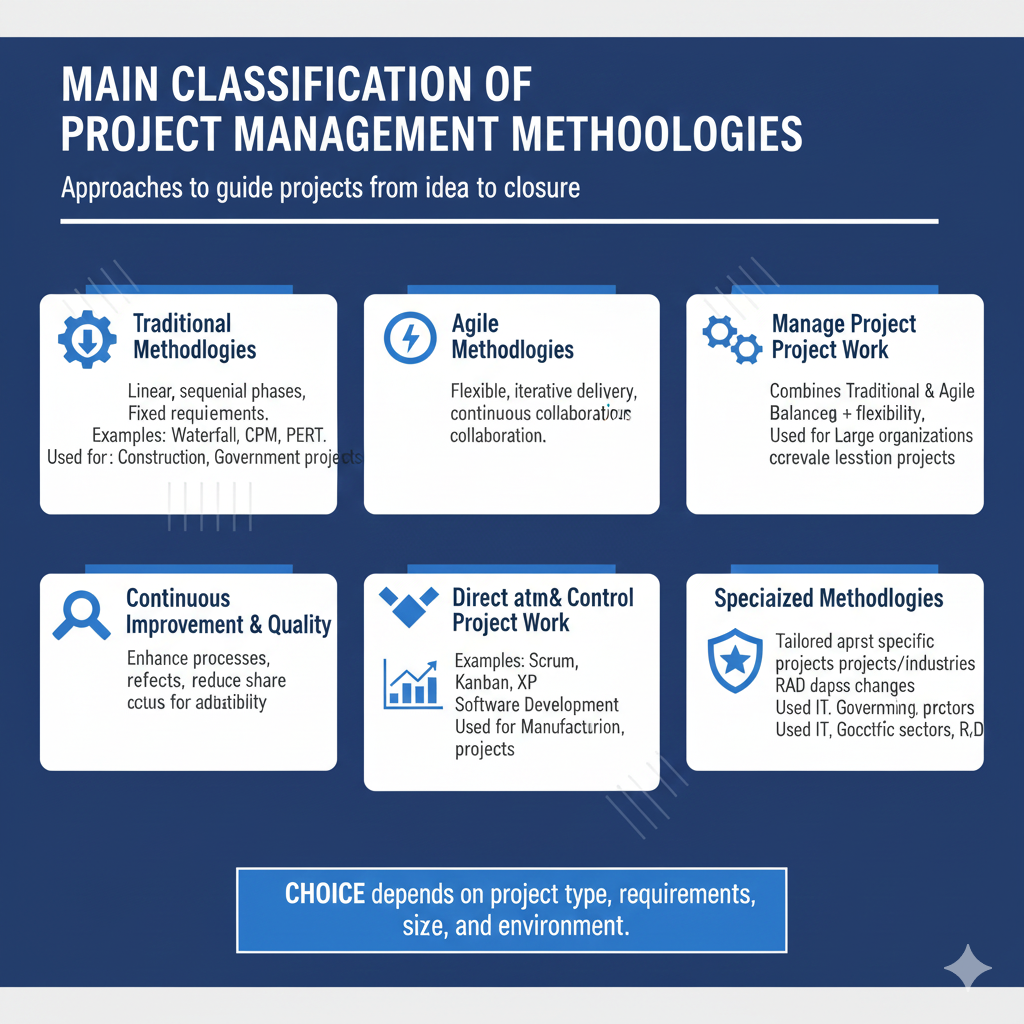
التصنيف الرئيسي لمنهجيات إدارة المشاريع
تُعد منهجيات إدارة المشاريع أساسية لتحديد نجاح المشروع وتحقيق أهدافه بكفاءة. تشمل هذه المنهجيات مجموعة من الأساليب والتقنيات التي تنظم كيفية إدارة المشاريع، من مرحلة الفكرة وحتى الإغلاق. ويعتمد اختيار المنهجية الأنسب على نوع المشروع ومتطلباته والبيئة التي يعمل ضمنها.
يمكن تصنيف منهجيات إدارة المشاريع إلى فئات متنوعة، تتراوح بين المنهجيات التقليدية التي تركز على التخطيط الشامل والنهج الخطي، والمنهجيات الرشيقة (Agile) التي تتميز بالمرونة والتكيف السريع مع التغييرات.
فيما يلي تصنيف رئيسي لمنهجيات إدارة المشاريع:
- المنهجيات التقليدية
- المنهجيات الرشيقة (Agile)
- المنهجيات الهجينة
- منهجيات التحسين المستمر والجودة
- المنهجيات المتخصصة
1. المنهجيات التقليدية
تُعرف المنهجيات التقليدية أيضًا بالمنهجيات التنبؤية أو منهجية الشلال (Waterfall)، وهي أساسية في إدارة المشاريع وطُوِّرت لتناسب المشاريع التي تتطلب تخطيطًا شاملًا وتنفيذًا دقيقًا خطوة بخطوة.
تعتمد هذه المنهجيات على نهج تسلسلي خطي حيث تُنفَّذ المهام بترتيب محدد مسبقًا، دون العودة إلى المراحل السابقة. تُحدَّد جميع تفاصيل المشروع ومهامه في بداية العملية، ويسير المشروع وفقًا للخطة الموضوعة مع حد أدنى من التغييرات أثناء التنفيذ.
تُستخدم المنهجيات التقليدية في المشاريع ذات المتطلبات الواضحة والثابتة، حيث يُحدَّد نطاق المشروع وأهدافه وجدوله الزمني مسبقًا. ويكون التركيز على توثيق كل خطوة وتتبعها بدقة لضمان سير العمل وفقًا للخطة.
تشمل المنهجيات التقليدية الشائعة:
- منهجية الشلال (Waterfall)
- طريقة المسار الحرج (CPM)
- أسلوب تقييم ومراجعة البرامج (PERT)
2. المنهجيات الرشيقة (Agile)
تركز المنهجيات الرشيقة على المرونة، والتعاون المستمر، والتسليم التكراري للقيمة. وهي مثالية للمشاريع ذات المتطلبات أو البيئات سريعة التغير. وتُبرز Agile التفاعل المستمر مع العميل وتحسين الأداء بناءً على الملاحظات.
تشمل المنهجيات الرشيقة أطر عمل مثل Scrum وKanban والبرمجة المتطرفة (XP) وغيرها، وجميعها شديدة التكيف والاستجابة لاحتياجات المشروع المتطورة. تعمل هذه المنهجيات بشكل أفضل في البيئات الديناميكية حيث تكون ملاحظات العملاء والتطوير التكراري مفتاحًا لتقديم منتج ناجح.
3. المنهجيات الهجينة
تجمع المنهجيات الهجينة بين النهجين التقليدي والرشيق، مما يوفر توازنًا بين التخطيط المنظم والمرونة. تتيح هذه المنهجيات للفرق استخدام أدوات وتقنيات تناسب أجزاء مختلفة من المشروع. وهي مناسبة للمشاريع التي تحتاج إلى خطة تفصيلية في البداية لكنها تتطلب تعديلات أثناء التنفيذ بناءً على ملاحظات العملاء المتطورة أو التغييرات الخارجية.
تشمل المنهجيات الهجينة الشائعة Scrumfall وWater-Scrum-Fall.
4. منهجيات التحسين المستمر والجودة
تركز هذه المنهجيات على التحسين المستمر للعمليات من خلال تقليل العيوب وزيادة الكفاءة. وتعتمد على أدوات إحصائية وتحليلية لمراقبة العمليات، واكتشاف المشكلات، وتطبيق تحسينات تؤدي إلى جودة وفعالية أعلى.
تشمل المنهجيات الرئيسية Six Sigma وLean وLean Six Sigma. وغالبًا ما تُستخدم في الصناعات ذات المعايير العالية للجودة والكفاءة، مثل التصنيع والرعاية الصحية.
5. المنهجيات المتخصصة
تُستخدم المنهجيات المتخصصة في صناعات أو مشاريع محددة تتطلب أساليب مصممة خصيصًا نظرًا لتحديات أو متطلبات فريدة. صُممت هذه المنهجيات لتلبية احتياجات خاصة، مثل تسريع التطوير أو تحسين الجودة في قطاعات كتطوير البرمجيات أو الرعاية الصحية أو المشاريع الحكومية.
تشمل الأمثلة PRINCE2، والتطوير السريع للتطبيقات (RAD)، وإدارة المشاريع بسلسلة المسار الحرج (CCPM).
اختيار منهجية إدارة المشاريع المثالية: مفتاحك لنجاح المشروع
يُعد اختيار منهجية إدارة المشاريع المناسبة أمرًا حاسمًا لنجاح المشروع. ويعتمد الاختيار على عوامل مثل حجم المشروع وتعقيده، ووضوح المتطلبات، ومستويات المخاطر، والثقافة المؤسسية، والتفاعل مع العميل، وديناميكيات الفريق، والقيود التنظيمية.
- حجم المشروع وتعقيده:
- المشاريع الصغيرة: تناسبها المنهجيات الرشيقة مثل Kanban للمرونة والبساطة.
- المشاريع متوسطة الحجم: توازن منهجيات Scrum أو Waterfall بين المرونة والتخطيط.
- المشاريع الكبيرة والمعقدة: توفر PRINCE2 أو المنهجيات الهجينة هيكلية للإدارة التفصيلية والمراقبة المستمرة.
- وضوح المتطلبات:
- المتطلبات الواضحة والثابتة: المنهجيات التقليدية مثل Waterfall هي الأنسب للمشاريع القابلة للتنبؤ.
- المتطلبات المتطورة: المنهجيات الرشيقة مثل Scrum أو XP مثالية للمشاريع ذات المتطلبات المتغيرة.
- مستويات المخاطر:
- المخاطر العالية: تساعد المنهجيات الرشيقة على تخفيف المخاطر من خلال التطوير التكراري والملاحظات المستمرة.
- المخاطر المنخفضة: يمكن للمنهجيات التقليدية إدارة المخاطر من خلال التخطيط المسبق والحد الأدنى من التغييرات.
- الثقافة المؤسسية:
- البيئات التقليدية والرسمية: تناسب Waterfall أو PRINCE2 البيئات المنظمة.
- البيئات المرنة والمبتكرة: تناسب المنهجيات الرشيقة مثل Scrum وKanban بيئات العمل السريعة والمتطورة.
- التفاعل مع العميل:
- التفاعل المحدود: تناسب Waterfall المشاريع ذات المشاركة المحدودة من العميل.
- التفاعل المستمر: تناسب المنهجيات الرشيقة مثل Scrum المشاريع التي تتطلب ملاحظات منتظمة من العملاء.
الخلاصة: التحول الاستراتيجي في إدارة المشاريع - نحو نجاح مستدام
في عالم إدارة المشاريع، يتجاوز تكامل العمليات مجرد تنفيذ المهام بترتيب متسلسل. فهو يشكل الأساس الذي يضمن النجاح ويعزز ترابط جميع جوانب المشروع من البداية إلى النهاية. من خلال تبني عمليات متكاملة، يمكن لمديري المشاريع ضمان تنفيذ سلس وفعال للمشروع، والتكيف مع أي تغييرات تطرأ. وهذا يضمن في النهاية استدامة النتائج المحققة وتوافقها مع الأهداف الاستراتيجية للمؤسسة.
تقدم ماستر تيم حلولًا مبتكرة لإدارة المشاريع من خلال منصات رقمية متكاملة، تساعدك على قيادة مشاريعك نحو النجاح. تواصل معنا اليوم لاكتشاف كيف يمكننا دعمك:
- الحل الرقمي P+ لمكاتب إدارة المشاريع: الحل الرقمي المتكامل لإدارة المشاريع بفعالية وكفاءة.
- الحل الرقمي S+ للاستراتيجية: حلول استراتيجية رقمية لتحسين الأداء المؤسسي.
- حل ديوان لإدارة المكتب التنفيذي: أدوات متقدمة لإدارة المكتب التنفيذي لتعزيز الإنتاجية.
ابدأ الآن، وقيّم مشاريعك مع ماستر تيم، وحوّلها إلى قصص نجاح حقيقية!
الأسئلة الشائعة:
1- كيف أختار أفضل منهجية لإدارة مشروع؟
يعتمد اختيار المنهجية المناسبة على عوامل مثل حجم المشروع وتعقيده، ووضوح المتطلبات، والمخاطر، والثقافة المؤسسية، والتفاعل مع العميل. تناسب المنهجيات التقليدية المشاريع ذات المتطلبات الثابتة، بينما تناسب المنهجيات الرشيقة بشكل أفضل المشاريع التي تتطلب مرونة وتكيفًا سريعًا.
2- ما الفرق بين المنهجيات التقليدية والرشيقة؟
تركز المنهجيات التقليدية مثل Waterfall على التخطيط التفصيلي المسبق والتنفيذ الخطي، بينما تركز المنهجيات الرشيقة مثل Scrum وKanban على المرونة، والتفاعل المستمر مع العميل، والتسليم التكراري للقيمة. تناسب Agile بشكل أفضل المشاريع ذات المتطلبات المتطورة، بينما تناسب الأساليب التقليدية المشاريع ذات المتطلبات الثابتة.
3- هل يمكن الجمع بين المنهجيات التقليدية والرشيقة؟
نعم، تجمع المنهجيات الهجينة بين عناصر من كليهما، مما يوفر توازنًا بين التخطيط المنظم والمرونة. فعلى سبيل المثال، يمكن استخدام Scrum للتنفيذ بعد مراحل التخطيط التقليدية، مما يوفر إطارًا منظمًا ومرونة للتعديلات المستمرة معًا.
4- كيف تساعد المنهجيات في إدارة مخاطر المشروع؟
تساعد المنهجيات على إدارة المخاطر من خلال التخطيط الدقيق والتكيف السريع. تحدد المنهجيات التقليدية المخاطر منذ البداية، بينما تُقيّم المنهجيات الرشيقة المخاطر باستمرار وتعالجها بناءً على الملاحظات المستمرة من العملاء وأصحاب المصلحة.