
🚀 تخيّل للحظة: أنت تدير مشروعًا ضخمًا، وفريقك يعمل بلا كلل، لكنك فجأة تجد نفسك مُثقلًا بمواعيد نهائية تُطاردك من كل اتجاه، وميزانية تتجاوز حدودها، وفريق على وشك الإنهاك. هل يبدو هذا السيناريو مألوفًا؟
هذا ليس مجرد افتراض؛ إنه واقع يعيشه أكثر من 70% من مديري المشاريع منذ عام 2024. مشكلات صغيرة تبدأ بالتراكم لتتحوّل إلى أزمات ضخمة تهدد وجود المشروع نفسه.
🔑 لكن هل تعلم ما الذي يميّز المشاريع الناجحة عن تلك التي تفشل؟ إنها طريقة التعامل مع هذه التحديات! فالعقبات لم تعد تقنية أو مالية فقط؛ فالتحديات التنظيمية والقيادية والثقافية يمكن أن تعيق تقدمك في أي لحظة.
🎯 في هذا المقال، سأكشف لك أبرز التحديات التي تعيق نجاح المشاريع وكيف يمكنك تحويلها إلى فرص حقيقية. إذا كنت مستعدًا للارتقاء بمشروعك إلى مستوى جديد، فاستعد لاكتشاف أدوات واستراتيجيات ستغيّر مسار مشروعك نحو الأفضل.
💡 هل أنت مستعد لتحويل كل تحدٍّ إلى فرصة؟ امنحني 5 دقائق من وقتك، وسأقدّم لك خارطة طريق لنجاح مستدام يتغلب على جميع العقبات!
🚀 اتخذ الخطوة الأولى نحو النجاح اليوم مع حلول ماستر تيم المتقدمة! استكشف حل P+ الرقمي لمكتب إدارة المشاريع، وحل S+ الرقمي للاستراتيجية، وحل ديوان لإدارة المكتب التنفيذي لتبسيط إدارة المشاريع، وتعزيز قدراتك الاستراتيجية، وضمان إدارة سلسة للمكتب التنفيذي.
تحديات إدارة المشاريع وكيفية التغلب عليها
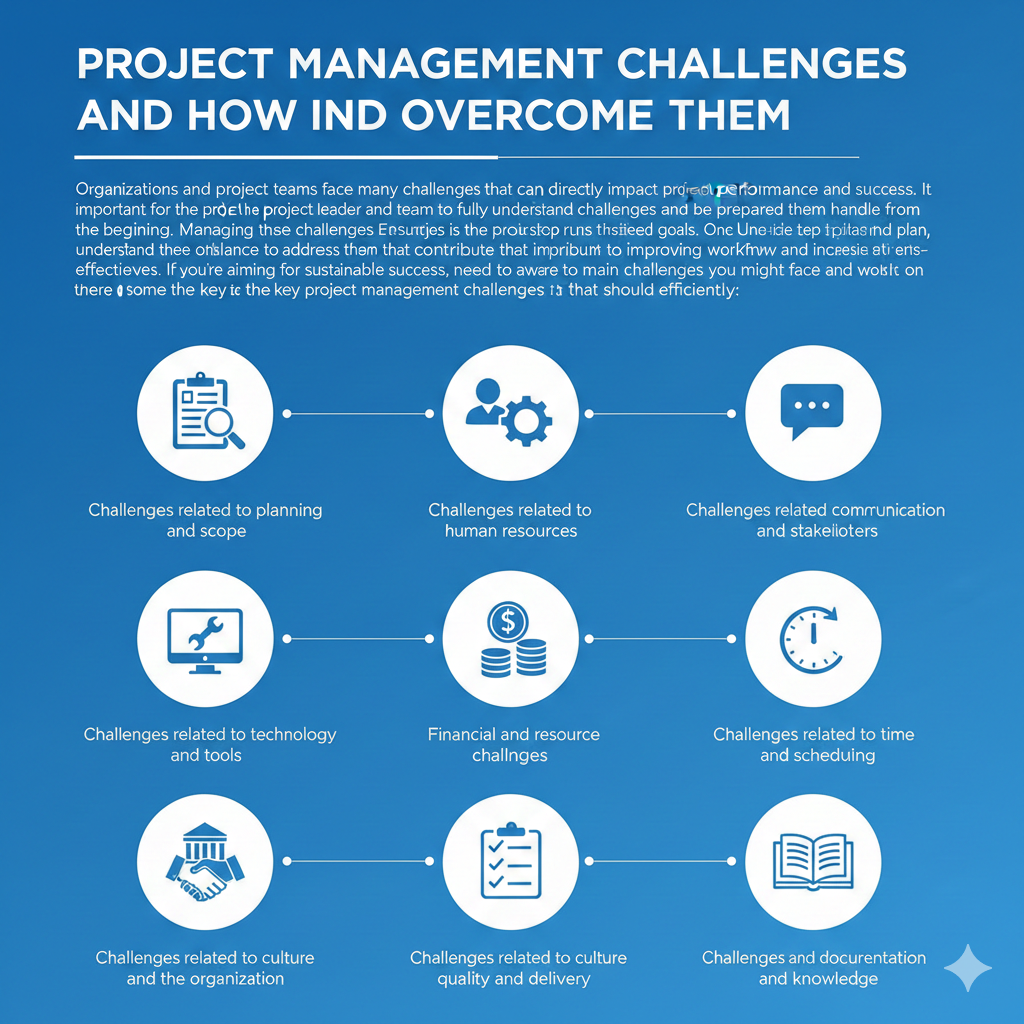
تواجه المنظمات وفرق المشاريع العديد من التحديات التي يمكن أن تؤثر بشكل مباشر على أداء المشروع ونجاحه. من المهم أن يفهم قائد المشروع والفريق هذه التحديات فهمًا كاملًا وأن يكونوا مستعدين للتعامل معها منذ البداية. تُعد إدارة هذه التحديات خطوة حاسمة لضمان سير المشروع بسلاسة وتحقيق الأهداف المرجوة. فبمجرد فهم هذه العقبات والتخطيط المسبق لمواجهتها، يمكنك تحويل التحديات إلى فرص تسهم في تحسين سير العمل وزيادة الفعالية.
إذا كنت تسعى إلى نجاح مستدام، فعليك أن تكون على دراية بأبرز التحديات التي قد تواجهها والعمل على الاستعداد للتعامل معها بكفاءة.
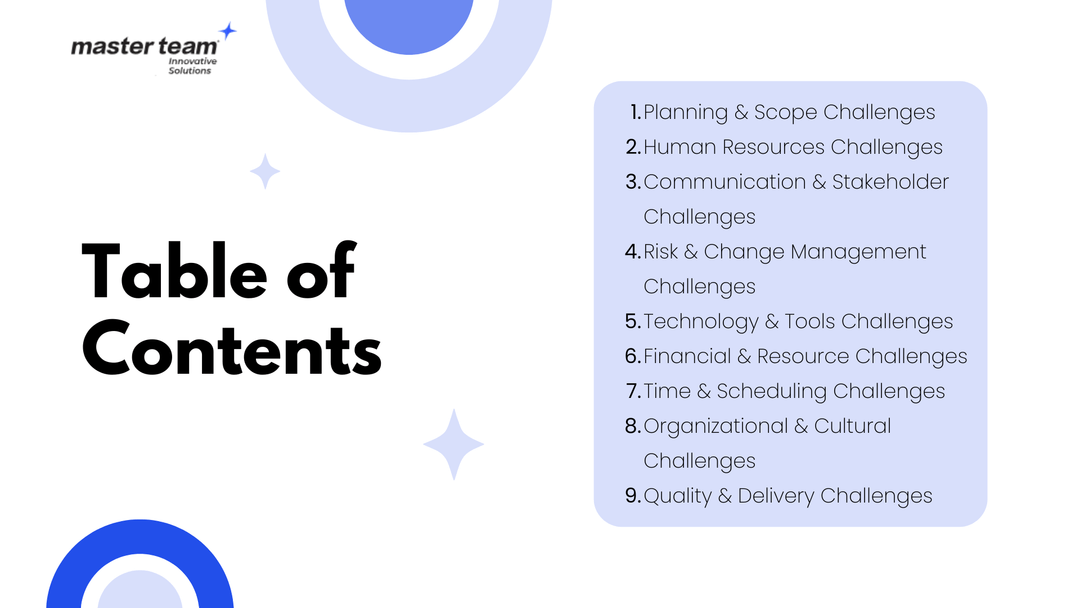
إليك بعض أبرز تحديات إدارة المشاريع التي ينبغي أخذها بعين الاعتبار:
- تحديات متعلقة بالتخطيط والنطاق
- تحديات متعلقة بالموارد البشرية
- تحديات متعلقة بالتواصل وأصحاب المصلحة
- تحديات متعلقة بالتقنية والأدوات
- تحديات مالية ومتعلقة بالموارد
- تحديات متعلقة بالوقت والجدولة
- تحديات متعلقة بالثقافة والتنظيم
- تحديات متعلقة بالجودة والتسليم
- تحديات متعلقة بالتوثيق والمعرفة
1. تحديات متعلقة بالتخطيط والنطاق: كيف تحوّل التحديات إلى فرص حقيقية لنجاح مشاريعك المستقبلية
عند إدارة أي مشروع، قد يواجه الفريق عدة عقبات، بدءًا من غموض الأهداف والمتطلبات وصولًا إلى توسّع النطاق والتخطيط غير الواقعي. وإذا لم يتم التعامل مع هذه التحديات باحترافية، فقد تؤدي إلى هدر الجهود، وارتفاع التكاليف، وتأخر المواعيد النهائية، مما يهدد استمرارية المشروع وتحقيق أهدافه.
فيما يلي أبرز التحديات التي قد تواجهها خلال مرحلة التخطيط وتحديد النطاق، مع حلول فعّالة تساعدك على تجاوزها بنجاح وتحقيق أهداف مشروعك:
1. غياب الوضوح في الأهداف والمتطلبات
يُعد هذا من أخطر التحديات التي تواجه المشاريع، إذ يؤدي غياب الوضوح في الأهداف منذ البداية إلى هدر الجهود وسوء إدارة الموارد. فعندما لا يفهم الفريق بوضوح ما هو متوقع منه، تتباين التفسيرات وتتباعد التوقعات، مما يؤدي إلى نتائج لا تلبي احتياجات أصحاب المصلحة. وغالبًا ما ينشأ هذا الغموض عن غياب دراسة جدوى شاملة، أو ضعف التواصل مع أصحاب المصلحة الرئيسيين، أو التسرّع في بدء المشروع قبل استكمال المتطلبات.
المؤشرات:
- تغييرات متكررة في المتطلبات
- اختلافات في فهم الأهداف بين أعضاء الفريق
- صعوبة قياس التقدم والنجاح
- إعادة العمل وهدر الموارد
الحلول المقترحة:
- عقد ورش عمل مكثفة مع أصحاب المصلحة لتحديد المتطلبات بدقة
- توثيق الأهداف بصيغة SMART (محددة، قابلة للقياس، قابلة للتحقيق، ذات صلة، ومحددة زمنيًا)
- إعداد وثيقة ميثاق مشروع واضحة ومعتمدة
- استخدام النماذج الأولية للتحقق من فهم المتطلبات
- الحصول على موافقات رسمية على المتطلبات قبل بدء التنفيذ
2. توسّع النطاق (Scope Creep)
يشير توسّع النطاق إلى الإضافة التدريجية لمتطلبات أو ميزات جديدة إلى المشروع دون تقييم مناسب لأثرها على الوقت والتكلفة والموارد. وغالبًا ما يحدث ذلك بسبب ضعف ضبط التغييرات، أو ضغط أصحاب المصلحة، أو رغبة الفريق في إرضاء العميل دون مراعاة العواقب، أو غياب عملية رسمية لإدارة التغيير. ويُعد توسّع النطاق من أكثر الأسباب شيوعًا لتجاوز المشاريع لميزانياتها وجداولها الزمنية.
المؤشرات:
- طلبات تغيير مستمرة من العملاء أو أصحاب المصلحة
- إضافة متكررة لمهام وميزات "صغيرة"
- توسّع المشروع عن حجمه الأصلي
- إرهاق الفريق وانخفاض الروح المعنوية
- تجاوزات كبيرة في الميزانية والجدول الزمني
الحلول المقترحة:
- وضع عملية رسمية وصارمة لإدارة التغيير
- توثيق النطاق بوضوح منذ بداية المشروع والحصول على موافقة رسمية عليه
- تقييم أثر كل تغيير مقترح على جميع محددات المشروع
- التواصل بشفافية مع أصحاب المصلحة حول تكاليف التغييرات
- استخدام لجنة ضبط التغيير (CCB)
- تطبيق منهجيات رشيقة تسمح بمرونة منضبطة
3. التخطيط غير الواقعي
وضع خطط المشروع بناءً على افتراضات مفرطة في التفاؤل أو غير واقعية، سواء من حيث الوقت أو التكلفة أو توفر الموارد. وغالبًا ما يحدث هذا بسبب ضغط الإدارة العليا أو العملاء، أو قلة الخبرة في تقدير الجهود، أو تجاهل المخاطر المحتملة، أو الاعتماد على سيناريوهات مثالية دون مراعاة الوضع الفعلي.
المؤشرات:
- جداول زمنية ضيقة للغاية
- ميزانيات لا تغطي الاحتياجات الفعلية
- افتراضات بعدم وجود عقبات أو مشكلات
- عدم وجود وقت احتياطي للطوارئ
- توقعات غير واقعية لإنتاجية الفريق
الحلول المقترحة:
- استخدام تقنيات تقدير متقدمة (مثل PERT التي تعتمد على ثلاثة تقديرات)
- الاستفادة من البيانات التاريخية لمشاريع مماثلة
- إشراك أعضاء الفريق في عملية التقدير
- تخصيص احتياطيات للوقت والتكلفة والموارد
- الاستعانة بخبراء مستقلين لمراجعة الخطط
- التخطيط بناءً على سيناريوهات واقعية، لا مثالية
2. تحديات متعلقة بالموارد البشرية: كيف تتغلب على العقبات لبناء فريق قوي وتحقيق نجاح مستدام
تُعد إدارة الموارد البشرية في أي مشروع أحد أهم العوامل المؤثرة في نجاحه أو فشله. فقد يواجه الفريق تحديات كبيرة، منها نقص الكفاءات المطلوبة، والصراعات الداخلية، وضعف القيادة، وعبء العمل المفرط. وكل هذه العوامل يمكن أن تقلّل الإنتاجية، وتُسهم في تفويت المواعيد النهائية، وتؤدي إلى اضطرابات تهدد استمرارية المشروع.
إليك أبرز التحديات التي قد تواجهها مع حلول فعّالة ستساعدك على تحسين أداء الفريق وضمان نجاح المشروع:
1. نقص الكفاءات والمهارات المطلوبة
ينشأ هذا التحدي عندما لا تتوفر الخبرات التقنية أو الإدارية اللازمة لإنجاز المشروع بنجاح. وقد ازدادت حدة هذه المشكلة في عصر التحول الرقمي، إذ باتت المشاريع تتطلب مهارات متخصصة في التقنيات الحديثة، إلى جانب المنافسة الشديدة على المواهب في سوق العمل.
المؤشرات:
- بطء إنجاز المهام بسبب منحنى تعلّم طويل
- مخرجات ذات جودة منخفضة
- زيادة الأخطاء والعيوب
- الحاجة المستمرة للإشراف والتوجيه
- صعوبة حل المشكلات التقنية المعقدة
الحلول المقترحة:
- التقييم المبكر للمهارات المطلوبة وتأمينها
- الاستثمار في تدريب الفريق وتطويره
- الاستعانة بمستشارين خارجيين عند الحاجة
- بناء فرق متعددة التخصصات تكمّل بعضها بعضًا
- إنشاء برامج نقل المعرفة والتوجيه (Mentoring) داخل الفريق
- التوظيف الاستراتيجي والتخطيط الاستباقي للاحتياجات
2. الصراعات والخلافات داخل الفريق
تنشأ الصراعات والتوترات بين أعضاء الفريق نتيجة اختلاف الشخصيات، وتضارب المصالح، وسوء الفهم، والمنافسة غير الصحية، أو غموض الأدوار والمسؤوليات. وتستنزف هذه الصراعات طاقة الفريق، وتقلّل الإنتاجية، وقد تؤدي إلى انهيار المشروع في الحالات القصوى.
المؤشرات:
- انخفاض الروح المعنوية والتعاون
- تأخيرات بسبب ضعف التنسيق
- تواصل ضعيف أو عدائي بين أعضاء الفريق
- تشكّل شلل وتكتلات داخلية داخل الفريق
- ارتفاع معدل دوران الموظفين
- تحميل المسؤولية للآخرين وإلقاء اللوم
الحلول المقترحة:
- تحديد الأدوار والمسؤوليات بوضوح منذ البداية
- بناء ثقافة فريق إيجابية تشجّع التعاون
- عقد جلسات لبناء الفريق (Team Building)
- معالجة الخلافات مبكرًا وبأسلوب بنّاء
- تطبيق آليات واضحة لحل النزاعات
- تعزيز التواصل المفتوح والصادق
- القيادة بالقدوة كمدير مشروع
3. ضعف القيادة والإدارة
عندما يفتقر مدير المشروع إلى المهارات القيادية والإدارية اللازمة، أو تنقصه الخبرة في إدارة المشاريع المعقدة، ينتج عن ذلك ضعف في القيادة. ويؤدي هذا إلى فقدان الاتجاه، وانخفاض الحافز، وضعف اتخاذ القرار، والإخفاق في إدارة التوقعات والمخاطر بفعالية.
المؤشرات:
- قرارات متضاربة أو متأخرة
- أولويات غير واضحة
- ضعف التواصل مع أصحاب المصلحة
- الإخفاق في تحفيز الفريق
- عدم القدرة على حل المشكلات بفعالية
- غياب الرؤية الاستراتيجية
الحلول المقترحة:
- اختيار مديري مشاريع مؤهلين وحاصلين على شهادات معتمدة
- توفير تدريب مستمر لمديري المشاريع
- تعيين موجّهين (Mentors) لمديري المشاريع الجدد
- تمكين مدير المشروع بالصلاحيات اللازمة
- وضع معايير أداء واضحة لمدير المشروع
- توفير الدعم من مكتب إدارة المشاريع (PMO)
4. عبء العمل المفرط وإنهاك الفريق
عندما يُثقل أعضاء الفريق بمهام ومسؤوليات تفوق طاقتهم، يؤدي ذلك إلى الإنهاك وانخفاض الإنتاجية والجودة. وغالبًا ما يحدث هذا في بيئات تفتقر إلى الموارد الكافية، أو تعتمد جداول زمنية غير واقعية، أو تسود فيها ثقافة تمجّد العمل المفرط.
المؤشرات:
- انخفاض الإنتاجية والجودة
- زيادة الأخطاء والإهمال
- ارتفاع معدلات الغياب والإجازات المرضية
- استقالة الموظفين الأساسيين
- مشكلات صحية ونفسية بين أعضاء الفريق
- فقدان الحماس والالتزام
الحلول المقترحة:
- تخطيط واقعي للموارد والجداول الزمنية
- توزيع عادل ومتوازن للعمل
- توفير فترات راحة وإجازات كافية
- مراقبة أعباء العمل والتدخل عند الحاجة
- تشجيع التوازن بين العمل والحياة الشخصية
- تقديم الدعم النفسي والاجتماعي للفريق
- تقدير جهود الفريق والاعتراف بها
3. تحديات متعلقة بالتواصل وأصحاب المصلحة: كيف تحقق التنسيق المثالي وتحافظ على توازن المصالح
تُعد قضايا التواصل مع أصحاب المصلحة من العوامل الرئيسية المؤثرة في فشل المشاريع. فضعف التواصل، سواء بين أعضاء الفريق أو مع أصحاب المصلحة، يؤدي إلى سوء الفهم، وتأخر اتخاذ القرار، وفقدان معلومات حيوية. كما أن تعدد المصالح المتضاربة قد يؤدي إلى نزاعات تؤثر سلبًا على تقدم المشروع. إضافة إلى ذلك، يمثّل غياب التزام الإدارة العليا تحديًا آخر يتطلب استجابة سريعة.
لحل هذه التحديات، لا بد من وضع خطة تواصل شاملة واستخدام أدوات فعّالة لضمان تدفق المعلومات بسلاسة. كما ينبغي تحديد أصحاب المصلحة مبكرًا وتحليل توقعاتهم لضمان تنسيق فعّال وتوازن في المصالح. وبالطبع، يُعد كسب التزام ودعم الإدارة العليا منذ البداية أمرًا أساسيًا لضمان استمرارية المشروع ونجاحه.
اكتشف كيف يمكن لقوة التواصل الفعّال والتنسيق السلس أن تحوّل التحديات إلى فرص قيّمة لتسريع نجاح مشروعك. بالاستراتيجيات المناسبة، يمكنك ضمان سير العمليات بسلاسة وتعزيز علاقتك مع جميع أصحاب المصلحة:
1. ضعف التواصل
يؤدي غياب قنوات تواصل فعّالة أو انقطاع التواصل بين أعضاء الفريق أو مع أصحاب المصلحة إلى سوء الفهم، وتأخر القرارات، وفقدان معلومات حيوية. ويُعد ضعف التواصل من أكثر أسباب فشل المشاريع شيوعًا.
المؤشرات:
- معلومات متضاربة أو غير دقيقة
- قرارات تُتخذ بناءً على معلومات ناقصة
- تأخيرات بسبب عدم وصول المعلومات إلى أصحاب المصلحة في الوقت المناسب
- إعادة عمل ناتجة عن سوء الفهم
- عدم إدراك أصحاب المصلحة لحالة المشروع
- مفاجآت غير سارة في نهاية المشروع
الحلول المقترحة:
- وضع خطة تواصل شاملة ومفصّلة
- استخدام أدوات تواصل مناسبة وفعّالة
- عقد اجتماعات دورية لمتابعة الحالة
- إعداد تقارير حالة واضحة ودورية
- تشجيع التواصل المفتوح والشفاف
- التأكد من استلام المعلومات المهمة وفهمها
- توثيق القرارات والاتفاقيات الرئيسية
2. تضارب مصالح أصحاب المصلحة
يجعل وجود عدة أصحاب مصلحة في المشروع بتوقعات وأولويات ومصالح مختلفة أو متضاربة من الصعب إرضاء الجميع، ويعقّد عملية اتخاذ القرار. وتُعد إدارة هذه التوقعات المتنوعة تحديًا كبيرًا، خاصة في المشاريع الكبيرة والمعقدة.
المؤشرات:
- طلبات متضاربة من أصحاب مصلحة مختلفين
- صعوبة الحصول على الموافقات
- تأخر اتخاذ القرارات بسبب الخلافات
- تغييرات متكررة في الاتجاه
- نزاعات بين أصحاب المصلحة
- عدم رضا بعض أصحاب المصلحة عن النتائج
الحلول المقترحة:
- تحديد جميع أصحاب المصلحة مبكرًا وتحليل توقعاتهم وتأثيرهم
- إعداد سجل وتحليل لأصحاب المصلحة
- ترتيب أولويات احتياجات وتوقعات أصحاب المصلحة
- الحفاظ على تواصل منتظم وشفاف مع جميع الأطراف
- إدارة التوقعات بواقعية منذ البداية
- البحث عن حلول وسط مقبولة
- تأمين دعم الإدارة العليا عند الحاجة
- استخدام تقنيات التفاوض وحل النزاعات
3. غياب دعم والتزام الإدارة العليا
يؤثر غياب الدعم والاهتمام من الإدارة العليا أو راعي المشروع على توفر الموارد، واتخاذ القرار، وإزالة العقبات. وتواجه المشاريع التي تفتقر إلى دعم قيادي قوي من الإدارة العليا صعوبات كبيرة في تحقيق النجاح.
المؤشرات:
- صعوبة الحصول على الموارد اللازمة
- تأخر الموافقات والقرارات الحاسمة
- الإخفاق في إزالة العقبات والحواجز
- إعطاء المشروع أولوية منخفضة
- فقدان الفريق للحماس والالتزام
- تدخلات متضاربة من مستويات إدارية مختلفة
الحلول المقترحة:
- الحصول على التزام واضح من الإدارة العليا قبل البدء
- توضيح القيمة الاستراتيجية للمشروع وفوائده بوضوح
- التواصل بانتظام مع الرعاة والإدارة العليا
- إشراك القادة في المحطات الرئيسية للمشروع
- تصعيد المشكلات والعقبات في الوقت المناسب
- توثيق الالتزامات والموافقات رسميًا
- بناء حالة عمل (Business Case) قوية ومقنعة
4. تحديات متعلقة بالمخاطر والتغيير: كيف تضمن نجاح المشروع في بيئة مليئة بالتحديات
تُعد إدارة المخاطر والقدرة على التكيّف مع التغيير من أبرز التحديات التي تواجه المشاريع. فضعف إدارة المخاطر، ومقاومة التغيير، وعدم استقرار البيئة الخارجية، يمكن أن تؤدي جميعها إلى مشكلات غير متوقعة تهدد نجاح المشروع. فعلى سبيل المثال، يترك إهمال تقليل المخاطر أو التخطيط لها المشروع عرضة لأزمات مفاجئة، بينما تعيق مقاومة التغيير التقدم. كما يمكن للتغيرات في البيئة الخارجية، مثل التقلبات الاقتصادية والسياسية، أن تضع المشروع في موقف صعب إن لم يُدَر بمرونة.
لمواجهة هذه التحديات، ينبغي على المديرين تحديد المخاطر المحتملة منذ بداية المشروع ووضع خطط استجابة للمخاطر الرئيسية. كما أن إشراك أصحاب المصلحة في إدارة التغيير وتوفير التدريب والدعم الكافيين أمر بالغ الأهمية لتقليل المقاومة. علاوة على ذلك، ينبغي مراقبة البيئة الخارجية باستمرار واعتماد استراتيجيات مرنة لضمان استجابة سريعة لأي تغيير.
هل ترغب في تحويل المخاطر إلى فرص؟ اكتشف كيف يمكن لإدارة مخاطر مخطط لها جيدًا واستراتيجيات تغيير فعّالة أن تضمن استقرار مشروعك وتحقيق أهدافه رغم تزايد التحديات:
1. ضعف إدارة المخاطر
يترك الإخفاق في تحديد المخاطر المحتملة، أو التقليل من شأن تأثيرها، أو عدم وضع خطط استجابة مناسبة، المشروعَ عرضة للمفاجآت والأزمات. ويزيد النهج السلبي في إدارة المخاطر (انتظار وقوع المشكلات) بدلًا من الإدارة الاستباقية من احتمالية الفشل.
المؤشرات:
- ظهور مشكلات غير متوقعة
- غياب الاستعداد للطوارئ
- استجابات اندفاعية وغير منظمة للأزمات
- تأثيرات كبيرة على المشروع
- عدم وجود خطط بديلة (خطة ب)
الحلول المقترحة:
- إجراء تحديد وتحليل شامل للمخاطر في بداية المشروع
- استخدام سجل مخاطر وتحديثه باستمرار
- وضع خطط استجابة للمخاطر الرئيسية
- تخصيص احتياطيات للوقت والتكلفة
- مراقبة المخاطر باستمرار وظهور مخاطر جديدة
- إشراك الفريق والخبراء في تحديد المخاطر
- التعلم من المخاطر التي واجهتها المشاريع السابقة
2. مقاومة التغيير
مقاومة أو معارضة الأفراد أو الجماعات للتغييرات التي يُدخلها المشروع، سواء كانت تغييرات في العمليات أو الأنظمة أو الثقافة أو الهيكل التنظيمي. ورغم أن مقاومة التغيير سمة إنسانية طبيعية، إلا أنها يمكن أن تعيق نجاح المشروع بشكل كبير.
المؤشرات:
- رفض استخدام الأنظمة أو المنتجات الجديدة
- شكاوى وانتقادات مستمرة
- العودة إلى الطرق القديمة
- انخفاض التعاون والمشاركة
- انتشار الشائعات والمخاوف
- التخريب المتعمد أو غير المتعمد
الحلول المقترحة:
- وضع استراتيجية إدارة تغيير منذ البداية
- إشراك الأفراد المتأثرين في التخطيط والتنفيذ
- التواصل بوضوح حول أسباب التغيير وفوائده
- توفير تدريب ودعم كافيين
- معالجة المخاوف والاعتراضات بجدية
- الاحتفال بالنجاحات المبكرة
- تحديد "سفراء التغيير" للترويج له
3. عدم استقرار البيئة الخارجية
التغيرات في البيئة الخارجية، كالظروف الاقتصادية والسياسية والتنظيمية والتقنية والتنافسية أو الطبيعية، والتي قد تؤثر بشكل كبير على المشروع وتكون خارج سيطرة فريق المشروع.
المؤشرات:
- تغيرات مفاجئة في المتطلبات التنظيمية
- تقلبات في أسعار المواد والموارد
- ظهور تقنيات جديدة تجعل الحل المخطط له متجاوَزًا
- تغيرات في السوق أو احتياجات العملاء
- أحداث جيوسياسية أو كوارث طبيعية
- تغيرات في القوانين والأنظمة
الحلول المقترحة:
- مراقبة البيئة الخارجية باستمرار
- بناء المرونة داخل خطط المشروع
- وضع سيناريوهات بديلة
- التأمين ضد المخاطر الرئيسية عند الإمكان
- بناء شراكات استراتيجية
- الاستجابة السريعة للتغيرات
- اعتماد منهجيات رشيقة وقابلة للتكيف
5. تحديات متعلقة بالتقنية والأدوات: كيف تتغلب على العقبات التقنية لضمان نجاح المشروع
تواجه العديد من المشاريع تحديات تقنية يمكن أن تؤثر بشكل كبير على سير العمل. فمشكلات مثل تكرار أعطال الأنظمة، وصعوبات دمج الأنظمة، وغياب أدوات إدارة المشاريع المناسبة، من أبرز أسباب التأخير وارتفاع التكاليف. وتشمل المؤشرات الشائعة لهذه التحديات ضعف الأداء التقني، وعدم كفاية البنية التحتية، وعدم توافق الأدوات، وتضارب المعلومات.
لحل هذه المشكلات، من الضروري إجراء تقييم تقني شامل قبل اختيار التقنيات المناسبة والاستثمار في بنية تحتية قوية. كما أن اختيار أدوات إدارة المشاريع الصحيحة وتوفير التدريب اللازم للفريق أمر بالغ الأهمية لتحسين الأداء. وسيساعد ضمان التوافق بين الأدوات واستخدام تقنيات مُجرَّبة على ضمان استمرارية المشروع وكفاءته.
هل تواجه مشكلات تقنية تؤثر على تقدم مشروعك؟ استثمر في تقنيات موثوقة وأدوات متكاملة لإدارة المشاريع لضمان تحقيق أهدافك بكفاءة وبأقل تكلفة ممكنة:
1. مشكلات التقنية والأنظمة
الاعتماد على تقنيات غير موثوقة أو معقدة أو غير ناضجة، أو مشكلات في دمج أنظمة مختلفة، أو غياب البنية التحتية التقنية اللازمة، يمكن أن يؤخر المشروع ويزيد تكاليفه بشكل كبير.
المؤشرات:
- تكرار أعطال الأنظمة
- صعوبات في دمج تقنيات مختلفة
- أداء ضعيف أو غير مستقر
- مشكلات أمنية وثغرات
- تعقيد تقني يصعب إدارته
- بنية تحتية غير كافية
الحلول المقترحة:
- إجراء تقييم تقني شامل قبل اختيار التقنيات
- اختيار تقنيات مُجرَّبة وموثوقة
- إجراء اختبارات دقيقة ومبكرة
- ضمان توفر خبراء تقنيين مؤهلين ضمن الفريق
- التخطيط للدمج والتوافق مسبقًا
- وضع خطط طوارئ وأنظمة احتياطية
- الاستثمار في البنية التحتية المناسبة
2. عدم استخدام أدوات إدارة المشاريع المناسبة
يؤدي الاعتماد على أدوات غير مناسبة أو قديمة أو معقدة للغاية، أو عدم استخدام أي أدوات منظمة على الإطلاق، إلى صعوبة في التخطيط والمتابعة والتواصل والتنسيق.
المؤشرات:
- صعوبة تتبع التقدم والأداء
- معلومات متناثرة وغير منظمة
- هدر الوقت في عمليات يدوية
- صعوبة التعاون والتنسيق
- تقارير غير دقيقة أو قديمة
الحلول المقترحة:
- اختيار أدوات تناسب حجم المشروع ونوعه
- توفير تدريب كافٍ على الأدوات
- التأكد من أن الأدوات تلبي احتياجات الفريق
- استخدام أدوات تدعم التعاون والتكامل
- مراجعة الأدوات وتحديثها بانتظام
- البدء بأدوات بسيطة والتطور تدريجيًا
6. التحديات المالية ومتعلقة بالموارد: كيف تتغلب على القيود المالية وتحقق النجاح في مشاريعك
تُعد القيود المالية ومحدودية الموارد من أبرز التحديات التي تواجه المشاريع. فمع تزايد التنافس على الموارد المحدودة، يمكن أن يؤدي نقص التمويل أو الميزانية المقيّدة إلى تقليص نطاق المشروع أو التأثير على جودته. وتشمل المؤشرات الرئيسية لهذه التحديات التأخر في تأمين الموارد اللازمة، وعدم القدرة على الاستجابة للمخاطر غير المتوقعة، وصعوبة الحصول على المعدات والخدمات المطلوبة.
لحل هذه التحديات، من الضروري إجراء تقديرات مالية دقيقة منذ البداية وتخصيص احتياطيات مالية للتعامل مع الطوارئ. كما يمكن اعتماد استراتيجيات مثل التمويل التدريجي أو البحث عن بدائل منخفضة التكلفة دون المساس بالجودة.
هل تشعر أن قيود الميزانية تؤثر على نجاح مشروعك؟ اكتشف حلولًا ذكية لإدارة الموارد المالية والمادية بفعالية وتحقيق أفضل النتائج بأقل تكلفة:
1. قيود الميزانية والمالية
عدم كفاية الميزانية المخصصة لتحقيق أهداف المشروع، أو تجميد الأموال، أو تخفيض الميزانية بعد بدء المشروع، أو التقديرات المالية الأولية غير الدقيقة. تحدّ القيود المالية من الخيارات المتاحة وتفرض تنازلات قد تؤثر على الجودة أو النطاق.
المؤشرات:
- تقليص إجباري في النطاق أو الجودة
- عدم القدرة على تأمين الموارد اللازمة
- تأخيرات بسبب نقص التمويل
- عدم القدرة على الاستجابة للمخاطر
- صعوبة الحصول على المعدات أو الخدمات
الحلول المقترحة:
- إجراء تقدير دقيق وواقعي للتكاليف
- تخصيص احتياطيات مالية للطوارئ
- مراقبة الإنفاق والتكاليف عن كثب
- البحث عن بدائل أقل تكلفة دون التضحية بالجودة
- إعادة ترتيب الأولويات عند الحاجة
- التواصل المبكر مع الرعاة بشأن القيود المالية
- النظر في التمويل التدريجي أو على مراحل
2. محدودية الموارد المادية والمعدات
نقص المعدات أو المواد أو المرافق المتاحة اللازمة لتنفيذ المشروع، أو المنافسة على الموارد المحدودة مع مشاريع أخرى داخل المنظمة.
المؤشرات:
- تأخيرات بانتظار توفر الموارد
- الاضطرار لاستخدام موارد غير مثالية
- تكاليف إضافية لاستئجار المعدات
- نزاعات مع مشاريع أخرى حول الموارد
- عدم القدرة على العمل بالكفاءة المطلوبة
الحلول المقترحة:
- التخطيط المبكر للموارد وحجزها مسبقًا
- وضع خطط بديلة للموارد الحرجة
- التنسيق مع مكتب إدارة المشاريع (PMO) لتخصيص الموارد
- النظر في التأجير أو الشراكات الاستراتيجية
- تحسين استخدام الموارد المتاحة
- تسلسل الأنشطة بما يتناسب مع توفر الموارد
7. تحديات متعلقة بالوقت والجدولة: كيف تضمن النجاح رغم المواعيد النهائية المعقدة
تعاني العديد من المشاريع من ضغوط مواعيد نهائية غير واقعية، مما يؤدي إلى إنهاك الفريق والتضحية بالجودة. ولهذه الضغوط آثار سلبية على الأداء، مثل زيادة الأخطاء، وانخفاض الروح المعنوية، وقد تؤدي حتى إلى إنهاك كامل للفريق. كما أن ترابط المهام المعقد يمكن أن يؤخر المشروع بأكمله، مما يزيد صعوبة عملية التخطيط والجدولة.
لحل هذه المشكلات، يُنصح بالتفاوض على مواعيد نهائية واقعية استنادًا إلى تقديرات دقيقة والتواصل بوضوح حول المخاطر والعواقب. كما يمكن استخدام المنهجيات الرشيقة لتسليم المشروع بشكل تدريجي وتوفير مرونة في التعامل مع الترابطات المعقدة بين الأنشطة.
هل تواجه صعوبات بسبب ضغوط الوقت وتأثيرات المواعيد النهائية على مشروعك؟ اكتشف استراتيجيات ذكية لتسريع الجدول الزمني دون المساس بالجودة أو إثقال الفريق:
1. ضغوط المواعيد النهائية غير الواقعية
فرض مواعيد نهائية صارمة وغير قابلة للتحقيق بسبب توقعات العملاء، أو المنافسة، أو الالتزامات التعاقدية، أو الضغوط التسويقية، دون مراعاة الواقع والقدرات الفعلية.
المؤشرات:
- إنهاك الفريق وساعات عمل طويلة
- التضحية بالجودة مقابل السرعة
- تخطي خطوات مهمة في العملية
- زيادة الأخطاء والعيوب
- انخفاض الروح المعنوية
- إنهاك كامل للفريق
الحلول المقترحة:
- التفاوض على مواعيد نهائية واقعية
- استخدام تقديرات مبنية على البيانات
- ترتيب الأولويات والتركيز على الأعلى قيمة
- اعتماد منهجيات رشيقة للتسليم التدريجي
- التواصل بصراحة حول المخاطر والعواقب
- استخدام تقنيات مثل التسريع المتوازي (Fast Tracking) والضغط الزمني (Crashing) بحذر
2. ترابط المهام المعقد
وجود علاقات معقدة ومتشابكة بين أنشطة المشروع، حيث لا يمكن بدء بعض المهام إلا بعد إنجاز أخرى، مما يزيد صعوبة التخطيط والجدولة ويحدّ من المرونة.
المؤشرات:
- تأخر نشاط واحد يؤدي إلى تأخر أنشطة عديدة أخرى
- صعوبة إعادة جدولة الأنشطة
- اختناقات متكررة أثناء التنفيذ
- عدم القدرة على تنفيذ الأعمال بالتوازي
- تأثير كبير لأي مشكلة على المشروع بأكمله
الحلول المقترحة:
- رسم خريطة واضحة للترابطات
- محاولة تقليل الترابطات الصارمة حيثما أمكن
- التخطيط الدقيق للأنشطة الحرجة
- إيجاد طرق لتنفيذ المهام بالتوازي
- متابعة الأنشطة الحرجة عن كثب
- وضع خطط طوارئ للترابطات الحرجة
8. تحديات متعلقة بالثقافة والتنظيم: كيف تُهيّئ بيئة داعمة لإدارة المشاريع
تلعب الثقافة التنظيمية دورًا كبيرًا في نجاح المشاريع، إذ يمكن أن تؤثر الثقافة غير الداعمة بشكل كبير على إدارة المشروع. وتشمل أبرز مظاهر هذه الثقافة مقاومة التغيير، والإجراءات المعقدة والبطيئة، وضعف التعاون الفعّال. علاوة على ذلك، تفتقر العديد من المنظمات إلى النضج في إدارة المشاريع، مما يؤدي إلى تباينات كبيرة في الأداء وصعوبة استخلاص الدروس من المشاريع السابقة.
لمواجهة هذه التحديات، من الضروري العمل تدريجيًا على تغيير الثقافة التنظيمية من الأعلى إلى الأسفل وتوفير تدريب مستمر لتعزيز قيمة إدارة المشاريع. كما يُنصح بإنشاء مكتب لإدارة المشاريع (PMO) لضمان تطبيق منهجيات موحدة وفعّالة، ومكافأة السلوكيات الإيجابية، والبدء بمشاريع تجريبية لإظهار الفوائد العملية.
هل تشعر أن ثقافة منظمتك لا تدعم مشاريعك كما ينبغي؟ تعرّف على كيفية تحويل بيئة عملك إلى مكان يدعم الابتكار والتعاون لتحقيق النجاح في إدارة المشاريع:
1. ثقافة تنظيمية غير داعمة
ثقافة تنظيمية لا تدعم الإدارة الاحترافية للمشاريع، وتقاوم التغيير، وتعاني من بيروقراطية مفرطة، أو لا تشجّع على التعاون والابتكار.
المؤشرات:
- مقاومة تطبيق منهجيات إدارة المشاريع
- إجراءات معقدة وبطيئة
- ثقافة لوم بدلًا من ثقافة تعلّم
- تفضيل الأساليب التقليدية على الابتكار
- غياب التقدير لمديري المشاريع
- عزلة تنظيمية (Silos) تعيق التعاون
الحلول المقترحة:
- العمل على تغيير الثقافة تدريجيًا من الأعلى إلى الأسفل
- عرض قصص نجاح لمشاريع أُديرت باحترافية
- توفير التدريب والتوعية بقيمة إدارة المشاريع
- إنشاء مكتب إدارة المشاريع (PMO) لتعزيز أفضل الممارسات
- مكافأة السلوكيات الإيجابية
- البدء بمشاريع تجريبية لإظهار الفوائد
2. غياب نضج إدارة المشاريع داخل المنظمة
غياب العمليات والمنهجيات والأدوات وأفضل الممارسات الموحدة في إدارة المشاريع، مما يؤدي إلى تباينات كبيرة في الأداء وصعوبة التعلم من التجارب السابقة.
المؤشرات:
- إدارة كل مشروع بطريقة مختلفة
- غياب نماذج أو إجراءات موحدة
- صعوبة قياس الأداء وإجراء المقارنات
- تكرار الأخطاء ذاتها في مشاريع متعددة
- غياب توثيق للدروس المستفادة
- ضعف المعرفة التنظيمية
الحلول المقترحة:
- تقييم مستوى نضج إدارة المشاريع الحالي
- وضع خارطة طريق للتحسين
- إنشاء مكتب إدارة المشاريع (PMO)
- توحيد المنهجيات والعمليات
- بناء مستودع للدروس المستفادة والنماذج
- الاستثمار في التدريب وتطوير القدرات
- قياس التقدم والتحسين المستمر
9. تحديات متعلقة بالجودة والتسليم: كيف تضمن مخرجات مشروع عالية الجودة
من أبرز التحديات التي قد تواجه فرق المشاريع صعوبة قياس الجودة وضمانها. فغياب معايير واضحة أو عمليات ضبط جودة قد يؤدي إلى تسليم منتجات لا تلبي توقعات العملاء. ويظهر هذا التحدي من خلال عيوب في المنتج النهائي، وتكاليف إضافية للتصحيحات، وتأخر المواعيد النهائية. وللتغلب على هذه التحديات، لا بد من وضع معايير جودة واضحة منذ البداية ودمج الجودة في كل مرحلة من مراحل المشروع، إلى جانب إجراء اختبارات ومراجعات منتظمة.
أما فيما يتعلق بالدمج والتسليم، فإن صعوبة دمج المكونات المختلفة وتسليم المنتج بفعالية تُعد تحديًا معقدًا، خاصة في المشاريع التي تتضمن مكونات متعددة. وغالبًا ما تظهر هذه المشكلات في المراحل المتأخرة، مما يؤدي إلى تأخيرات، أو مقاومة المستخدمين للمنتج الجديد، أو غياب التوثيق. ولمواجهة هذه العقبات، ينبغي التخطيط للدمج منذ البداية، واستخدام الدمج المستمر، وتوفير التدريب والدعم المناسبين للمستخدمين النهائيين.
هل تواجه صعوبات في ضمان جودة مشاريعك؟ استراتيجيات بسيطة لكنها فعّالة لضمان الجودة وتسليم المنتج النهائي في الوقت المحدد ستضمن نجاحك ورضا العملاء الكامل:
1. صعوبة قياس الجودة وضمانها
غياب معايير جودة واضحة، أو صعوبة قياس الجودة، أو عدم الالتزام بعمليات ضمان الجودة ومراقبتها، مما يؤدي إلى تسليم منتجات لا تلبي التوقعات.
المؤشرات:
- عيوب ومشكلات في المنتج النهائي
- عدم رضا العملاء
- تكاليف إضافية للإصلاحات والتصحيحات
- تأخيرات بسبب إعادة العمل
- الإضرار بالسمعة
الحلول المقترحة:
- تحديد معايير جودة واضحة وقابلة للقياس منذ البداية
- دمج الجودة في جميع مراحل المشروع
- إجراء مراجعات واختبارات منتظمة
- تطبيق منهجيات ضمان الجودة (QA) ومراقبة الجودة (QC)
- تدريب الفريق على معايير الجودة
- استخدام قوائم مراجعة وإجراءات مراجعة
- التحسين المستمر بناءً على التغذية الراجعة
2. صعوبة الدمج والتسليم
تحديات متعلقة بدمج مكونات المشروع المختلفة أو تسليم المنتج النهائي للعميل أو المستخدمين النهائيين، خصوصًا في المشاريع المعقدة ذات المكونات المتعددة.
المؤشرات:
- مشكلات عند دمج الأجزاء المختلفة
- اكتشاف مشكلات في مراحل متأخرة
- صعوبة نقل المشروع إلى بيئة الإنتاج
- مقاومة المستخدمين للمنتج الجديد
- غياب التوثيق أو التدريب
الحلول المقترحة:
- التخطيط للدمج منذ البداية
- إجراء اختبارات دمج مبكرة ومتكررة
- استخدام الدمج المستمر (CI)
- وضع استراتيجية واضحة للنشر والتسليم
- توفير تدريب ودعم مناسبين للمستخدمين
- ضمان الجاهزية التشغيلية
- تطبيق التسليم التدريجي عند الإمكان
10. تحديات متعلقة بالتوثيق والمعرفة
يُعد ضعف التوثيق أو غيابه من أبرز التحديات التي يمكن أن تعيق نجاح المشاريع. فبدون توثيق مناسب للمتطلبات والقرارات والتغييرات والدروس المستفادة، تصبح متابعة التقدم وضمان المساءلة أمرًا صعبًا. وقد تؤدي هذه المشكلة إلى فقدان المعرفة عند مغادرة أعضاء الفريق، أو تكرار الأخطاء ذاتها في مشاريع مستقبلية. ولتجنب ذلك، من الضروري وضع معايير توثيق واضحة منذ البداية واستخدام نماذج موحدة لضمان توثيق مستمر والتأكد من تسجيل جميع التغييرات والقرارات بدقة.
هل تجد صعوبة في تتبع القرارات والتغييرات داخل فريقك؟ من خلال تطبيق استراتيجيات توثيق منظمة، يمكنك ضمان نقل سلس للمعرفة وتحقيق الكفاءة في كل مرحلة من مراحل المشروع:
1. غياب أو ضعف التوثيق
الإخفاق في توثيق المتطلبات أو القرارات أو التغييرات أو الدروس المستفادة بشكل كافٍ، مما يؤدي إلى فقدان المعرفة وصعوبات في المتابعة والمساءلة.
المؤشرات:
- اعتماد كبير على المعرفة الضمنية للأفراد
- صعوبة تتبع التغييرات والقرارات
- فقدان المعرفة عند مغادرة أعضاء الفريق
- صعوبة نقل المشروع إلى فريق آخر
- تكرار الأخطاء ذاتها
الحلول المقترحة:
- وضع معايير توثيق واضحة
- استخدام نماذج موحدة للمستندات
- التوثيق باستمرار، وليس فقط في النهاية
- استخدام أدوات إدارة المعرفة
- تشجيع تبادل المعرفة بين أعضاء الفريق
- مراجعة المستندات للتأكد من اكتمالها ودقتها
- تحقيق التوازن بين التوثيق الكافي والإفراط في التوثيق
الخاتمة: استعد للنجاح في إدارة المشاريع مع ماستر تيم
كما رأينا، تُعد تحديات إدارة المشاريع جزءًا لا يتجزأ من أي مشروع، لكن القدرة على التعامل معها بكفاءة واحترافية هي ما يميّز المشاريع الناجحة عن غيرها. فبمجرد أن تتسلح بالأدوات الصحيحة وتفهم استراتيجيات حل هذه التحديات، ستتمكن من تحويل أي عقبة إلى فرصة للتحسين والنمو.
إذا كنت مستعدًا للارتقاء بمشروعك إلى مستوى جديد من النجاح المستدام، فالآن هو الوقت المناسب للانتقال إلى الحلول المتقدمة التي تقدّمها ماستر تيم. فنحن نوفر لك مجموعة من الأدوات المتكاملة والذكية التي ستساعدك على إدارة مشاريعك بأعلى مستوى من الكفاءة والجودة، مع ضمان تحقيق الأهداف في الوقت المحدد وضمن الميزانية.
🔗 لا تتردد في زيارة موقع ماستر تيم اليوم لاكتشاف المزيد عن حلولنا المتقدمة لإدارة المشاريع. دعنا نساعدك على تحقيق نجاح مستدام لمشاريعك المستقبلية!
الأسئلة الشائعة:
1- ما أبرز التحديات التي يواجهها مديرو المشاريع؟
تشمل أبرز التحديات التخطيط غير الواقعي، وتوسّع النطاق، ونقص المهارات، وضعف القيادة، وضغوط المواعيد النهائية، والتحديات المالية، وضعف التواصل مع أصحاب المصلحة، ومقاومة التغيير.
2- كيف يمكن إدارة توسّع النطاق في المشاريع؟
يمكن إدارة توسّع النطاق من خلال تحديد نطاق المشروع بوضوح منذ البداية، ووضع عملية رسمية لإدارة التغييرات، وتوثيق التغييرات التي تحدث خلال مراحل المشروع، مع تقييم أثرها على الميزانية والجدول الزمني.
3- ما أفضل الممارسات للتغلب على فجوات المهارات داخل الفريق؟
يمكن معالجة فجوات المهارات من خلال التقييم المبكر لاحتياجات المشروع، وتوفير تدريب مستمر لأعضاء الفريق، والاستعانة بمستشارين عند الحاجة، وبناء فرق متعددة التخصصات تكمّل بعضها بعضًا.
4- كيف يمكن تحسين التواصل بين أعضاء الفريق وأصحاب المصلحة؟
من خلال وضع خطة تواصل شاملة، واستخدام أدوات تواصل فعّالة، وعقد اجتماعات منتظمة، وتشجيع التواصل المفتوح والشفاف بين أعضاء الفريق وأصحاب المصلحة.
5- ما الدور الذي تلعبه القيادة في نجاح المشروع؟
تُعد القيادة الفعّالة عاملًا حاسمًا في نجاح المشروع. إذ يجب على مدير المشروع أن يكون قادرًا على اتخاذ قرارات سليمة في الوقت المناسب، وتحفيز الفريق، وتحقيق التوازن بين التوقعات الاستراتيجية والواقعية في تنفيذ المشروع.