
🚀 تخيّل أنك تدير مشروعًا ضخمًا يتطلب التنسيق بين فرق متعددة، وموارد كبيرة، ومواعيد نهائية ضيقة... وبينما تتزايد التحديات، تتسارع التغييرات، ويبدو التنسيق بين المهام متأخرًا أو عشوائيًا. في عالم اليوم، حيث يتنامى حجم المشاريع وتعقيدها باستمرار، يتوقف النجاح على قدرتك على الجمع بين التنسيق والتخطيط الاستراتيجي والتنفيذ الدقيق.
📌 تُظهر الدراسات أن المشاريع التي تُدار بأساليب منهجية ومدعومة بأدوات متكاملة لإدارة التكامل تحقق نجاحًا أكبر بكثير من تلك التي تعتمد فقط على الجهد الفردي أو الأساليب التقليدية. ويكمن مفتاح الأمر في فهم أن إدارة التكامل ليست مجرد ترتيب للمهام، بل ضمان التنسيق عبر جميع جوانب المشروع بدءًا من التخطيط وحتى الإغلاق بما يضمن تنفيذ القرارات والأنشطة بأسلوب منظم ومترابط.
💡 إدارة تكامل المشروع ليست مجرد عملية إدارية؛ إنها العامل الحاسم في نجاح أي مشروع معقد. فهي تساعدك على:
✔ مواءمة الأهداف والموارد من خلال إطار منظم
✔ تتبع الأنشطة وضمان الترابط عبر جميع مراحل المشروع
✔ التعامل مع التغييرات بمرونة واحترافية مع ضمان تحقيق النتائج المرجوة
✔ تعزيز الشفافية والمساءلة في جميع جوانب المشروع
⏳ في هذا المقال، سنستعرض عمليات إدارة تكامل المشروع الأساسية، التي تشكّل الأساس لتحقيق النجاح في أي مشروع. وسنتعرف على كيفية دمج الأنشطة المختلفة من خلال عمليات متعددة، مثل إعداد ميثاق المشروع، وتوجيه أعمال المشروع، وإدارة المعرفة، وضبط التغيير، لضمان نجاح تنظيمي مستدام.
🚀 هل أنت مستعد للارتقاء بإدارة مشاريعك؟
استكشف حلول ماستر تيم الرقمية اليوم لتبسيط مشاريعك، وتعزيز التكامل، وتحقيق نجاح سلس! تفضّل بزيارة موقع ماستر تيم الآن واتخذ الخطوة الأولى نحو تنفيذ مشاريع فعّال وموجّه نحو النتائج.
عمليات إدارة تكامل المشروع
تُعد عمليات إدارة تكامل المشروع أساسية لضمان نجاح أي مشروع وكفاءته. وتتضمن هذه العمليات سلسلة من الأنشطة التي تركّز على التنسيق الشامل عبر جميع جوانب المشروع لضمان تنفيذ القرارات والأنشطة بأسلوب منظم ومترابط. وتمتد عمليات إدارة التكامل من بداية المشروع وحتى إغلاقه، بما يضمن استمرار العمل بشكل متسق ومستمر وموجَّه نحو تحقيق النتائج المرجوة.
وتُستخدم مجموعة متنوعة من الأدوات والاستراتيجيات لضمان تكامل جميع جوانب المشروع، بحيث ترتبط كل عملية ديناميكيًا بالأخرى. بدءًا من إعداد ميثاق المشروع، الذي يحدّد أهداف المشروع وصلاحياته، مرورًا بخطة إدارة المشروع التي تحدّد كيفية إدارته، وانتهاءً بإغلاق المشروع الذي يضمن إنجازه وفقًا للمواصفات. وطوال هذه المراحل، تُستخدم عمليات إدارة المعرفة وضبط التغيير المتكامل لضمان المراقبة المستمرة والتعديل عند الحاجة.
إضافة إلى ذلك، تتم مراقبة أعمال المشروع وضبطها من خلال تتبع الأداء ومراجعات دورية للتقدم. وتضمن هذه العمليات تسليم المشروع في الوقت المحدد وبالجودة المطلوبة، مع المرونة لإجراء تعديلات على التغييرات غير المتوقعة.
فيما يلي قائمة بعمليات إدارة تكامل المشروع:
- إعداد ميثاق المشروع
- إعداد خطة إدارة المشروع
- توجيه وإدارة أعمال المشروع
- إدارة معرفة المشروع
- مراقبة وضبط أعمال المشروع
- تنفيذ ضبط التغيير المتكامل
- إغلاق المشروع أو المرحلة
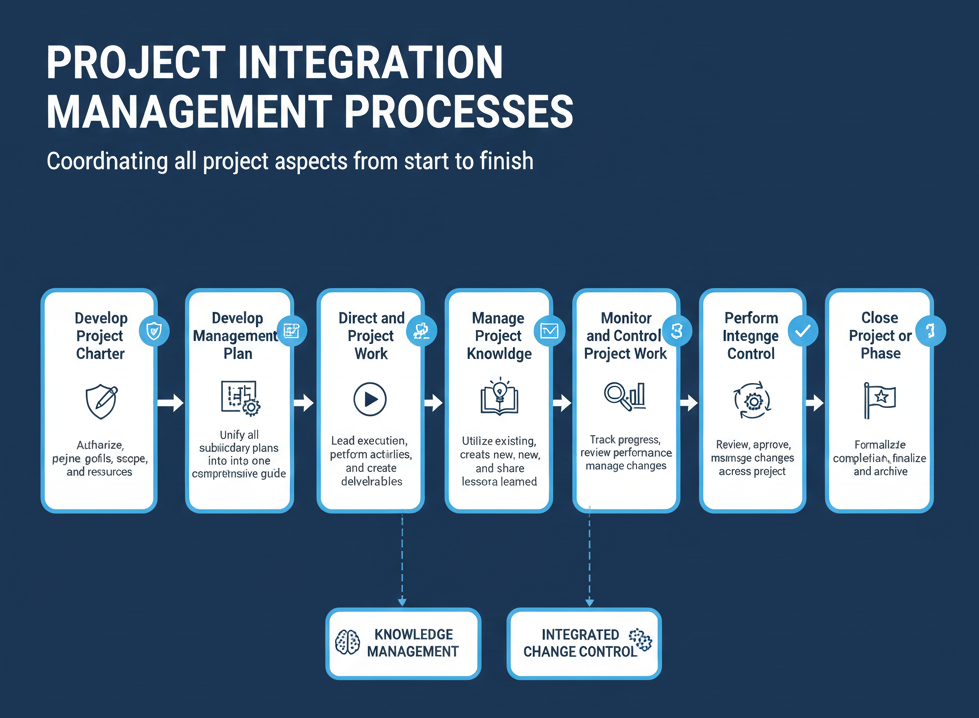
شرح تفصيلي لكل عملية من عمليات إدارة تكامل المشروع:
1- إعداد ميثاق المشروع
عملية إنشاء وثيقة رسمية تُخوّل المشروع وتمنح مدير المشروع الصلاحية لاستخدام موارد المنظمة في أنشطة المشروع. يحدّد ميثاق المشروع أهداف المشروع، ومبرراته، وأصحاب المصلحة الرئيسيين، والمتطلبات رفيعة المستوى، والميزانية الإجمالية، والجدول الزمني الأولي. ويصدره راعي المشروع أو مالكه، مانحًا مدير المشروع الشرعية والصلاحية للبدء في التخطيط والتنفيذ.
2- إعداد خطة إدارة المشروع
عملية تحديد وتوثيق وتوحيد جميع الخطط الفرعية للمشروع والمستندات ذات الصلة في خطة شاملة واحدة. وتُعد خطة إدارة المشروع الوثيقة المركزية التي تدمج جميع الخطط الفرعية لمجالات المعرفة العشرة (النطاق، والجدول الزمني، والتكلفة، والجودة، والموارد، والتواصل، والمخاطر، والمشتريات، وأصحاب المصلحة) وتوضّح كيفية تنفيذ المشروع ومراقبته وإغلاقه.
3- توجيه وإدارة أعمال المشروع
عملية قيادة وتنفيذ الأعمال المحددة في خطة إدارة المشروع وتطبيق التغييرات المعتمدة لتحقيق أهداف المشروع. وتشمل هذه العملية التنفيذ الفعلي لخطة إدارة المشروع من خلال إنجاز الأنشطة المخططة، وإنتاج المخرجات، وجمع بيانات الأداء، وإصدار طلبات التغيير عند الحاجة، وإدارة المخاطر والمشكلات، وتنفيذ الإجراءات التصحيحية والوقائية.
4- إدارة معرفة المشروع
عملية الاستفادة من المعرفة الحالية وخلق معرفة جديدة لتحقيق أهداف المشروع والمساهمة في التعلم التنظيمي. وهذه عملية جديدة، أُدرجت في الإصدار السادس من دليل PMBOK، وتركّز على الاستفادة من الدروس المستفادة السابقة والمعرفة التنظيمية القائمة، وتوثيق الرؤى الجديدة المكتسبة أثناء المشروع، ومشاركتها مع أعضاء الفريق والمنظمة، بما يحسّن الأداء المستقبلي.
5- مراقبة وضبط أعمال المشروع
عملية تتبع ومراجعة وتنظيم التقدم لتحقيق أهداف أداء المشروع كما هي محددة في خطة إدارة المشروع. وتتضمن مقارنة الأداء الفعلي بخطة إدارة المشروع، وتقييم ما إذا كانت هناك حاجة لإجراءات وقائية أو تصحيحية، ومراقبة المخاطر والمشكلات، والتأكد من تنفيذ التغييرات المعتمدة فقط، وتوفير معلومات لتقارير التقدم والتوقعات، والحفاظ على معلومات دقيقة وحديثة حول مخرجات المشروع والمستندات المرتبطة بها.
6- تنفيذ ضبط التغيير المتكامل
عملية مراجعة واعتماد وإدارة التغييرات على مخرجات المشروع والأصول التنظيمية ووثائق المشروع. وتضمن هذه العملية تقييم جميع طلبات التغيير من حيث أثرها على مختلف جوانب المشروع (النطاق، والجدول الزمني، والتكلفة، والجودة، والموارد)، واعتماد التغييرات المفيدة ورفض غير الضرورية منها، وتوثيق القرارات، وإبلاغها لأصحاب المصلحة، وتحديث المستندات المتأثرة للحفاظ على التوازن بين محددات المشروع.
7- إغلاق المشروع أو المرحلة
عملية الإنجاز الرسمي لجميع أنشطة المشروع أو المرحلة، وإتمام المخرجات، وتحرير موارد المشروع. وتشمل هذه العملية التحقق من اكتمال جميع المخرجات، والحصول على القبول الرسمي من العميل أو الراعي، وإغلاق العقود مع الموردين والمقاولين، وتوثيق الدروس المستفادة وأفضل الممارسات، وأرشفة سجلات المشروع ومستنداته، وتقييم أداء الفريق، وتحرير الموارد، وإعداد التقرير النهائي للمشروع، والاحتفال بنجاح المشروع، وتقدير جهود الفريق لضمان إغلاق مشروع احترافي ومنظم.
الخاتمة: التحول الاستراتيجي في إدارة المشاريع: نحو تحقيق نجاح مستدام
في عالم إدارة المشاريع، يختلف تكامل العمليات عن مجرد تنفيذ المهام بالتتابع. فتكامل عمليات إدارة المشروع هو الأساس الذي يُبنى عليه النجاح، إذ يضمن الترابط عبر جميع جوانب المشروع من البداية إلى النهاية. فمن إعداد ميثاق المشروع وحتى إغلاقه، تتطلب كل مرحلة إشرافًا دقيقًا وتنفيذًا محكمًا لتحقيق الأهداف ضمن الوقت المحدد والميزانية المخصصة.
وباعتماد عمليات إدارة المشروع المتكاملة هذه، يمكنك ضمان سير المشروع بسلاسة وكفاءة، مع القدرة على التكيّف والاستجابة للتغييرات مع الحفاظ على نتائج مستدامة. لذلك، فإن إدارة تكامل المشروع ليست عملية روتينية؛ بل هي مفتاح نجاح أي مشروع كبير، وضمانة لتوافقه مع الأهداف الاستراتيجية للمنظمة.
تواصل معنا اليوم في ماستر تيم لاكتشاف حلولنا الرقمية المتقدمة التي تدعم نجاحك المستقبلي:
- حل P+ الرقمي لمكتب إدارة المشاريع: الحل الرقمي المتكامل لإدارة فعّالة وكفؤة للمشاريع.
- حل S+ الرقمي للاستراتيجية: حلول رقمية استراتيجية لتعزيز الأداء المؤسسي.
- حل ديوان لإدارة المكتب التنفيذي: أدوات متقدمة لإدارة المكاتب التنفيذية وتعزيز الإنتاجية.
ابدأ الآن، وحوّل مشاريعك إلى قصص نجاح حقيقية!
الأسئلة الشائعة:
ما أهمية إدارة تكامل المشروع؟
إدارة تكامل المشروع هي الركيزة الأساسية التي تضمن ترابط المشروع وتوجّهه. فمن خلال التنسيق بين مختلف الجوانب مثل النطاق والجدول الزمني والتكلفة، تُمكّن إدارة تكامل المشروع المشاريعَ من تحقيق أهدافها بكفاءة، مع ضمان توافق القرارات مع الأهداف الاستراتيجية، مما يعزز احتمالية النجاح.
كيف يمكن تحسين عمليات إدارة تكامل المشروع؟
يمكن تحسين العمليات من خلال تطبيق أدوات وتقنيات متكاملة، مثل إدارة التغيير المتكاملة، واستخدام أنظمة رقمية لتتبع التقدم في الوقت الفعلي. وينبغي توحيد جميع الخطط الفرعية في خطة شاملة واحدة، مع تواصل فعّال بين الفرق لضمان تنفيذ القرارات باتساق. كما يساعد التدريب المستمر للفريق على أفضل الممارسات في تعزيز الكفاءة.
ما أبرز التحديات في إدارة تكامل المشروع؟
تشمل أبرز التحديات التنسيق بين فرق متعددة، وإدارة التغييرات غير المتوقعة، وضمان توافق جميع الأنشطة مع الأهداف الرئيسية للمشروع. إضافة إلى ذلك، يمكن أن تكون الإدارة الفعّالة للموارد ضمن جدول زمني وميزانية محددين تحديًا يتطلب مراقبة دقيقة واتخاذ قرارات مدروسة.
ما الفرق بين إدارة تكامل المشروع والإدارة التقليدية للمشاريع؟
تركّز إدارة تكامل المشروع على ربط جميع جوانب المشروع ضمن إطار متكامل، بما يضمن تنسيقًا دقيقًا بين العمليات والفرق. وعلى عكس الإدارة التقليدية، التي قد تركّز أكثر على تنفيذ المهام بشكل منفصل أو على مراحل، تربط إدارة التكامل جميع الأنشطة عبر دورة حياة المشروع بأكملها، بما يضمن استجابة مرنة للتغييرات وشفافية معززة.
كيف يمكن للأنظمة الرقمية أن تدعم إدارة تكامل المشروع؟
تساعد الأنظمة الرقمية، مثل منصات إدارة المشاريع، على تسريع تكامل المشروع من خلال توفير أدوات لتتبع التقدم، وإدارة التغييرات، والتواصل بين الفرق. وتتيح هذه الأنظمة ربط كل عملية في المشروع بمؤشرات الأداء الرئيسية (KPIs) والتحديثات في الوقت الفعلي، مما يمكّن من اتخاذ قرارات مبنية على البيانات، وتقليل الأخطاء البشرية، وضمان الالتزام بالمواعيد النهائية.