
🚀 تخيّل بيئة عمل تتكدّس فيها الملفات، وتتناثر فيها القرارات هنا وهناك، وتتشتت فيها المهام بين الإدارات المختلفة، بينما تسعى القيادة العليا لتحقيق أهداف استراتيجية واضحة. في خضم هذه الفوضى المحتملة، قد تضيع مبادئ الحوكمة، وقد تفقد المؤسسة السيطرة على قراراتها الحاسمة.
لكن ماذا لو كان هناك مركز واحد يعمل كجسر قوي بين القيادة التنفيذية والتنفيذ اليومي، يحوّل هذه الفوضى إلى نظام منظم وفعّال؟
📊 مع تطور أدوات الإدارة الرقمية وظهور منصات متخصصة مثل منصة ديوان لإدارة المكتب التنفيذي، أصبح بإمكان المؤسسات في المملكة العربية السعودية وحول العالم ربط استراتيجياتها بأدق التفاصيل اليومية، ومتابعة القرارات، وإدارة المهام بشكل متكامل، بما يضمن حوكمة فعّالة.
💡 هل تودّ معرفة كيف يمكن لإدارة المكتب التنفيذي أن تكون العمود الفقري لحوكمة الشركات وتضمن استمرار نجاح مؤسستك؟ امنحني بضع دقائق، وسأوضح لك كيف يمكن للحوكمة أن تنتقل من إطار نظري إلى واقع عملي يعزز أداء مؤسستك بشكل ملموس.
لماذا تُعد إدارة المكتب التنفيذي العمود الفقري لحوكمة الشركات
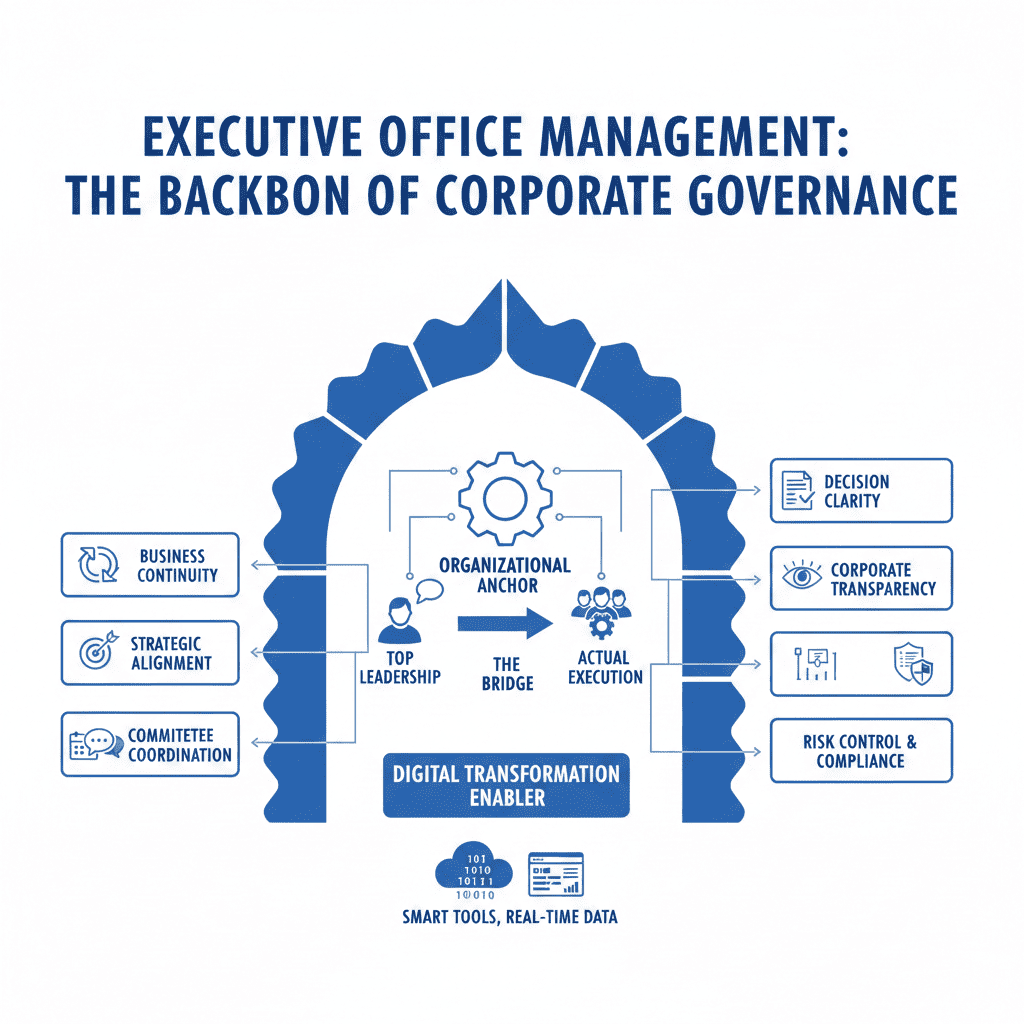
تُعد إدارة المكتب التنفيذي العمود الفقري لحوكمة الشركات، إذ تضمن ارتباطًا حيويًا بين القيادة العليا والتنفيذ الفعلي للقرارات، وترسّخ ممارسات الحوكمة في الواقع بأسلوب منهجي ومستدام. كما تُنشئ إطارًا تنظيميًا مركزيًا يعزز وضوح القرارات، والشفافية، واستمرارية العمليات، وضبط المخاطر، والتوافق مع التوجهات الاستراتيجية، مع تمكين التحول الرقمي باعتباره عاملًا حاسمًا في الحوكمة الحديثة.
في بيئات العمل المؤسسية الحديثة، لا تقتصر الحوكمة على وضع السياسات والإجراءات فحسب، بل تتطلب تطبيقًا يوميًا وتنسيقًا فعّالًا لضمان تنفيذ هذه السياسات بدقة. وهنا يبرز دور إدارة المكتب التنفيذي كركيزة تنظيمية داخل المؤسسة، إذ تعمل كجسر بين الاستراتيجية رفيعة المستوى والتنفيذ الفعلي للمهام. ومن خلال مركزة متابعة القرارات وتنسيق العمل بين الإدارات المختلفة، تضمن الإدارة التنفيذية الاستقرار وسلاسة العمليات.
يُعد وضوح القرارات عاملًا رئيسيًا في بناء ثقافة المساءلة المؤسسية؛ فتوثيق نتائج الاجتماعات وربط كل قرار بالجهة المسؤولة عنه يتيح للمؤسسات تتبع الأثر الفعلي لهذه القرارات وتحسين الأداء باستمرار. كما أن توحيد مصادر المعلومات وفتح قنوات شفافة لمشاركة البيانات في الوقت الفعلي بين أصحاب المصلحة المعنيين يقضي على العزلة بين فرق العمل ويعزز الشفافية التشغيلية.
كما تضمن أدوات إدارة المكتب التنفيذي استمرارية العمليات المؤسسية من خلال الحفاظ على المعرفة المؤسسية وتوثيق القرارات، مما يقلل الاعتماد على الأفراد ويحمي المؤسسة من المخاطر المرتبطة بتغيّر القيادة أو فرق العمل التنفيذية. كما تركز على ضبط المخاطر بدقة من خلال المتابعة المستمرة للالتزامات واكتشاف التحديات التشغيلية والتنظيمية مبكرًا، بما يدعم الامتثال للسياسات واللوائح المعتمدة.
من ناحية أخرى، يضمن التوافق بين التوجهات الاستراتيجية وأطر الحوكمة أن تكون كل خطوة تنفيذية منسجمة مع الأهداف العامة للمؤسسة، مما يحوّل الاستراتيجية إلى ممارسات قابلة للقياس والمتابعة. وتتعزز هذه العملية من خلال مركز تنسيق مخصص لعمل اللجان واتخاذ القرارات المؤسسية، ينظم عمل اللجان، ويمنع تعارض القرارات، ويضمن تكامل القرارات على مستوى المؤسسة.
وأخيرًا، أصبح التحول الرقمي ركيزة أساسية لتمكين الحوكمة الحديثة. فالأنظمة الرقمية المتقدمة مثل منصات إدارة المكتب التنفيذي توفر أدوات ذكية لتحليل البيانات ولوحات معلومات متكاملة تدعم اتخاذ القرار في الوقت الفعلي، محوّلة الحوكمة التقليدية إلى حوكمة ذكية ومتقدمة.
لتلخيص أبرز النقاط التي سنتناولها بالتفصيل في الأقسام التالية:
- الركيزة التنظيمية لحوكمة الشركات
- وضوح القرارات كأحد ركائز المساءلة المؤسسية
- الجسر الواصل بين القيادة العليا والتنفيذ الفعلي
- الشفافية المؤسسية من خلال مركزة المعلومات
- ضمان استمرارية الأعمال بعيدًا عن الاعتماد على الأفراد
- ضبط المخاطر والامتثال التنظيمي
- مواءمة التوجهات الاستراتيجية مع أطر الحوكمة
- مراكز تنسيق اللجان واتخاذ القرارات المؤسسية
- التحول الرقمي كممكّن للحوكمة الحديثة
1. الركيزة التنظيمية لحوكمة الشركات
تُشكّل إدارة المكتب التنفيذي الركيزة التنظيمية التي تضمن التطبيق العملي لسياسات الحوكمة. فهي تعمل كمركز عصبي للمؤسسة، يجمع المعلومات، ويوجّه الإرشادات، وينسّق الإجراءات بين مختلف الإدارات. وكما يشير خبراء الحوكمة، غالبًا ما يُعد أمين سر الشركة أو مسؤول الحوكمة العمود الفقري لاتخاذ القرارات وضمان النزاهة، إذ يزوّد القيادة ومجالس الإدارة بالمعلومات والموارد في الوقت المناسب.
وبذلك، تحوّل إدارة المكتب التنفيذي الأطر النظرية للحوكمة إلى ممارسة يومية من خلال إنشاء آليات مراقبة مركزية. ويوحّد هذا الترتيب متطلبات الرقابة والإشراف ضمن نظام تنظيمي واحد، مما يسهّل التواصل بين اللوائح الصادرة وصناع القرار والفرق، ويسهم في استقرار العمليات والتوافق مع الأهداف.
2. وضوح القرارات كركيزة للمساءلة المؤسسية
إن التسجيل الدقيق للقرارات المؤسسية ومتابعتها هو ما يجعلها قابلة للتنفيذ ومحمية قانونيًا. ويجب توثيق كل قرار بوضوح وربطه مباشرة بالجهة المسؤولة عنه والأفراد المكلفين بتنفيذه.
تشير الدراسات إلى أن الحفاظ على محاضر الاجتماعات وتوزيعها بدقة على أصحاب المصلحة يعزز الشفافية والثقة، إذ يمنحهم فهمًا واضحًا للتوجهات الاستراتيجية ويضمن المساءلة عن تنفيذها.
باستخدام نظام متكامل لمتابعة القرارات، يُربط كل قرار بالأهداف الاستراتيجية عبر المهام ومؤشرات الأداء، مما يخلق حلقة مساءلة مغلقة. وكما أشارت منصة متخصصة لمجالس الإدارة التنفيذية (BoardCloud)، فإن ربط القرارات بفرق التنفيذ وتحديد المواعيد النهائية يشكّل شبكة حوكمة قوية.
وبالتالي، فإن وضوح القرارات، عندما يُترسّخ من خلال آليات رسمية، يعزز المساءلة ويرتقي بالحوكمة من مجرد توصيات إلى إنجازات قابلة للقياس استنادًا إلى مؤشرات الأداء الرئيسية (KPIs).
3. الجسر الواصل بين القيادة العليا والتنفيذ الفعلي
يعمل المكتب التنفيذي كجسر يربط كل توجيه استراتيجي بالواقع. ويكمن دوره في ترجمة رؤى القيادة العليا إلى مهام يومية واضحة وقابلة للتنفيذ. وعندما تُقسّم القيادة العليا الرؤية إلى أهداف قابلة للقياس وخطوات عملية، يتولى المكتب التنفيذي مسؤولية ضمان تنفيذها من قبل فرق التنفيذ.
يؤكد الخبراء أن القادة الناجحين كثيرًا ما يُطلق عليهم "الرؤساء التنفيذيون" لأنهم متخصصون في تحويل الاستراتيجية إلى مقاييس قابلة للتنفيذ. وهذا يعني أن خارطة طريق التنفيذ تنبثق من صميم إدارة المهام داخل المكتب التنفيذي، حيث تُوزّع المهام على الفرق وتُحدد مؤشرات التقدم.
وتُلغي هذه الآلية الفجوة التقليدية بين المستويين الاستراتيجي والتنفيذي؛ فبدلًا من بقاء الخطط حبيسة الأوراق، تُتابع وتُراقب يوميًا. وبذلك، يضمن المكتب التنفيذي انتقال معايير وأهداف القيادة العليا من الشكل الوثائقي إلى واقع ملموس، يترجمه كل موظف ضمن نطاق دوره.
4. الشفافية المؤسسية من خلال مركزة المعلومات
تُعد مركزة المعلومات والبيانات في منصة واحدة مفتاحًا للشفافية الداخلية. فعندما تعتمد المؤسسة على نظام مركزي لتجميع بيانات الاجتماعات والقرارات والوثائق، فإنها تُنشئ مصدرًا موحدًا للحقيقة يمكن للجميع الوصول إليه. ويشير خبراء إدارة البيانات إلى أن مركزة المعلومات تقلل من التناقضات وتمنع تشتت التقارير، مما يتيح اتخاذ قرارات سريعة ودقيقة.
وبالمثل، فإن مشاركة البيانات المشتركة بين جميع الأطراف تعزز ثقافة تعاون أكثر انفتاحًا؛ إذ تستطيع كل إدارة الوصول فورًا إلى البيانات والأهداف ذات الصلة، بدلًا من العمل بمعزل عن غيرها. وبهذه الطريقة، تصبح الشفافية ركيزة أساسية للمؤسسة: فالهيكل الرسمي المركزي يضمن حصول كل صاحب مصلحة على المعلومات التي يحتاجها في الوقت الفعلي، وعدم اتخاذ أي قرار دون مراعاة مؤشرات الأداء والالتزامات المحددة.
5. الاستمرارية المؤسسية بعيدًا عن الاعتماد على الأفراد
تعتمد المؤسسات القوية على الحفاظ على المعرفة والسجلات المؤسسية، لا على الأفراد. ومن أبرز إنجازات المكتب التنفيذي توثيق المعرفة المؤسسية، أي جمع القرارات والإرشادات وأفضل الممارسات في قواعد بيانات يسهل البحث فيها. ويحذّر خبراء إدارة المعرفة من أن المعلومات التنظيمية تمثل "الذاكرة الحية" للمؤسسة، ويمكن أن تضيع إذا لم يتم تسجيلها.
ولضمان استمرارية الأعمال، يتولى المكتب التنفيذي إدارة حفظ السجلات الحيوية، من محاضر وخطط وجداول عمل، أشبه بمستودع رقمي موثوق. ويقلل هذا النهج من مخاطر الاعتماد على شخص واحد أو تغيّر القيادة؛ إذ يمكن لأي موظف جديد الوصول بسهولة إلى تاريخ القرارات والإرشادات عبر النظام المركزي، وفهم الخطوات المطلوبة للمستقبل.
ويكتسب هذا الأمر أهمية خاصة خلال فترات التغيير التنظيمي، إذ تُنشئ المؤسسة "نطاقًا معرفيًا" متينًا قادرًا على استيعاب الصدمات والتكيف بسرعة.
6. ضبط المخاطر وضمان الامتثال التنظيمي
تتطلب إدارة المخاطر والامتثال متابعة يومية للالتزامات والقرارات. وكلما ازدادت تعقيدات المتطلبات التنظيمية، ازدادت أهمية توفر آليات فورية لرصد المخاطر التشغيلية ومراقبتها. وهنا يؤدي المكتب التنفيذي دورًا رئيسيًا في ربط القرارات بالسياسات واللوائح المعتمدة.
يوصي خبراء الحوكمة بتوحيد جميع العمليات ذات الصلة تحت إطار رقابي موحد؛ فالاعتماد مثلًا على تواصل عشوائي عبر البريد الإلكتروني "ينطوي على مخاطر" ويفتقر إلى الشفافية. لذلك، توفر الأنظمة الحديثة لوحة معلومات مركزية تكشف فورًا أي مخالفات في المسارات الإدارية أو القانونية.
يتفق متخصصو الحوكمة على أن الخطوة الأولى للحد من المخاطر هي إنشاء نظام متكامل يجمع الحوكمة والرقابة ضمن إطار واحد. ويستطيع المكتب التنفيذي، من خلال منصات متخصصة تتابع الالتزامات، إصدار إنذارات مبكرة بالمشكلات المحتملة ودعم التنفيذ الفوري للسياسات المعتمدة.
وبهذه الطريقة، يصبح الحفاظ على الامتثال عملية منهجية مدعومة بتقارير ومؤشرات تتابع تقدم الالتزامات لحظة بلحظة.
7. مواءمة التوجهات الاستراتيجية مع أطر الحوكمة
تربط إدارة المكتب التنفيذي بين الأهداف طويلة المدى للمؤسسة والقواعد التشغيلية التي تحكم العمل، إذ تأخذ الرؤية الاستراتيجية وتعيد صياغتها ضمن إطار حوكمة متسق. وعلى سبيل المثال، توصي إحدى مبادرات الحوكمة الوطنية بمواءمة الأهداف الاستراتيجية مع قرارات القيادة لضمان اتساق التنفيذ ضمن إطار السياسات.
وبفضل أنظمة العمل المؤسسية (Enterprise PMO / EPM)، يمكن متابعة مدى توافق نتائج المشاريع والمبادرات مع هذه الأهداف من خلال مؤشرات أداء محددة. وعندما تقيس اللجان التنفيذية التقدم بشفافية وتقدم النتائج استنادًا إلى معايير واضحة، يتحول التخطيط النظري إلى ممارسات قابلة للقياس والمتابعة.
وكما أشار معهد مركز دبي المالي العالمي (DIFC) في ورشة عمل حديثة، فإن إدارة المشاريع التنفيذية، حين تُصمم بوعي حوكمي، تساعد على "مواءمة الاستراتيجية مع أطر الحوكمة والتنفيذ" بشكل مباشر. وبذلك، تُنشئ إدارة المكتب التنفيذي ارتباطًا مستمرًا بين خطط القيادة العليا والمتطلبات التنظيمية، محوّلة الخطط إلى مبادرات منتجة ورقابة قائمة على البيانات.
8. تنسيق اللجان واتخاذ القرارات المؤسسية
تؤدي اللجان التنفيذية دورًا محوريًا في معالجة القضايا التفصيلية؛ والمكتب التنفيذي هو الجسر الذي يربط هذه اللجان ببعضها، ويضمن انسجام عملها. ولكل لجنة رسمية في مجلس الإدارة (كلجنة المالية أو لجنة المراجعة) مهام ونتائج محددة تُوثّق في محاضر رسمية.
ومن خلال الأتمتة والإدارة المركزية للمعلومات، يضمن المكتب التنفيذي تنظيم مخرجات اللجان وتوحيدها. وتشير المصادر إلى أن مجالس الإدارة الفعالة تفوّض مسؤوليات واضحة للجان، بما يضمن توثيق كل خطوة. فعلى سبيل المثال، تنسّق لجنة المخاطر مع لجنة المراجعة لتقييم المخاطر التشغيلية وضمان عدم تداخل الرقابة.
ثم تقدم كل لجنة توصياتها النهائية لمجلس الإدارة مع سجلات رسمية واضحة. ويمنع هذا التنسيق المركّز تعارض القرارات أو التكرار بين اللجان المختلفة، ويضمن نهجًا موحدًا على مستوى المؤسسة. وكما يصف أحد خبراء الحوكمة، تتحول الجهات المختلفة في هذه العملية إلى غرف تحليل متكاملة، تتخصص كل منها في مجالها دون تداخل، مما يعزز تماسك اتخاذ القرار المؤسسي وترابطه.
9. التحول الرقمي كممكّن للحوكمة الحديثة
لم تعد الحوكمة مقتصرة على السياسات الورقية؛ فقد أدت التقنيات الرقمية دورًا تمكينيًا حاسمًا. وقد غيّر التحول الرقمي طريقة إدارة المعلومات واتخاذ القرارات على المستوى التنفيذي. ووفقًا لتوصيات حديثة، ينبغي للمؤسسات استخدام لوحات معلومات ذكية وأنظمة متطورة لعرض البيانات الحية وتحسين اتخاذ القرار في الوقت الفعلي.
وبدلًا من الاعتماد فقط على البيانات التاريخية، تعالج الشركات اليوم المعلومات فوريًا، مما يمكّن القادة من اتخاذ إجراءات عاجلة ومستنيرة مدعومة بأدوات الذكاء الاصطناعي وتحليل البيانات. ومن الأمثلة على ذلك منصة "ديوان": فهي تمركز إدارة الاجتماعات والقرارات في مكان واحد، وتحوّل كل قرار إلى مهام ملموسة ضمن نظام موثّق مسبقًا لإدارة المهام.
وكما توضح وثائق المنصة نفسها، فإن تحويل القرارات إلى مهام وتوفير تقارير تنفيذ فورية يعزز الشفافية ويرسّخ الاتساق مع الأهداف. وبالمثل، يساعد تبني التقنيات الذكية السحابية وأنظمة إدارة الأداء في الحفاظ على آليات الحوكمة على مدار الساعة، مع وصول آمن إلى الوثائق وتدفق سلس للإجراءات.
ويمكّن هذا التحول من الحوكمة الورقية التقليدية إلى الحوكمة الرقمية الذكية الجهات الحكومية والمؤسسات من الاستجابة السريعة للتحديات، وتقديم تقارير حية، وضمان تنفيذ كل قرار وفق استراتيجية رقمية متكاملة.
الحلول المؤسسية المتخصصة كممكّنات للحوكمة التنفيذية
تحقق إدارة المكتب التنفيذي فاعليتها وتعزز دورها في حوكمة الشركات بفضل الحلول التقنية المتخصصة التي تقدمها شركات مثل ماستر تيم. وتُعد منصة ديوان جزءًا أساسيًا من نظام متكامل يدعم إدارة المكاتب التنفيذية بطريقة ذكية، بما يتوافق مع رؤية المملكة العربية السعودية 2030.
توفر منصة ديوان أدوات متقدمة لإدارة الاجتماعات، ومتابعة القرارات التنفيذية، وتنسيق اللجان، بما يمكّن المؤسسات من توحيد عمليات الحوكمة والإدارة ضمن بيئة مركزية واحدة.
وتتيح هذه الحلول، بما فيها الحل الرقمي P+ لمكتب إدارة المشاريع، دمج متابعة المهام مع التقارير المالية ومؤشرات الأداء الرئيسية (KPIs)، مع الالتزام بمعايير "قياس" الوطنية. وهو ما يضمن توفير بيانات موثوقة وفورية تدعم اتخاذ القرار.
ومن خلال الترابط المتكامل بين منصة ديوان والأدوات الذكية لماستر تيم، تتوافق الحوكمة مع الاستراتيجية التنفيذية، ويُدعم التحول الرقمي المؤسسي، مما يجعل هذه الحلول نقطة تحول حقيقية من الأطر النظرية إلى نظام عملي متكامل يعزز فاعلية المكتب التنفيذي ويقود حوكمة الشركات نحو مستقبل أكثر ذكاءً واستدامة.
الخاتمة: الإدارة التنفيذية... نبض حوكمة الشركات الناجحة
إدارة المكتب التنفيذي هي نبض أي هيكل حوكمة ناجح. فمن خلالها تتحول الرؤى الاستراتيجية إلى مهام يومية قابلة للتنفيذ والمتابعة، وتصبح القرارات واضحة ومؤتمتة، ويعمل الجميع في تناغم بدلًا من التشتت. إنها العمود الفقري لحوكمة الشركات؛ إذ تنظّم اللجان، وتوحّد المتابعات، وتحافظ على المعرفة المؤسسية بعيدًا عن الاعتماد على الأفراد.
وعند توظيف الأدوات الرقمية الحديثة، سواء منصات مثل ديوان أو أنظمة PMO الذكية، يمكن دعم هذه العملية بكفاءة غير مسبوقة: إذ توفر لوحات المعلومات الذكية بيانات ومقاييس فورية، وتربط كل قرار بمؤشرات استراتيجية، وتضمن الامتثال للمتطلبات التنظيمية.
باختصار، يحقق المكتب التنفيذي، من خلال منهجيته المتقدمة وتكامله مع التحول الرقمي، توافقًا كاملًا بين الرؤية والواقع التنفيذي، بما يؤدي إلى حوكمة شركات أكثر شفافية ومرونة وفعالية.
💬 هل تودّ تعزيز حوكمة مؤسستك بأحدث الحلول الرقمية؟
تواصل معنا في ماستر تيم للحصول على أفضل دعم، ودعنا نساعدك على تحويل رؤيتك إلى واقع ملموس.
الأسئلة الشائعة:
1- ما الدور الذي تؤديه إدارة المكتب التنفيذي في تعزيز حوكمة الشركات؟
تعمل إدارة المكتب التنفيذي كدعم رئيسي لوظائف الحوكمة؛ إذ تجمع المعلومات والقرارات الرسمية وتوزعها على الجميع بطريقة منظمة، وتضمن متابعة تنفيذ السياسات وقرارات القيادة. فعلى سبيل المثال، يُعد أمين سر الشركة العمود الفقري لاتخاذ القرارات وضمان النزاهة، إذ يزوّد مجالس الإدارة والقيادة بالموارد والأدوات اللازمة للامتثال الصارم.
2- متى تصبح إدارة المكتب التنفيذي ضرورة حوكمية لا مجرد وظيفة تنظيمية داعمة؟
عندما تزداد القرارات تعقيدًا وتتنامى المسؤوليات الاستراتيجية، تميل المؤسسات إلى تحويل دور المكتب التنفيذي من وظيفة إدارية إلى دور حوكمي استراتيجي. بمعنى آخر، عندما يتسع نطاق المشروع أو الرقابة التنظيمية، يصبح التركيز فقط على المهام الإدارية الروتينية خطأً.
3- كيف يمكن قياس أثر إدارة المكتب التنفيذي على فاعلية مجالس الإدارة واللجان التنفيذية؟
يمكن تقييم هذا الأثر من خلال مؤشرات الأداء الرئيسية (KPIs) المرتبطة بتنفيذ القرارات والالتزام بالجداول الزمنية. فعلى سبيل المثال، تُعد نسبة إنجاز المهام المنبثقة عن القرارات ومتوسط الوقت اللازم لاعتماد المحاضر من الأدوات المعيارية لقياس الفاعلية.
4- ما الفروق بين إدارة المكتب التنفيذي التقليدية وإدارتها ضمن إطار حوكمة الشركات الحديثة؟
غالبًا ما كانت إدارة المكتب التنفيذي التقليدية تركز على المهام الإدارية اليومية (مثل الجدولة الورقية وخدمات الدعم)، وكانت أقل ارتباطًا بالاستراتيجية وأهداف القيادة العليا. أما حوكمة الشركات الحديثة فتعتمد على أنظمة رقمية متكاملة.