
🚀 تخيل أنك تقود مشروعًا استراتيجيًا تبلغ قيمته ملايين الريالات، بمشاركة عشرات الأطراف المعنية، وجداول زمنية ضيقة... بينما الخطط متناثرة، والقرارات متأخرة، والتغييرات تُدار بردود الفعل بدلاً من رؤية واضحة.
في عالم تتسارع فيه وتيرة الأعمال وتزداد فيه تعقيدات المشاريع، لم يعد الفشل ناتجًا عن نقص الجهد، بل عن غياب منهجية إدارية منظمة تربط الرؤية بالتنفيذ.
📌 تشير التقارير العالمية الحديثة إلى أن المشاريع التي تُدار وفق ممارسات إدارة المشاريع الاحترافية تحقق نجاحًا يفوق ضعف نجاح تلك التي تعتمد على الجهد الفردي أو الأدوات التقليدية. والسبب واضح: إدارة المشاريع ليست مجرد جداول وخطط، بل هي منظومة متكاملة توحّد الأهداف والموارد والمخاطر والتوقعات ضمن إطار قابل للقياس والتحكم.
📊 مع تنامي حجم المشاريع، وتعدد الأطراف المعنية، وتسارع وتيرة التغيير، لم يعد السؤال:
هل نحتاج إلى إدارة المشاريع؟
بل أصبح السؤال الحقيقي هو:
كيف يمكننا إدارة مشاريعنا باحترافية لضمان تحقيق الأهداف الاستراتيجية، والتحكم في الوقت والتكلفة، وتقديم قيمة حقيقية ومستدامة؟
💡 لم تعد إدارة المشاريع الحديثة وظيفة تشغيلية، بل أصبحت ركيزة أساسية لنجاح المؤسسات، إذ تمكّنك من:
✔ تحويل الاستراتيجية إلى مشاريع قابلة للتنفيذ
✔ التحكم في النطاق والوقت والتكلفة بمرونة واحترافية
✔ إدارة المخاطر قبل أن تتحول إلى أزمات
✔ تعزيز الشفافية والتواصل مع جميع الأطراف المعنية
✔ تحسين جودة المخرجات وتعظيم العائد على الاستثمار
⏳ في هذا الدليل الشامل، ستنتقل من فهم المفاهيم الأساسية لإدارة المشاريع، إلى إتقان مراحلها ومنهجياتها ومجالات المعرفة فيها وأبرز التحديات التي تواجهها. وستكتشف كيف يمكن لإدارة المشاريع أن تحوّل العمل من مجرد تنفيذ مهام... إلى قدرة مؤسسية تدفع نحو الإنجاز، وتبني النجاح بثقة، وتضمن الاستدامة.
ما هي إدارة المشاريع؟
تُعرّف إدارة المشاريع من قبل معهد إدارة المشاريع (PMI) في دليل PMBOK بأنها "تطبيق المعرفة والمهارات والأدوات والتقنيات على أنشطة المشروع لتلبية متطلباته". يركز هذا التعريف على الجانب العملي والتطبيقي لهذا التخصص.
في المقابل، تعرّفها المنظمة الدولية للمعايير (ISO) في معيار ISO 21500 بأنها "تطبيق الأساليب والأدوات والتقنيات والكفاءات على المشروع"، مؤكدة على أهمية الكفاءات البشرية إلى جانب الأدوات التقنية.
وتُعرّف الجمعية البريطانية لإدارة المشاريع (APM) إدارة المشاريع بأنها "تطبيق العمليات والأساليب والمعرفة والمهارات والخبرة لتحقيق أهداف المشروع ضمن معايير قبول متفق عليها ووفقًا لمعايير محددة". ويضيف هذا التعريف بُعدًا مهمًا يتعلق بمعايير القبول والمعايير المتفق عليها مسبقًا.
وعلى الرغم من اختلاف هذه التعريفات، يبقى جوهرها واحدًا: فإدارة المشاريع هي مجموعة من العمليات والأدوات والأساليب والمنهجيات والموارد والإجراءات المستخدمة لإدارة المشروع.
ولفهم إدارة المشاريع بشكل أعمق، من الضروري الإلمام بالمفاهيم التالية:
تعريف المشروع
وفقًا لدليل PMBOK، يُعرَّف المشروع بأنه "مسعى مؤقت يُنفَّذ لإنشاء منتج أو خدمة أو نتيجة فريدة". ويتميز المشروع بسمات جوهرية تميزه عن العمليات التشغيلية الروتينية؛ إذ يكون لكل مشروع بداية ونهاية محددتان، ولا تعني كلمة "مؤقت" بالضرورة قصر المدة، فقد تمتد المشاريع لسنوات عديدة. كما تُنفَّذ المشاريع لتحقيق أهداف محددة من خلال إنتاج مخرجات - منتجات أو خدمات أو نتائج فريدة وقابلة للتحقق.
ويتمثل هدف كل مشروع في نقل المؤسسة من وضعها الحالي إلى الوضع المستقبلي المنشود، وقد يتطلب ذلك المرور بعدة مراحل انتقالية تُتخذ خلالها خطوات متتابعة للوصول إلى المستقبل المتصوَّر. ويؤدي إنجاز المشروع بنجاح إلى تحقيق المؤسسة لوضعها المستقبلي وأهدافها المحددة، من خلال إدارة فعّالة للمشروع وما يرافقها من تغيير مؤسسي.
مدير المشروع
مدير المشروع هو الشخص المسؤول عن قيادة الفريق لتحقيق أهداف المشروع. ويشمل هذا الدور الإشراف على تطوير الفريق من خلال تعزيز الكفاءات وتحفيز التفاعل بين أعضاء الفريق ضمن بيئة عملهم، بهدف تحسين أداء المشروع وضمان تحقيق أهدافه المحددة. ويعتمد نجاح مدير المشروع على قدرته على دمج مختلف العمليات الإدارية وتوجيه الموارد بكفاءة نحو تحقيق النتائج المرجوة، ضمن قيود الوقت والتكلفة والجودة.
مخرجات المشروع
تُعرَّف مخرجات المشروع في إدارة المشاريع بأنها جميع النواتج والنتائج - سواء كانت ملموسة أو غير ملموسة - التي تُنتَج أثناء تنفيذ المشروع بهدف إنجازه وتحقيق الأهداف المتفق عليها.
وقد تشمل هذه المخرجات منتجًا فريدًا، أو خدمة محددة، أو تقريرًا أو برنامجًا، أو حتى تحسينًا أو تصحيحًا لمنتج أو عملية قائمة. وتُعد المخرجات أداة رئيسية لقياس تقدم المشروع وتقييم نجاحه، كما تشكل أساسًا لتحقيق رضا الأطراف المعنية، إذ تحدد بوضوح ما يجب إنجازه، على عكس نقاط التحول (Milestones) التي تقتصر على قياس التقدم دون وصف المخرجات نفسها.
وتشمل مخرجات المشروع كلًا من المخرجات المرحلية التي تُنجَز خلال المراحل الوسيطة للمشروع، والمخرجات النهائية التي تمثل الناتج النهائي للمشروع.
ويمكن أن تكون المخرجات ملموسة، مثل مبنى مكتمل، أو تصاميم، أو برنامج حاسوبي، أو غير ملموسة، مثل التدريب، أو خطة تسويقية، أو تحسين عملية تشغيلية، أو قدرة مؤسسية جديدة. وتكمن أهمية المخرجات في توجيه الفريق، وتحديد الأولويات، وقياس جودة العمل، وتعزيز التواصل الفعّال مع الأطراف المعنية.
وبما أن كل مشروع فريد في خصائصه الأساسية - كالموقع والتصميم والبيئة وطبيعة الأفراد المشاركين فيه - فإن مخرجاته تعكس هذه الخصوصية، مما يجعل كل مشروع حالة فريدة تتطلب نهج إدارة مصممًا خصيصًا لتحقيق أفضل النتائج.
دليل PMBOK (مجموعة معارف إدارة المشاريع)
دليل PMBOK (مجموعة معارف إدارة المشاريع) هو المرجع المعترف به عالميًا الذي يجمع أفضل الممارسات والمفاهيم والمصطلحات المعيارية في مجال إدارة المشاريع، ويصدره معهد إدارة المشاريع (PMI).
ويوفر دليل PMBOK إطارًا منهجيًا شاملاً مصممًا لمساعدة مديري المشاريع على التخطيط والتنفيذ والمراقبة والتحكم في المشاريع بشكل منظم، بما يضمن تحقيق الأهداف بكفاءة وفعالية. وينظم الدليل المعرفة حول مجموعات العمليات ومجالات المعرفة، ويقدم لغة موحدة وأساسًا معياريًا مرنًا يمكن تكييفه مع مختلف أنواع المشاريع وأحجامها وقطاعاتها.
ويخضع الدليل لتحديث دوري لمواكبة تطور مهنة إدارة المشاريع، بما يشمل دمج منهجيات حديثة مثل Agile والنهج الهجين (Hybrid). ويجعله ذلك خارطة طريق عملية لتحسين الأداء وتحقيق نتائج ناجحة، إضافة إلى كونه المرجع الأساسي للحصول على الشهادات المهنية المعترف بها عالميًا، ومنها شهادة PMP (محترف إدارة المشاريع).
وتضم النسخة السادسة من الدليل، الصادرة عام 2017، 49 عملية إدارية موزعة على خمس مجموعات عمليات (البدء، والتخطيط، والتنفيذ، والمراقبة والتحكم، والإغلاق) وعشرة مجالات معرفية، من بينها: إدارة التكامل، والنطاق، والجدول الزمني، والتكلفة، والجودة، والموارد، والاتصالات، والمخاطر، والمشتريات، وإدارة الأطراف المعنية.
دورة حياة المشروع
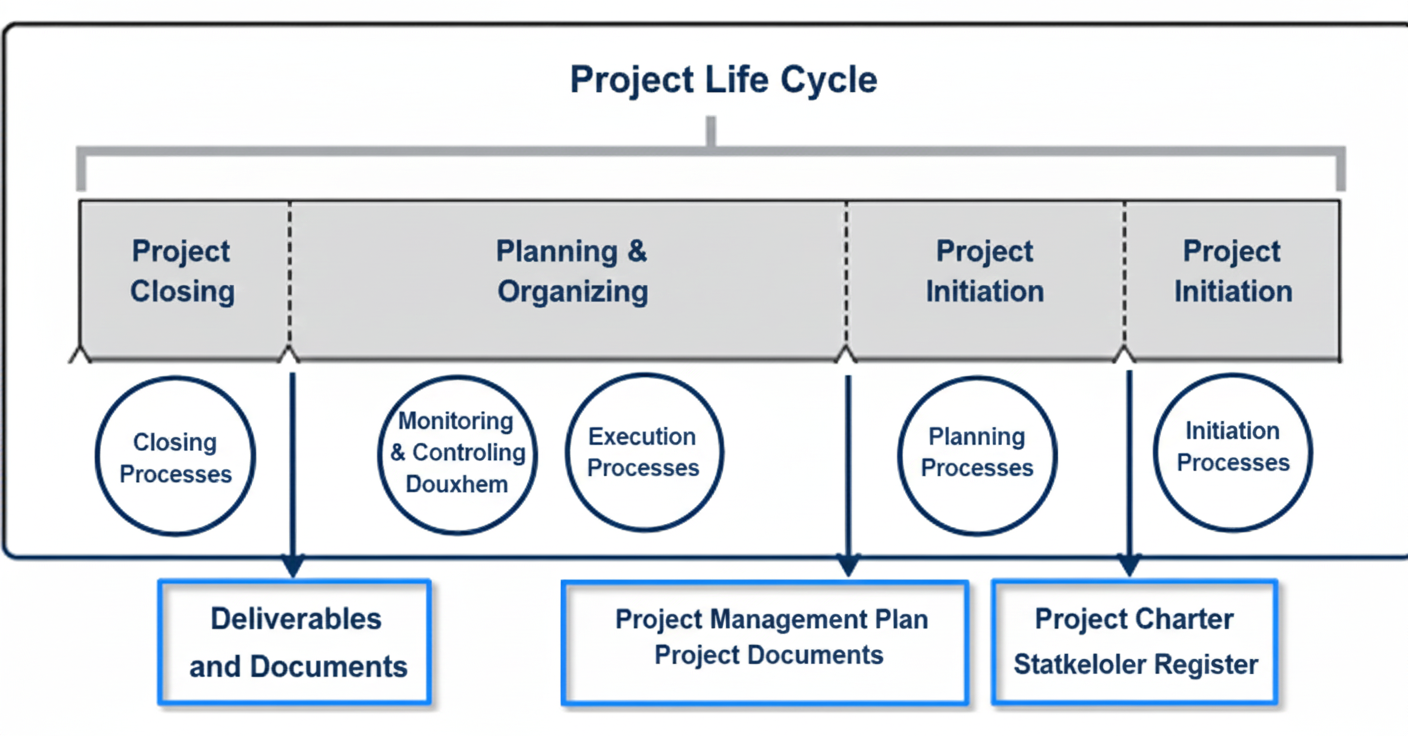
تُعرَّف دورة حياة المشروع بأنها الإطار المنهجي الذي يوضح تسلسل المراحل التي يمر بها المشروع منذ بدايته وحتى إغلاقه الرسمي، بما يضمن تحقيق أهداف المشروع بكفاءة وفعالية.
وتتضمن دورة حياة المشروع عادةً مراحل رئيسية مترابطة، تبدأ بمرحلة بدء المشروع، حيث تُحدَّد الفكرة العامة، ويُنشأ ميثاق المشروع، وتُحدَّد الأطراف المعنية. تليها مرحلة التخطيط والإعداد، التي تُطوَّر خلالها خطة إدارة المشروع (خطة إدارة النطاق، وخطة إدارة المتطلبات، وخطة إدارة الجدول الزمني، وغيرها) والوثائق التفصيلية للمشروع (قائمة الأنشطة، وتقديرات التكلفة، وغيرها).
بعد ذلك، تُترجم مرحلة التنفيذ الخطط إلى أنشطة فعلية، مع مراقبة وتحكم مستمرين لضمان الالتزام بالجداول الزمنية والمعايير المحددة مسبقًا. وأخيرًا، تركز مرحلة الإغلاق على تسليم المخرجات النهائية، وتوثيق الدروس المستفادة، والإغلاق الرسمي للعقود والوثائق.
وتُعد دورة حياة المشروع إطارًا أساسيًا لإدارة المشاريع، يُطبَّق بغض النظر عن طبيعة المشروع أو قطاعه، إذ تساعد على تنظيم الجهود، وتوضيح المسؤوليات، وتحسين جودة القرارات الإدارية، مما يعزز فرص نجاح المشروع وتحقيق القيمة المتوقعة منه.
المراحل الرئيسية لإدارة المشاريع
تمر إدارة المشاريع بخمس مراحل رئيسية مترابطة وفقًا لدليل PMBOK، تبدأ بمرحلة البدء، حيث يُعتمد المشروع رسميًا وتُحدَّد أهدافه وأطرافه المعنية. تليها مرحلة التخطيط، التي تُوضع خلالها خطة شاملة لتحديد نطاق المشروع ومنهجيته وآليات التنفيذ والتحكم. ثم تأتي مرحلة التنفيذ، التي تترجم الخطط إلى واقع من خلال إنجاز المهام وإنتاج المخرجات. وتسير مرحلة المراقبة والتحكم بالتوازي مع التنفيذ لتتبع الأداء، وإدارة الانحرافات، وضمان الالتزام بالخطة. وتختتم الدورة بمرحلة الإغلاق، حيث تُعتمد المخرجات النهائية، وتُوثَّق الدروس المستفادة، وتُطلَق الموارد.
إليك قائمة بالمراحل الرئيسية في إدارة المشاريع:
- مجموعة عمليات البدء
- مجموعة عمليات التخطيط
- مجموعة عمليات التنفيذ
- مجموعة عمليات المراقبة والتحكم
- مجموعة عمليات الإغلاق
وفيما يلي شرح تفصيلي لكل خطوة من خطوات عملية إدارة المشاريع:
1. مجموعة عمليات البدء
عمليات البدء هي الأنشطة اللازمة لتحديد مشروع جديد أو مرحلة جديدة من مشروع قائم، والحصول على التفويض الرسمي للانطلاق.
وتشمل هذه المرحلة إعداد ميثاق المشروع، الذي يمنح مدير المشروع الصلاحية الرسمية لاستخدام الموارد، كما تتضمن تحديد وتوثيق الأطراف المعنية بالمشروع، بما يرسّي الأساس القانوني والإداري لانطلاق المشروع وتحديد أهدافه الأولية.
2. مجموعة عمليات التخطيط
عمليات التخطيط ضرورية لتحديد نطاق المشروع، وتطوير أهدافه، وتحديد المسار المطلوب لتحقيق تلك الأهداف.
وتُعد هذه المجموعة الأكبر من حيث عدد الأنشطة، إذ تتضمن إعداد خطة إدارة المشروع التي توضح كيفية تنفيذه ومراقبته وإغلاقه، بما يشمل التخطيط لجميع مجالات المعرفة العشرة: النطاق، والجدول الزمني، والتكلفة، والجودة، والموارد، والاتصالات، والمخاطر، والمشتريات، والأطراف المعنية.
3. مجموعة عمليات التنفيذ
عمليات التنفيذ هي الأنشطة التي تُنجَز لإتمام العمل المحدد في خطة إدارة المشروع، بهدف تلبية متطلبات المشروع وإنتاج مخرجاته.
وتتحول الخطط إلى نتائج ملموسة من خلال توجيه وإدارة أعمال المشروع، واستقطاب وتطوير فريق المشروع، وإدارة الجودة والاتصالات والمشتريات وإشراك الأطراف المعنية، وتطبيق استجابات المخاطر. وتستهلك هذه المرحلة الجزء الأكبر من موارد المشروع وميزانيته.
4. مجموعة عمليات المراقبة والتحكم
عمليات المراقبة والتحكم هي الأنشطة اللازمة لتتبع ومراجعة وضبط التقدم والأداء، وتحديد المجالات التي تتطلب إجراء تعديلات على الخطة.
وتُنفَّذ هذه العمليات بالتوازي مع مرحلة التنفيذ، وتشمل مراقبة أعمال المشروع والتحكم فيها، والتحكم المتكامل في التغييرات، والتحكم في النطاق والجدول الزمني والتكلفة والجودة والموارد والاتصالات والمخاطر والمشتريات والأطراف المعنية، بما يضمن بقاء المشروع على المسار الصحيح.
5. مجموعة عمليات الإغلاق
عمليات الإغلاق هي تلك التي تُنفَّذ لإتمام أو إغلاق المشروع أو المرحلة أو العقد رسميًا، وإطلاق الموارد المخصصة له.
ويشمل ذلك الإغلاق الرسمي للمشروع أو المرحلة بعد إنجاز جميع المخرجات وقبولها من قبل العميل، وإغلاق جميع العقود مع الموردين، وتوثيق الدروس المستفادة، وأرشفة وثائق المشروع، وإطلاق أعضاء الفريق والموارد للعودة إلى مهامهم التشغيلية أو مشاريع أخرى.
مجالات المعرفة الأساسية في إدارة المشاريع
تشمل مجالات المعرفة الأساسية في إدارة المشاريع عشرة مجالات مترابطة، كما وردت في دليل PMBOK، وتهدف هذه المجالات إلى ضمان تخطيط المشروع وتنفيذه والتحكم فيه بشكل متكامل. وتبدأ بـإدارة تكامل المشروع لتنسيق جميع الجهود، تليها إدارة النطاق للتحكم في العمل المطلوب، وإدارة الجدول الزمني والتكلفة لضمان الالتزام بقيود الوقت والميزانية. وتضمن إدارة الجودة والموارد والاتصالات كفاءة الأداء وتدفق المعلومات. وتهدف إدارة المخاطر إلى الحد من التهديدات وتعظيم الفرص، في حين تنظم إدارة المشتريات التعامل مع الموردين. وتركز إدارة الأطراف المعنية على إشراكهم وضمان رضاهم لضمان نجاح المشروع.
وفيما يلي مجالات المعرفة الأساسية في إدارة المشاريع وفقًا لدليل PMBOK، والتي تشكل الإطار المعرفي الذي يعتمد عليه مديرو المشاريع لضمان التخطيط والتنفيذ والتحكم بشكل متكامل:
- إدارة تكامل المشروع: يشمل هذا المجال العمليات والأنشطة اللازمة لتحديد ودمج وتوحيد وتنسيق مختلف عمليات وأنشطة إدارة المشروع. وتضمن إدارة التكامل عمل جميع عناصر المشروع معًا بتناغم، وتشمل سبع عمليات رئيسية، بدءًا من إعداد ميثاق المشروع وانتهاءً بإغلاقه.
- إدارة نطاق المشروع: يشمل هذا المجال العمليات اللازمة لضمان تضمين المشروع لكل العمل المطلوب فقط دون زيادة أو نقصان، لإنجازه بنجاح. ويتضمن ست عمليات، تبدأ بجمع المتطلبات وتحديد النطاق، وإعداد هيكل تجزئة العمل (WBS)، وتنتهي بالتحقق من النطاق والتحكم فيه لمنع التوسع غير المنضبط في النطاق (Scope Creep).
- إدارة الجدول الزمني للمشروع: يشمل هذا المجال العمليات اللازمة لضمان إنجاز المشروع في الوقت المحدد. ويتضمن ست عمليات، تبدأ بتحديد الأنشطة وترتيبها تسلسليًا وتقدير مددها ووضع الجدول الزمني، وتنتهي بالتحكم في الجدول الزمني لضمان الالتزام بالمواعيد النهائية ومعالجة التأخيرات المحتملة.
- إدارة تكلفة المشروع: يشمل هذا المجال العمليات المتعلقة بتخطيط التكاليف وتقديرها ووضع الميزانية لها وتمويلها وإدارتها والتحكم فيها، لضمان إنجاز المشروع ضمن الميزانية المعتمدة. ويتضمن أربع عمليات لضمان الاستخدام الأمثل للموارد المالية ومنع تجاوز الميزانية.
- إدارة جودة المشروع: يشمل هذا المجال العمليات اللازمة لدمج سياسة الجودة الخاصة بالمؤسسة في تخطيط المشروع وإدارته والتحكم فيه، وكذلك متطلبات جودة المنتج لتلبية توقعات الأطراف المعنية. ويتضمن ثلاث عمليات: تخطيط الجودة، وإدارة الجودة (ضمان الجودة)، والتحكم في الجودة (مراقبة الجودة)، بما يدعم التحسين المستمر للعمليات.
- إدارة موارد المشروع: يشمل هذا المجال العمليات اللازمة لتحديد الموارد الضرورية لنجاح المشروع، والحصول عليها وإدارتها، سواء كانت بشرية أو مادية أو معدات. ويغطي ست عمليات تشمل تخطيط الموارد وتقديرها والحصول عليها وتطويرها وإدارتها والتحكم فيها، بما يضمن توفر الموارد المناسبة في الوقت المناسب.
- إدارة اتصالات المشروع: يشمل هذا المجال العمليات اللازمة لضمان التخطيط والجمع والتوزيع والتخزين والاسترجاع في الوقت المناسب وبالشكل الملائم لمعلومات المشروع. ويتضمن ثلاث عمليات: تخطيط الاتصالات، وإدارة الاتصالات، ومراقبة الاتصالات، بما يضمن تدفق المعلومات بفعالية بين جميع الأطراف المعنية.
- إدارة مخاطر المشروع: يشمل هذا المجال العمليات اللازمة للتخطيط للمخاطر وتحديدها وتحليلها والاستجابة لها ومراقبتها طوال دورة حياة المشروع. ويتكون من سبع عمليات مصممة للحد من احتمالية وتأثير المخاطر السلبية (التهديدات)، وتعظيم احتمالية وتأثير المخاطر الإيجابية (الفرص).
- إدارة مشتريات المشروع: يشمل هذا المجال العمليات المتعلقة بالحصول على المنتجات أو الخدمات أو النتائج المطلوبة من خارج فريق المشروع. ويتضمن ثلاث عمليات: تخطيط المشتريات، وتنفيذ المشتريات، والتحكم في المشتريات، بما يشمل إدارة العقود والعلاقات مع الموردين والمقاولين.
- إدارة الأطراف المعنية بالمشروع: يشمل هذا المجال العمليات اللازمة لتحديد الأفراد أو الجماعات أو المؤسسات التي قد تؤثر في المشروع أو تتأثر به، وتحليل توقعاتهم وتأثيرهم، ووضع استراتيجية مناسبة لإشراكهم بفعالية في قرارات المشروع وتنفيذه. ويتضمن أربع عمليات لضمان رضا الأطراف المعنية واستمرار دعمهم للمشروع.
المثلث الحديدي لإدارة المشاريع (القيد الثلاثي)
المثلث الحديدي، المعروف أيضًا بالقيد الثلاثي (Triple Constraint)، هو إطار أساسي يبرز الترابط بين ثلاثة عناصر جوهرية تحدد نجاح أي مشروع. وتمثل هذه العناصر القيود الرئيسية التي يجب على مدير المشروع الموازنة بينها باستمرار.
أضلاع المثلث الثلاثة هي:
- النطاق: يمثل النطاق حجم العمل المطلوب لتحقيق أهداف المشروع والمخرجات الواجب إنتاجها. ويحدد النطاق ما سيتم تسليمه، ويشمل جميع المتطلبات والمواصفات والخصائص والوظائف التي يجب أن يستوفيها المنتج أو الخدمة النهائية.
- الوقت: يمثل الوقت الجدول الزمني المطلوب لإنجاز المشروع، بما في ذلك مدة المشروع الإجمالية، وتواريخ التسليم الرئيسية، ونقاط التحول. ويحدد الوقت متى سيتم تسليم المشروع، ويشمل جميع الأنشطة المجدولة وتسلسلها المنطقي.
- التكلفة: تمثل التكلفة الموارد المالية المخصصة للمشروع والميزانية المعتمدة له. وتحدد التكلفة قيمة إنفاق المشروع، بما في ذلك جميع النفقات المتعلقة بالموارد البشرية والمواد والمعدات والخدمات والتكاليف غير المباشرة.
العلاقة بين هذه العناصر:
العلاقة بين هذه العناصر الثلاثة علاقة تبادلية، بمعنى أن أي تغيير في أحدها سينعكس حتمًا على العنصرين الآخرين:
- إذا ازداد النطاق (بإضافة متطلبات جديدة): فمن المرجح أن يتطلب ذلك مزيدًا من الوقت أو التكلفة أو كليهما لتلبية المتطلبات الجديدة.
- إذا تم تقليص الوقت (اختصار الجدول الزمني): فقد يستلزم ذلك زيادة التكلفة (من خلال استقطاب موارد إضافية أو تسريع العمل) أو تقليص النطاق (إزالة بعض المتطلبات).
- إذا تم تخفيض الميزانية: فقد يؤدي ذلك إلى تمديد الوقت اللازم لإنجاز المشروع أو تقليص نطاقه لضمان بقائه ضمن الميزانية المعدَّلة.
ويجب على مدير المشروع الموازنة المستمرة بين قيود النطاق والوقت والتكلفة لضمان تسليم المشروع بنجاح. ويُعد هذا التوازن أساسيًا لتحقيق أفضل النتائج وتلبية توقعات الأطراف المعنية.
العلاقة بين مثلث إدارة المشاريع ومجالات المعرفة
يمثل مثلث إدارة المشاريع (النطاق والوقت والتكلفة) القيود الرئيسية والأهداف المباشرة لأي مشروع، في حين تمثل مجالات المعرفة العشرة الأدوات والعمليات والمنهجيات اللازمة لإدارة هذه القيود وتحقيق التوازن الأمثل بينها. وترتبط المجالات الأربعة الأولى (التكامل، والنطاق، والجدول الزمني، والتكلفة) ارتباطًا مباشرًا بأضلاع المثلث، في حين تمثل إدارة الجودة مركز المثلث. أما المجالات الخمسة الأخرى (الموارد، والاتصالات، والمخاطر، والمشتريات، والأطراف المعنية) فتمثل عوامل داعمة ومساندة لتحقيق أهداف المشروع.
ويعتمد نجاح المشروع على الفهم العميق لمثلث إدارة المشاريع، والقدرة على تطبيق المعرفة والمهارات في مجالات المعرفة العشرة بأسلوب متكامل ومترابط، مع مرونة كافية للتكيف مع التغييرات والتحديات التي قد تطرأ خلال دورة حياة المشروع.
منهجيات إدارة المشاريع
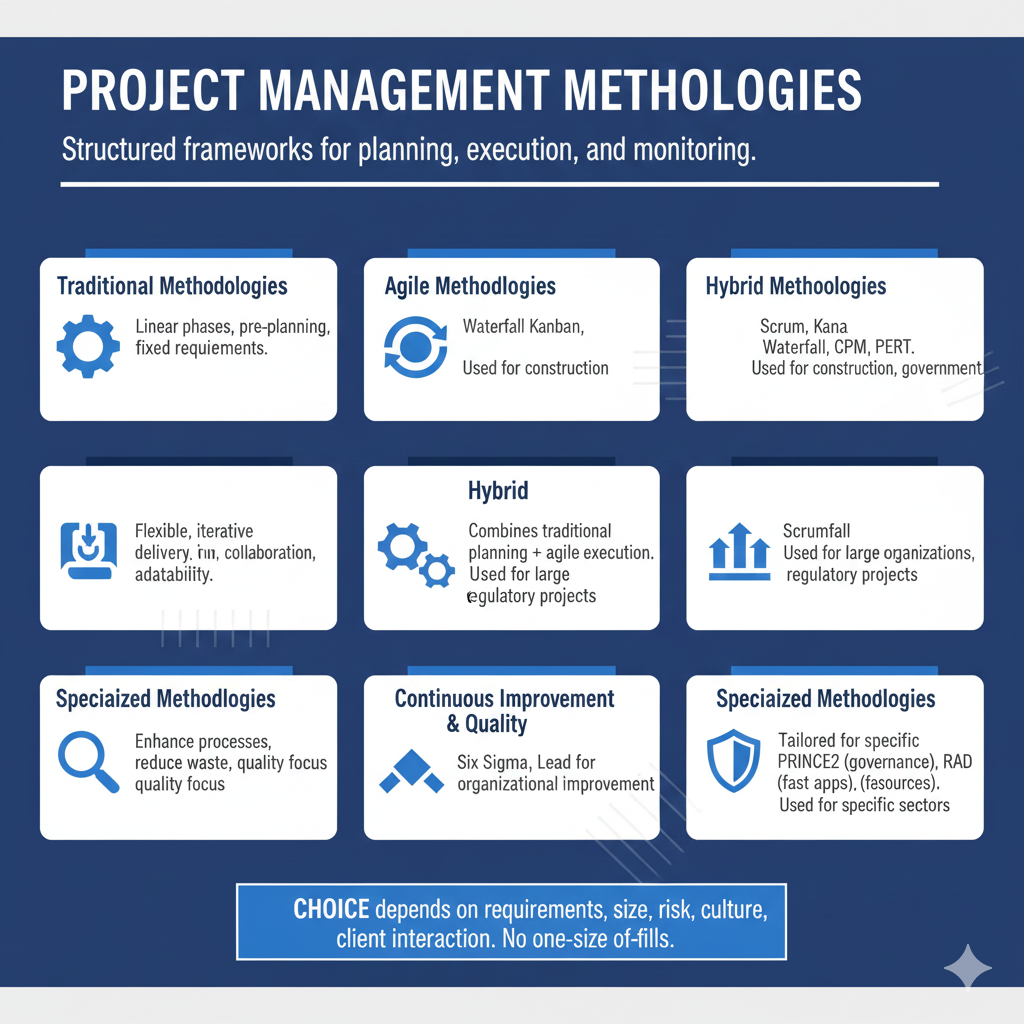
منهجيات إدارة المشاريع هي أطر ومناهج منظمة تُستخدم لتوجيه تخطيط المشاريع وتنفيذها ومراقبتها من بدايتها حتى إغلاقها. وقد تطورت هذه المنهجيات لتلائم مختلف أحجام المشاريع ومستويات تعقيدها وبيئات العمل المختلفة.
وتنقسم هذه المنهجيات إلى منهجيات تقليدية تركز على التخطيط المسبق والتسلسل الخطي للمراحل، ومنهجيات رشيقة (Agile) تعتمد على المرونة والتسليم التدريجي، ومنهجيات هجينة تجمع بين النهجين، ومنهجيات متخصصة تركز على الجودة والتحسين المستمر أو على قطاعات معينة.
ويعتمد اختيار المنهجية المناسبة على عوامل مثل وضوح المتطلبات، وحجم المشروع، ومستوى المخاطر، والثقافة المؤسسية، وطبيعة التفاعل مع العميل. ولا توجد منهجية واحدة تناسب جميع المشاريع، بل يكمن النجاح في اختيار المنهجية الأنسب وتكييفها.
إليك قائمة بالفئات الرئيسية لمنهجيات إدارة المشاريع:
- المنهجيات التقليدية
- المنهجيات الرشيقة (Agile)
- المنهجيات الهجينة
- منهجيات التحسين المستمر والجودة
- المنهجيات المتخصصة
وإذا كنت مهتمًا بالتعمق أكثر في تفاصيل كل منهجية من منهجيات إدارة المشاريع هذه، فإليك شرحًا تفصيليًا لكل منها.
المنهجيات التقليدية لإدارة المشاريع
تعتمد المنهجيات التقليدية لإدارة المشاريع على التخطيط المسبق وتسلسل خطي للمراحل، حيث تُحدَّد المتطلبات بشكل كامل في البداية، ثم تُنجَز كل مرحلة بالتتابع دون تداخل. وتتميز هذه المنهجيات بالوضوح، ومستوى توثيق عالٍ، وسهولة التتبع، لكنها تفتقر إلى المرونة في التعامل مع التغييرات. ومن أبرز المنهجيات التقليدية: منهجية الشلال (Waterfall)، وأسلوب المسار الحرج (CPM)، وأسلوب تقييم ومراجعة البرامج (PERT). وتُستخدم هذه المنهجيات عادة في المشاريع ذات المتطلبات الثابتة، مثل مشاريع الإنشاءات والمشاريع الحكومية.
المنهجيات الرشيقة لإدارة المشاريع
تركز المنهجيات الرشيقة لإدارة المشاريع على المرونة والقدرة على التكيف مع التغيير، والتعاون المستمر مع العميل، وتقديم القيمة عبر مراحل قصيرة ومتكررة. وتقلل هذه المنهجيات من الاعتماد على التخطيط طويل المدى، وتعتمد على فرق ذاتية التنظيم. ومن أشهر أطر العمل الرشيقة: Scrum، وKanban، والبرمجة القصوى (XP)، والتطوير الموجه بالميزات (FDD). وهي مناسبة لمشاريع تطوير البرمجيات والمنتجات ذات المتطلبات المتغيرة.
المنهجيات الهجينة لإدارة المشاريع
تجمع المنهجيات الهجينة لإدارة المشاريع بين التخطيط الصارم للمنهجيات التقليدية ومرونة التنفيذ الرشيق، بهدف تحقيق التوازن بين التوثيق والمرونة. وتُستخدم في البيئات التي تتطلب موافقات ولوائح رسمية، إلى جانب الحاجة إلى التكيف أثناء التنفيذ. ومن أمثلتها: Scrumfall وWater-Scrum-Fall، وهي مناسبة للمؤسسات الكبرى والمشاريع ذات القيود التنظيمية.
منهجيات التحسين المستمر والجودة في إدارة المشاريع
تركز منهجيات التحسين المستمر والجودة في إدارة المشاريع على تحسين العمليات، وتقليل الهدر، ورفع مستوى الجودة باستخدام أدوات تحليلية وبيانات حقيقية. وتشمل هذه المنهجيات Six Sigma، وLean، وLean Six Sigma، وتُستخدم على نطاق واسع في مشاريع التحسين المؤسسي والصناعي والخدمي، مع التركيز على الكفاءة والاستدامة وتقديم قيمة حقيقية للعملاء.
المنهجيات المتخصصة لإدارة المشاريع
تُطوَّر المنهجيات المتخصصة لإدارة المشاريع لتلائم بيئات أو أنواعًا محددة من المشاريع، وتتميز بهيكلية واضحة، وتنفيذ سريع، أو تركيز خاص على الموارد. ومن أبرز المنهجيات المتخصصة: PRINCE2 للحوكمة والتنظيم المؤسسي، والتطوير السريع للتطبيقات (RAD) لتطوير التطبيقات بسرعة، وإدارة المشاريع بالسلسلة الحرجة (CCPM) لإدارة الوقت والموارد بكفاءة. وتُطبَّق هذه المنهجيات بناءً على طبيعة المشروع والقطاع الذي يعمل فيه.
أهداف إدارة المشاريع
يتمثل هدف إدارة المشاريع في ضمان تنفيذ المشاريع بكفاءة وفعالية من خلال تحقيق التوازن بين النطاق والوقت والتكلفة، مع الالتزام بمعايير الجودة، وإدارة المخاطر، وضمان رضا الأطراف المعنية. ويدعم هذا النهج الأهداف الاستراتيجية للمؤسسة ويعظّم القيمة والعائد على الاستثمار (ROI). كما تسهم إدارة المشاريع في تحسين استغلال الموارد، وتعزيز التواصل، وبناء القدرات المؤسسية، والتعامل المنهجي مع التغييرات، وكل ذلك يزيد من فرص نجاح المشروع واستدامته.
إليك قائمة بأبرز أهداف إدارة المشاريع:
- إنجاز المشروع ضمن النطاق المحدد: يتمثل الهدف في تسليم جميع المخرجات المتفق عليها دون أي إضافات أو حذف، مع الالتزام الكامل بالمتطلبات الوظيفية والتقنية. ويساعد التحكم في النطاق على منع التوسع غير المنضبط فيه، والذي قد يؤدي إلى تأخر المشروع أو زيادة تكاليفه.
- إنجاز المشروع في الوقت المحدد: يركز هذا الهدف على الالتزام بالجدول الزمني المخطط له من خلال التخطيط الدقيق والمتابعة المستمرة للتقدم. ويسهم الالتزام بالمواعيد النهائية في تحقيق رضا العملاء، واغتنام الفرص، وتقليل التكاليف غير المباشرة.
- إنجاز المشروع ضمن الميزانية المعتمدة: يهدف إلى التحكم في التكاليف ومنع تجاوز الميزانية من خلال التقدير الدقيق والمتابعة المستمرة للإنفاق، بما يضمن تحقيق العائد المتوقع مع الحفاظ على الاستقرار المالي للمؤسسة.
- تحقيق معايير الجودة المطلوبة: يضمن أن يفي المنتج أو الخدمة النهائية بتوقعات الأطراف المعنية أو يتجاوزها من حيث الأداء والموثوقية. وتقلل الجودة العالية من الأخطاء، وتحسّن رضا العملاء، وتعزز سمعة المؤسسة.
- إدارة المخاطر بفعالية: يهدف إلى تحديد المخاطر المحتملة وتحليلها والاستجابة لها بشكل استباقي، مما يساعد على الحد من التهديدات، وتعظيم الفرص، وحماية المشروع من الفشل.
- تحقيق رضا الأطراف المعنية: يركز على تلبية توقعات الأطراف المعنية من خلال التواصل الفعّال وإشراكهم في القرارات الرئيسية. ويعزز رضاهم استمرار الدعم للمشروع ويزيد من فرص نجاحه.
- دعم وتحقيق الأهداف الاستراتيجية للمؤسسة: يضمن توافق المشروع مع رؤية المؤسسة واستراتيجيتها العامة، بما يسهم في تحقيق قيمة حقيقية مثل النمو أو تحسين الكفاءة أو تعزيز القدرة التنافسية.
- تعظيم العائد على الاستثمار (ROI): يهدف إلى استخلاص أقصى قيمة ممكنة من الموارد المستثمرة في المشروع، ويتحقق ذلك من خلال التخطيط السليم واتخاذ قرارات استثمارية مبنية على الجدوى والقيمة.
- بناء وتطوير القدرات المؤسسية: يسهم المشروع في تطوير مهارات الأفراد، وتحسين العمليات، وتوثيق الدروس المستفادة، مما يؤدي إلى نضج مؤسسي أعلى ونجاح أكبر في المشاريع المستقبلية.
- تحسين التواصل والتعاون: يركز على إنشاء قنوات تواصل واضحة وتعزيز العمل الجماعي بين الأطراف المعنية بالمشروع، إذ يقلل التواصل الفعّال من النزاعات ويحسّن جودة اتخاذ القرار.
- تحسين استغلال الموارد: يهدف إلى الاستخدام الفعّال للموارد البشرية والمادية والمالية دون هدر، مما يساعد على خفض التكاليف، وزيادة الإنتاجية، والحفاظ على توازن أعباء العمل.
- إدارة التغيير بفعالية: يسعى إلى معالجة أي تغييرات تطرأ أثناء المشروع بشكل منهجي لضمان بقائه على المسار الصحيح، بما يكفل أن تكون التغييرات مدروسة وتضيف قيمة حقيقية للمشروع.
أهمية إدارة المشاريع
تسهم إدارة المشاريع الاحترافية بشكل كبير في رفع معدلات نجاح المشاريع من خلال تحقيق التوازن بين النطاق والوقت والتكلفة، والحد من المخاطر والهدر، وتحسين الكفاءة وجودة المخرجات. كما تعزز التواصل والشفافية، وتدعم اتخاذ القرارات المبنية على البيانات، وتضمن التوافق مع الأهداف الاستراتيجية للمؤسسة. إضافة إلى ذلك، تساعد إدارة المشاريع على تحسين استغلال الموارد، وبناء ثقافة التحسين المستمر، والتكيف مع التغيير والتعقيد، مما يؤدي إلى رضا أكبر للعملاء ويمنح المؤسسة ميزة تنافسية مستدامة.
وباختصار، تكمن أهمية إدارة المشاريع فيما يلي:
- رفع معدلات نجاح المشاريع: تعزز إدارة المشاريع الاحترافية بشكل كبير فرص إنجاز المشاريع بنجاح ضمن النطاق والوقت والميزانية المحددة، إذ توفر المنهجيات المنظمة والعمليات المعيارية إطارًا واضحًا يقلل من الارتجالية والفوضى.
- الحد من المخاطر والهدر: من خلال التخطيط الشامل وتحديد المخاطر المحتملة واتخاذ إجراءات وقائية، تساعد إدارة المشاريع على تجنب المشكلات والأزمات أو التخفيف منها، مما يقلل من هدر الموارد والوقت والمال، ويحمي المؤسسة من الخسائر المحتملة.
- تحسين الكفاءة والإنتاجية: تزيد العمليات المنظمة، والأدوات المناسبة، والتوزيع الواضح للمهام من كفاءة العمل وتقلل من هدر الوقت والجهد. فالفرق التي تعمل ضمن منهجيات واضحة تكون أكثر إنتاجية وأقل عرضة للارتباك والتشتت.
- تعزيز جودة المخرجات: يضمن التركيز على معايير الجودة منذ بداية المشروع، إلى جانب المراقبة المستمرة والتحسينات الدورية، تقديم منتجات وخدمات عالية الجودة تلبي توقعات العملاء أو تتجاوزها.
- تحسين التواصل والشفافية: توفر إدارة المشاريع قنوات تواصل منظمة بين جميع الأطراف المعنية، مما يقلل من سوء الفهم والغموض. وتوفر التقارير الدورية، واجتماعات المتابعة، ولوحات المعلومات شفافية حول تقدم المشروع وتحدياته، بما يمكّن الأطراف المعنية من اتخاذ قرارات مدروسة وفي الوقت المناسب.
- تحقيق التوافق الاستراتيجي: تضمن إدارة المشاريع توافق المشاريع المنفذة مع الأهداف والأولويات الاستراتيجية للمؤسسة، مما يمنع هدر الموارد على مشاريع غير فعالة أو منخفضة الأولوية، ويضمن توجيه الاستثمارات نحو المبادرات الأكثر قيمة للمؤسسة.
- تحسين إدارة الموارد: يضمن التخطيط الفعّال للموارد وتوزيعها توفرها عند الحاجة وبالكمية المطلوبة، مما يمنع الاختناقات والتأخيرات، ويحسّن استغلال الموارد البشرية والمادية والمالية. وتؤدي الإدارة الفعالة للموارد إلى خفض التكاليف وزيادة العائد على الاستثمار.
- تسهيل اتخاذ القرار: تمكّن البيانات والرؤى التي توفرها أنظمة إدارة المشاريع القادة من اتخاذ قرارات مبنية على الحقائق والتحليل بدلاً من الحدس أو التخمين. وتوفر مؤشرات الأداء الرئيسية (KPIs)، وتقارير الحالة، والتحليلات التنبؤية رؤى قيّمة للتوجيه الاستراتيجي وحل المشكلات.
- بناء ثقافة التحسين المستمر: من خلال توثيق الدروس المستفادة، وتحليل الأداء، وتطبيق أفضل الممارسات، تسهم إدارة المشاريع في بناء ثقافة تعلم وتحسين مستمر، إذ يصبح كل مشروع فرصة للنمو والتطور، مما يرفع من نضج المؤسسة ومعدلات نجاحها المستقبلية.
- التكيف مع التغيير والتعقيد: توفر إدارة المشاريع الأدوات والمنهجيات اللازمة للتكيف مع التغيرات والتعامل مع التعقيد، إذ تمكّن المنهجيات الرشيقة والمرنة المؤسسات من الاستجابة بسرعة للتغيرات في متطلبات السوق أو احتياجات العملاء أو التقنية.
- تعزيز رضا الأطراف المعنية والعملاء: من خلال التسليم في الوقت المحدد وبالجودة المطلوبة وضمن الميزانية، إلى جانب التواصل الفعّال وإدارة التوقعات، تزيد إدارة المشاريع الاحترافية من رضا العملاء والأطراف المعنية، مما يعزز العلاقات طويلة الأمد ويفتح فرص أعمال جديدة.
- تحقيق ميزة تنافسية: يمكن للمؤسسات المتميزة في إدارة المشاريع إنجاز مشاريعها بشكل أسرع وأفضل وبتكلفة أقل مقارنة بمنافسيها، مما يمنحها ميزة تنافسية في السوق ويعزز قدرتها على الابتكار والنمو والتوسع.
إحصاءات تؤكد أهمية إدارة المشاريع
تشير البيانات العالمية الحديثة إلى أن تبني ممارسات إدارة المشاريع الاحترافية يحسّن بشكل واضح نتائج المشاريع، ويقلل من معدلات الفشل، ويزيد من فرص تحقيق الأهداف. ووفقًا لدراسة Ravetree لعام 2025، فإن المشاريع التي تطبق ممارسات إدارة مشاريع منظمة تكون فرص نجاحها أكبر بـ2.5 مرة مقارنة بتلك التي لا تتبع هذه الممارسات. ويُظهر ذلك الأثر الكبير للأطر المنظمة في تحسين نتائج التنفيذ وتحقيق الأهداف المرجوة.
كما أظهر المصدر ذاته أن معدل نجاح المشاريع التي تعتمد منهجية Agile يبلغ نحو 64%، وهو معدل أعلى بكثير من معدل نجاح المنهجيات التقليدية كـWaterfall والبالغ 49%. ويبرز ذلك أهمية اختيار المنهجية المناسبة في إدارة المشاريع لتحسين معدلات النجاح.
علاوة على ذلك، تشير إحصاءات Wellingtone لعام 2024 إلى أن 36% فقط من المؤسسات تحقق الفوائد المتوقعة من مشاريعها بشكل كامل، مما يؤكد الحاجة إلى التركيز على منهجيات إدارة المشاريع لضمان تحقيق الأهداف الحقيقية للمشروع. كما تكشف بيانات Standish Group أن معدل نجاح المشاريع لا يزال منخفضًا نسبيًا (إذ إن أقل من ثلثها يستوفي معايير النجاح التقليدية)، مما يعكس الحاجة الملحة لتبني مبادئ إدارة المشاريع لتعزيز الأداء المؤسسي من خلال تحسين التخطيط والتنفيذ والمراقبة.
أبرز القطاعات والمجالات التي ينبغي أن تعتمد على أدوات إدارة المشاريع
تُعد أدوات إدارة المشاريع أساسية لنجاح المؤسسات في مختلف القطاعات، لكن أهميتها تتضاعف في القطاعات المعقدة التي تضم عددًا كبيرًا من الأطراف المعنية، وتنطوي على استثمارات ضخمة، وتشهد تغيرات سريعة. وفيما يلي أبرز القطاعات التي يُعد فيها تبني أدوات ومنهجيات إدارة المشاريع ضرورة استراتيجية لا خيارًا مؤسسيًا.
1️⃣ قطاع تقنية المعلومات والاتصالات
يعتمد القطاع التقني على إدارة المشاريع لمواكبة التطورات السريعة والتغيرات المستمرة في المتطلبات التقنية. وتشمل مشاريعه تطوير البرمجيات، وأنظمة ERP وCRM، والأمن السيبراني، والبنية التحتية الرقمية، والتحول الرقمي. وتُعد المنهجيات الرشيقة والهجينة الأنسب لهذا القطاع نظرًا للحاجة الكبيرة إلى المرونة والتكرار السريع.
2️⃣ قطاع الإنشاءات والهندسة والعمارة
يتميز قطاع الإنشاءات بمشاريع كبيرة الحجم وطويلة المدة وبعدد كبير من الأطراف المعنية، مما يجعل أدوات إدارة المشاريع ضرورية للتحكم في الوقت والتكلفة والجودة. وتشمل هذه المشاريع البنية التحتية، والمباني، والمصانع، ومشاريع الطاقة. وتُستخدم المنهجيات التقليدية مثل Waterfall وCPM وPERT بشكل شائع في هذه المشاريع.
3️⃣ قطاع الرعاية الصحية والأدوية
نظرًا لتأثيره المباشر على سلامة الإنسان، يتطلب قطاع الرعاية الصحية إدارة مشاريع دقيقة تركز على الجودة والامتثال. وتشمل مشاريعه إنشاء المستشفيات، وتطوير الأدوية، وأنظمة السجلات الطبية، والبحوث الطبية، مع الجمع بين المنهجيات التقليدية والرشيقة.
4️⃣ القطاع المالي والمصرفي
تُستخدم أدوات إدارة المشاريع في القطاع المالي لضمان الامتثال التنظيمي، وإدارة المخاطر، وحماية البيانات الحساسة. وتشمل مشاريع هذا القطاع تطوير الأنظمة المصرفية، والخدمات الرقمية، والامتثال، ومبادرات مكافحة غسل الأموال، مع تركيز قوي على الحوكمة والرقابة.
5️⃣ القطاع الحكومي والعام
تتطلب المشاريع الحكومية مستويات عالية من الشفافية والمساءلة. وتشمل هذه المشاريع البنية التحتية، والتحول الرقمي الحكومي، والتعليم، والرعاية الصحية، والإسكان. وتُعد منهجيات مثل PRINCE2 مناسبة لهذا القطاع نظرًا لما توفره من أطر حوكمة واضحة.
7️⃣ قطاع التصنيع والإنتاج
تركز إدارة المشاريع في القطاع الصناعي على تحسين الكفاءة والجودة وخفض التكاليف. وتشمل مشاريع هذا القطاع تطوير المنتجات، والأتمتة، وتحسين العمليات، والتحول الرقمي الصناعي، باستخدام منهجيات Lean وSix Sigma والمنهجيات الهجينة.
8️⃣ قطاع التجزئة والتجارة الإلكترونية
يشهد قطاع التجزئة تحولًا رقميًا سريعًا، مما يجعل إدارة المشاريع ضرورية للتكيف مع تغيرات السوق. وتشمل المشاريع منصات التجارة الإلكترونية، وإدارة المخزون، وتجربة العملاء، وأنظمة الدفع، مع اعتماد كبير على المنهجيات الرشيقة.
تحديات إدارة المشاريع
تواجه إدارة المشاريع مجموعة من التحديات التي قد تعيق تحقيق أهداف المشروع ضمن الوقت والتكلفة والجودة المحددة. وغالبًا ما تنشأ هذه العقبات نتيجة عوامل تنظيمية أو بشرية أو تقنية، مما يجعل التعامل معها باحترافية أمرًا حاسمًا لنجاح المشروع.
- غياب الوضوح في الأهداف والمتطلبات: يؤدي عدم وجود تعريف واضح لأهداف المشروع أو استمرار التغيير فيها إلى إرباك الفرق، وزيادة المراجعات، وصعوبة قياس النجاح الفعلي للمشروع.
- ضعف التخطيط الأولي: يؤثر التخطيط غير الكافي للوقت والموارد والمخاطر بشكل مباشر على الجدول الزمني والميزانية، مما يجعل المشروع أكثر عرضة للتأخير والفشل.
- ضعف التواصل بين الأطراف المعنية: يؤدي ضعف أو انقطاع التواصل بين الفريق والإدارة والعملاء إلى سوء الفهم، وتضارب التوقعات، وعدم اتساق القرارات.
- التوسع غير المنضبط في النطاق (Scope Creep): تؤدي إضافة متطلبات جديدة دون ضبط رسمي أو تعديل الخطة إلى تجاوزات في الوقت والتكلفة، وتؤثر سلبًا على جودة المخرجات.
- غياب دعم الإدارة العليا: يقلل غياب دعم القيادة من أولوية المشروع داخل المؤسسة، مما يؤثر على تخصيص الموارد واتخاذ القرارات في الوقت المناسب.
- نقص الموارد أو سوء إدارتها: يؤدي غياب المهارات أو الأدوات المناسبة، أو التوزيع غير الفعال للموارد، إلى انخفاض الإنتاجية وزيادة الضغط على الفريق.
- ضعف إدارة المخاطر: يمنع الفشل في تحديد المخاطر المحتملة أو تجاهلها الاستعداد الاستباقي لها، مما يؤدي إلى أزمات مفاجئة قد تعطل تقدم المشروع.
- مقاومة التغيير: يعيق رفض الفريق أو الأطراف المعنية لأساليب العمل الجديدة أو التقنيات الحديثة التطبيق الفعّال لمنهجيات إدارة المشاريع.
- الاعتماد على أدوات غير ملائمة: يحد استخدام أدوات قديمة أو غير متكاملة لإدارة المشاريع من القدرة على تتبع التقدم بدقة واتخاذ قرارات مبنية على البيانات.
- ضغط الوقت والتوقعات غير الواقعية: يزيد فرض مواعيد نهائية غير واقعية أو توقع نتائج تفوق الإمكانات المتاحة من احتمالية الإرهاق والأخطاء وفشل المشروع.
أبرز أنظمة إدارة المشاريع في المملكة العربية السعودية
تُعد ماستر تيم من الشركات الرائدة في تطوير أنظمة إدارة المشاريع في المملكة العربية السعودية، إذ تقدم مجموعة شاملة من الحلول الرقمية، في مقدمتها الحل الرقمي P+ لمكتب إدارة المشاريع (PMO). وهو نظام احترافي لإدارة المحافظ والبرامج والمشاريع (PPM) يوفر تحكمًا كاملاً في دورة حياة المشروع، من التخطيط الاستراتيجي إلى المتابعة وإعداد التقارير واتخاذ القرار. ويدعم النظام الحوكمة المؤسسية، وإدارة الأداء، وتتبع مؤشرات الأداء الرئيسية (KPIs)، وإدارة المخاطر والموارد من خلال لوحات معلومات تفاعلية وتقارير ذكية مبنية على تحليلات بيانات متقدمة.
وتتكامل أنظمة إدارة المشاريع لدى ماستر تيم مع حلول داعمة أخرى:
- الحل الرقمي P+ لمكتب إدارة المشاريع (PMO)
- الحل الرقمي S+ لإدارة الاستراتيجية
- حل ديوان لإدارة المكتب التنفيذي
وهذا ما يخلق بيئة رقمية موحدة لإدارة المشاريع والبرامج والمبادرات الاستراتيجية بكفاءة. وتتميز هذه الأنظمة بمرونة الإعداد، ودعم تطبيقات الويب والجوال، والقدرة على التكامل مع الأنظمة الحكومية والمؤسسية مثل ERP وSAP.
وبفضل التزامها الكامل بمعايير الهيئة الوطنية للأمن السيبراني (NCA)، وتعدد خيارات الاستضافة داخل المملكة (سحابية، أو سحابية خاصة، أو محلية)، ودعم اللغة العربية، تُعد حلول ماستر تيم من أبرز وأقوى أنظمة إدارة المشاريع في المملكة العربية السعودية، إذ تجمع بين التقنية المتقدمة، والفهم العميق لبيئة العمل المؤسسية المحلية، والتركيز على تقديم قيمة حقيقية ونتائج قابلة للقياس من المشاريع.
لماذا تختار ماستر تيم لتطوير أنظمة إدارة المشاريع في السعودية
تُعد ماستر تيم خيارًا استراتيجيًا لتطوير أنظمة إدارة المشاريع في المملكة العربية السعودية، إذ تقدم حلولاً رقمية متكاملة تجمع بين الخبرة التقنية والحوكمة والامتثال والمرونة العالية.
وفيما يلي أبرز أسباب اختيارها كأفضل نظام لإدارة المشاريع:
- خبرة محلية وفهم عميق للسوق السعودي: تمتلك ماستر تيم خبرة واسعة في تطبيق أنظمة إدارة المشاريع داخل المملكة، مع فهم دقيق للمتطلبات التنظيمية والحوكمة الحكومية والتوافق مع أهداف رؤية السعودية 2030.
- حلول متكاملة ومترابطة: تقدم منظومة رقمية شاملة تضم إدارة المشاريع (P+)، وإدارة الاستراتيجية (S+)، وإدارة المكتب التنفيذي (ديوان)، ولوحات البيانات الذكية، والأتمتة، بما يضمن تكامل البيانات وسلاسة اتخاذ القرار.
- أنظمة مرنة وقابلة للتخصيص: تُصمم الحلول بناءً على احتياجات المؤسسة، مع إمكانية الإعداد المستمر وقابلية التوسع المستقبلي دون تعقيدات تقنية.
- دعم متقدم لصناع القرار: تعتمد ماستر تيم على التحليلات الذكية، والبيانات الذكية، والذكاء الاصطناعي الوكيل لتقديم رؤى دقيقة، ولوحات مراقبة تفاعلية، ومؤشرات أداء تدعم القرارات الاستراتيجية.
- امتثال صارم للأمن السيبراني: تلتزم جميع الأنظمة بمعايير الهيئة الوطنية للأمن السيبراني (NCA)، وتطبق أعلى مستويات حماية البيانات وإدارة المخاطر.
- خيارات استضافة داخل المملكة العربية السعودية: توفر استضافة سحابية، أو سحابية خاصة، أو محلية، بما يضمن الامتثال والتحكم الكامل في البيانات.
- دعم اللغة العربية: واجهات سهلة الاستخدام تدعم اللغتين العربية والإنجليزية، مناسبة لبيئات العمل متعددة المستخدمين.
في الختام: عندما تُدار المشاريع باحترافية... تتحقق النتائج
لم تعد إدارة المشاريع اليوم مجرد متابعة للمهام أو التزام بالجداول الزمنية، بل أصبحت العامل الحاسم الذي يحدد قدرة المؤسسة على التنفيذ، والتحكم في المخاطر، وتحقيق الأثر الحقيقي لاستراتيجياتها. فالمشاريع الناجحة لا تعتمد على الجهد وحده، بل على وضوح الرؤية، والمنهجية المنضبطة، والقرارات الذكية.
ومع تنامي حجم المبادرات وازدياد تعقيد بيئات العمل، يصبح تبني إدارة مشاريع احترافية مدعومة بأنظمة رقمية متكاملة الفارق الحاسم بين مؤسسة تدير مشاريعها... وأخرى تقودها بثقة، وتحولها إلى قيمة مستدامة.
ابدأ اليوم مع ماستر تيم وحوّل إدارة مشاريعك إلى قوة تدفع النمو وتحقق النتائج.
الأسئلة الشائعة:
1- ما الفرق بين إدارة المشاريع الاحترافية والمتابعة التقليدية للمشاريع؟
تعتمد إدارة المشاريع الاحترافية على منهجيات ومعايير عالمية مثل PMBOK وAgile، باستخدام أدوات رقمية متكاملة لإدارة النطاق والوقت والتكلفة والمخاطر والأطراف المعنية. أما المتابعة التقليدية، فغالبًا ما تقتصر على رصد المهام دون حوكمة واضحة أو تحكم في الأداء والنتائج.
2- هل يمكن تطبيق منهجيات إدارة المشاريع على جميع أنواع المشاريع والقطاعات؟
نعم، يمكن تكييف منهجيات إدارة المشاريع مع مختلف القطاعات وأحجام المشاريع - سواء كانت تقنية أو إنشائية أو حكومية أو خدمية - من خلال اختيار المنهجية الأنسب (تقليدية أو رشيقة أو هجينة) وتطبيقها وفقًا لطبيعة المشروع وبيئة العمل.
3- ما أبرز التحديات التي تواجهها المؤسسات عند تطبيق إدارة المشاريع؟
من أبرز التحديات: غموض الأهداف والمتطلبات، وضعف التخطيط، وسوء التواصل بين الأطراف المعنية، والتوسع غير المنضبط في النطاق، وغياب دعم الإدارة العليا، والاعتماد على أدوات غير متكاملة. ويمكن الحد بشكل كبير من هذه التحديات من خلال تطبيق إدارة مشاريع منهجية مدعومة بأنظمة رقمية فعّالة.
4- كيف تسهم أنظمة إدارة المشاريع الرقمية في تحسين نجاح المشاريع؟
توفر أنظمة إدارة المشاريع الرقمية رؤية شاملة وآنية لحالة المشروع، وتُمكّن من تتبع الأداء وإدارة المؤشرات، والتعامل مع المخاطر والموارد، وتعزيز الشفافية وسرعة اتخاذ القرار. ويقلل ذلك من الانحرافات، ويحسّن الالتزام بالجداول الزمنية والميزانيات، ويزيد من فرص نجاح المشروع.
5- لماذا تُعد ماستر تيم خيارًا مناسبًا لتطوير نظام إدارة المشاريع في السعودية؟
تجمع ماستر تيم بين الخبرة المحلية العميقة، والالتزام بمعايير الحوكمة والأمن السيبراني، والحلول الرقمية القابلة للتخصيص، ودعم القرار الذكي للقادة. وهذا يمكّن المؤسسات من بناء نظام احترافي لإدارة المشاريع يحقق قيمة حقيقية ويتوافق مع أهداف رؤية السعودية 2030.