
تخيل أن يتخذ مشروعك القرارات الصحيحة قبل ظهور المشكلات أصلًا. فبينما لا يزال كثير من مدراء المشاريع يعتمدون على الحدس والخبرة الشخصية، أصبحت الحلول المدعومة بالذكاء الاصطناعي اليوم قادرة على تحليل آلاف السيناريوهات في ثوانٍ، والتنبؤ بالتأخيرات، وكشف المخاطر الخفية، والتوصية بأفضل مسار للعمل قبل فوات الأوان. وهذا ليس مبالغة مستقبلية، بل هو الواقع الجديد الذي يقوده الذكاء الاصطناعي (AI)، والذي يعيد تشكيل إدارة المشاريع وأنظمة إدارة المشاريع الرقمية حول العالم.
تشير تقارير حديثة إلى أن أكثر من 70% من المشاريع الكبرى تعاني من تجاوزات في الوقت أو التكلفة، ليس لضعف الفرق، بل لأن القرارات تُتخذ دون رؤية كاملة قائمة على البيانات لواقع المشروع. وهنا يلعب الذكاء الاصطناعي في إدارة المشاريع دورًا محوريًا، إذ يحوّل الإدارة من استجابة رد فعل للمشكلات إلى قيادة استباقية وتنبؤية قائمة على التحليلات والتوقعات.
لم يعد الذكاء الاصطناعي مجرد إضافة تقنية؛ بل أصبح شريكًا استراتيجيًا لمدير المشروع ومكتب إدارة المشاريع (PMO). فهو:
- يدعم اتخاذ قرارات واثقة ومبنية على الأدلة
- يتنبأ بالمخاطر قبل وقوعها
- يرفع كفاءة التخطيط والجدولة
- يقلل الهدر والتكاليف غير الضرورية
- يمنح الفرق رؤية دقيقة وآنية عبر دورة حياة المشروع بأكملها
باختصار، نحن نشهد تحولًا جوهريًا في طريقة إدارة المؤسسات لمشاريعها. والسؤال الحقيقي الذي سيحدد نجاح مبادراتكم القادمة ليس: "هل سمعتُ عن الذكاء الاصطناعي؟"
بل هو: "كيف يمكنني الاستفادة من الحلول الرقمية المدعومة بالذكاء الاصطناعي لاتخاذ قرارات أذكى وتحقيق نتائج أفضل؟"
في هذا المقال، ستكتشف كيف يعيد الذكاء الاصطناعي تشكيل اتخاذ القرار وكفاءة إدارة المشاريع خطوة بخطوة، وما يعنيه ذلك لمستقبل المشاريع في بيئة الأعمال الخليجية سريعة التطور، خصوصًا للمؤسسات التي تتبنى إدارة المشاريع المتكاملة، وأنظمة إدارة المشاريع الشاملة من البداية إلى النهاية، ومنصات متقدمة مثل P+ لإدارة المشاريع وغيرها من الحلول الرقمية لإدارة المشاريع.
دور الذكاء الاصطناعي في دعم اتخاذ القرار في المشاريع
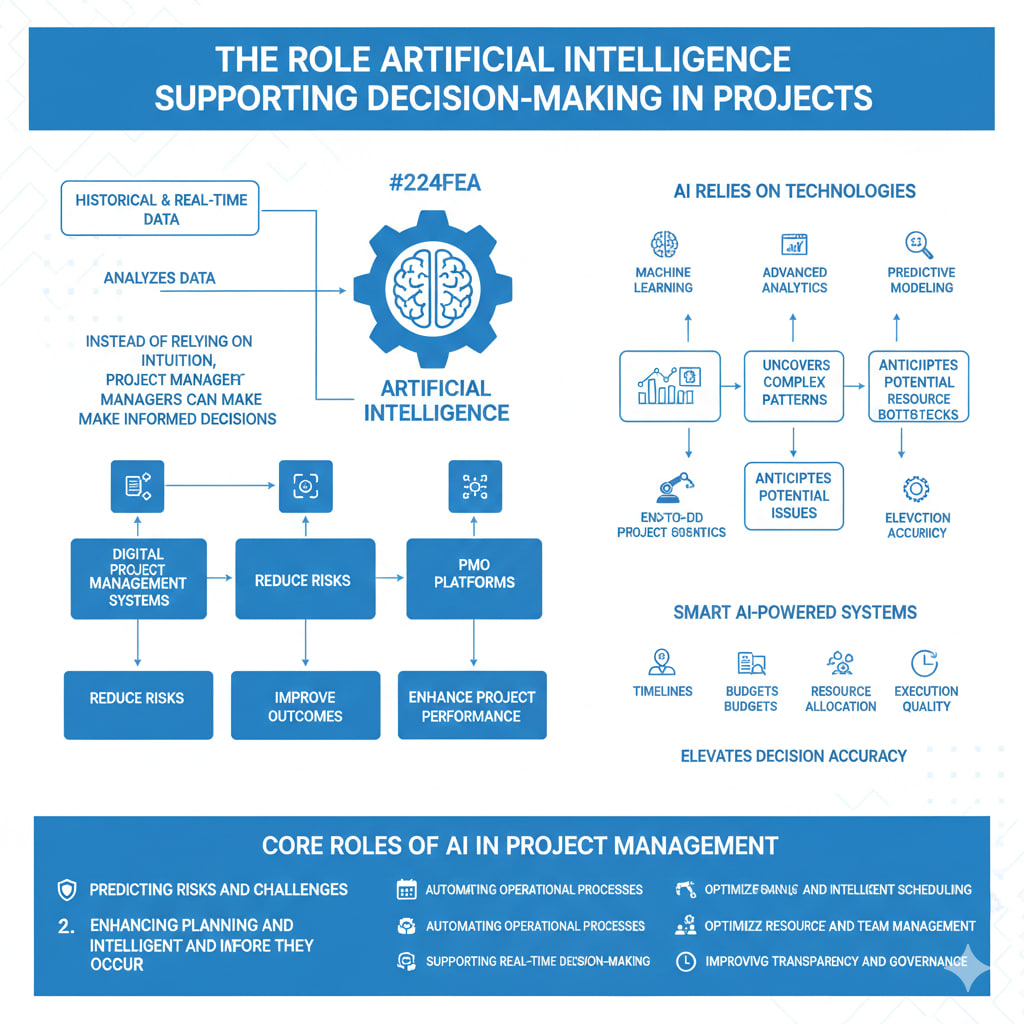
يؤدي الذكاء الاصطناعي دورًا تحويليًا في اتخاذ القرار داخل المشاريع من خلال تحليل البيانات التاريخية والآنية وتحويلها إلى توصيات دقيقة مبنية على الأدلة. فبدلًا من الاعتماد على الحدس، يمكن لمدراء المشاريع اتخاذ قرارات مدروسة تقلل المخاطر، وتحسّن النتائج، وترفع الأداء العام للمشروع عبر أنظمة إدارة المشاريع الرقمية، ومنصات مكتب إدارة المشاريع (PMO)، وأنظمة إدارة المشاريع الشاملة.
يعتمد الذكاء الاصطناعي على تقنيات مثل التعلم الآلي (Machine Learning)، والتحليلات المتقدمة، والنمذجة التنبؤية، لكشف الأنماط المعقدة في أداء المشاريع السابقة وربطها بالوضع الحالي للمشروع. وهذا يمكّن مدراء المشاريع من توقع المشكلات المحتملة، مثل تأخر الجدول الزمني، أو تجاوز التكاليف، أو اختناقات الموارد، قبل وقوعها، وتقييم بدائل عملية لمعالجتها.
كما تقوم الأنظمة الذكية المدعومة بالذكاء الاصطناعي بمحاكاة سيناريوهات متعددة، توضح أثر كل قرار على الجداول الزمنية والميزانيات وتوزيع الموارد وجودة التنفيذ. وهذا يرفع دقة القرار ويمنح القادة رؤية أوسع وآنية. ونتيجة لذلك، ينتقل مدير المشروع من اتخاذ قرارات رد الفعل تحت الضغط إلى قيادة استراتيجية مدعومة بتحليلات موثوقة وحلول رقمية مدعومة بالذكاء الاصطناعي.
ولتوضيح الأدوار الأساسية التي يؤديها الذكاء الاصطناعي في تعزيز اتخاذ القرار ضمن منصات إدارة المشاريع الحديثة، تبرز الوظائف التالية:
- التنبؤ بالمخاطر والتحديات قبل وقوعها
- تعزيز التخطيط والجدولة الذكية
- أتمتة العمليات التشغيلية
- تحسين إدارة الموارد والفرق
- دعم اتخاذ القرار في الوقت الفعلي
- تحسين الشفافية والحوكمة
وتجعل هذه القدرات من الذكاء الاصطناعي مكونًا أساسيًا في إدارة المشاريع الرقمية الحديثة، بما يمكّن المؤسسات من تعزيز الحوكمة، وتحسين تسليم المشاريع، والارتقاء بأداء بيئات مكتب إدارة المشاريع (PMO) ومكتب إدارة القيمة (VRO) والبيئات المؤسسية للمشاريع.
1. التنبؤ بالمخاطر والتحديات قبل وقوعها: إدارة استباقية للمخاطر مدعومة بالذكاء الاصطناعي
يعزز الذكاء الاصطناعي بشكل كبير الإدارة الاستباقية للمخاطر من خلال تحليل مجموعات بيانات ضخمة وتطبيق نماذج تنبؤية لتوقع التحديات المستقبلية قبل ظهورها. وباستخدام خوارزميات التعلم الآلي المتقدمة، تفحص الحلول المدعومة بالذكاء الاصطناعي السجلات التاريخية للمشاريع لتحديد إشارات الإنذار المبكر، لتنبيه الفرق إلى احتمالات تجاوز التكاليف، أو تأخر الجدول الزمني، أو اختناقات الموارد قبل تفاقمها بوقت طويل. وأصبحت هذه القدرة أساسية عبر أنظمة إدارة المشاريع الرقمية الحديثة، ومنصات مكتب إدارة المشاريع (PMO)، وأنظمة إدارة المشاريع الشاملة.
على سبيل المثال، يمكن للذكاء الاصطناعي تنبيه مدراء المشاريع إلى احتمالية مرتفعة لانحراف الميزانية أو تأخر الجدول الزمني بناءً على أنماط مستخلصة من مشاريع سابقة مشابهة. بالإضافة إلى ذلك، تقوم تقنيات معالجة اللغة الطبيعية (NLP) بتحليل التواصل الداخلي والخارجي المتعلق بالمشروع، مثل رسائل البريد الإلكتروني وملخصات الاجتماعات وتقارير الحالة، للكشف عن مؤشرات عاطفية أو مؤشرات مخاطر قد تفوت على المراجعين البشريين.
وتعزز لوحات المعلومات التفاعلية المدعومة بالذكاء الاصطناعي الشفافية بشكل أكبر من خلال تصور واضح لمستويات التعرض للمخاطر، ومؤشرات الأداء، وارتباطات المشروع. وهذه اللوحات، الشائعة في منصات مثل P+ لإدارة المشاريع، وحل PMO الرقمي، ومنصات إدارة المشاريع المؤسسية، تمكّن المدراء من استيعاب الصورة الكاملة فورًا واتخاذ قرارات مدروسة.
ومن الناحية العملية، يدعم الذكاء الاصطناعي التخطيط المستمر من خلال توفير تحليلات آنية تتيح للفرق تعديل الجداول الزمنية، أو إعادة توزيع الموارد، أو تغيير سير العمل فور ظهور أي عائق. وهذا يحوّل إدارة المخاطر من مراجعات دورية إلى عملية ديناميكية مستمرة، تتماشى مع الحلول الرقمية الحديثة المدعومة بالذكاء الاصطناعي، وبرامج تحليل المخاطر، وأطر حوكمة المشاريع (Project Governance) المستخدمة في بيئات PMO وVRO والبيئات المؤسسية.
2. تعزيز تخطيط المشاريع والجدولة الذكية: جداول زمنية مرنة تدفع نحو تنفيذ دقيق
يؤدي الذكاء الاصطناعي دورًا محوريًا في بناء جداول زمنية ديناميكية ومتكاملة للمشاريع من خلال تحليل الترابطات بين المهام والموارد والمواعيد النهائية والقيود. وباستخدام نماذج متقدمة مدعومة بالذكاء الاصطناعي، يمكن للمؤسسات إنشاء جداول زمنية محسّنة تأخذ بعين الاعتبار ترابط المهام، وتوافر الموارد، ومهارات الفريق، وتوزيع أعباء العمل، ما يقلل بشكل كبير من الأخطاء اليدوية ويسرّع بدء المشروع عبر أنظمة إدارة المشاريع الرقمية الحديثة، وأنظمة تخطيط المشاريع، ومنصات إدارة المشاريع الشاملة.
فعلى سبيل المثال، إذا تأخرت إحدى المهام، يعيد نظام الذكاء الاصطناعي حساب الجدول الزمني تلقائيًا، ويعدّل المهام المرتبطة، ويعيد توزيع الموارد لمنع اختناقات سير العمل. وتكتسب هذه الأتمتة قيمة خاصة في البيئات التي تستخدم P+ لإدارة المشاريع، أو حل PMO الرقمي، أو برمجيات إدارة المشاريع على المستوى المؤسسي، حيث تُعد التعديلات الآنية أساسية للحفاظ على دقة التسليم.
كما يتيح الذكاء الاصطناعي نمذجة سيناريوهات معقدة، مما يمكّن مدراء المشاريع من تصور أثر التغييرات في الموارد أو الميزانيات أو النطاق على النتائج النهائية. ومن خلال محاكاة سيناريوهات "ماذا لو" المتعددة، يمكن للقادة اتخاذ قرارات أكثر أمانًا واستراتيجية، مدعومة بتحليلات تنبؤية بدلًا من التخمين. وتعزز هذه القدرة حوكمة المشاريع، وتحسّن أداء برامج جدولة المشاريع، وتدعم مكاتب PMO وVRO في الحفاظ على التوافق مع أولويات المؤسسة ومعايير إدارة المشاريع في رؤية السعودية 2030.
وباختصار، يحوّل الذكاء الاصطناعي التخطيط والجدولة من عمليات ثابتة عرضة للأخطاء إلى مسارات عمل ذكية وقابلة للتكيف، بما يمنح الفرق المرونة والدقة اللازمتين لتسليم المشاريع في الوقت المحدد وبكفاءة أعلى.
3. أتمتة العمليات وتقليل الجهد التشغيلي: إنتاجية أعلى في وقت أقل
يؤدي الذكاء الاصطناعي دورًا كبيرًا في أتمتة المهام المتكررة وتقليل العبء التشغيلي عن فرق المشاريع. فالأنظمة المدعومة بالذكاء الاصطناعي يمكنها تسجيل ساعات العمل تلقائيًا، وتحديث حالة المهام، وإرسال التذكيرات، وإعداد التقارير الدورية، وجمع البيانات من أدوات متعددة دون تدخل يدوي. وهذا يوفر وقتًا ثمينًا لقادة الفرق للتركيز على الأنشطة الاستراتيجية عالية القيمة، وهي ميزة أساسية في أنظمة إدارة المشاريع الرقمية الحديثة، ومنصات مكتب إدارة المشاريع (PMO)، وبرمجيات إدارة المشاريع على المستوى المؤسسي.
وتظهر الدراسات أن أدوات الذكاء الاصطناعي يمكنها التعامل مع ما يصل إلى 80% من الأنشطة الروتينية في إدارة المشاريع، بما في ذلك الجدولة والتقارير ومتابعة التقدم. وهذا ينقل مدراء المشاريع بعيدًا عن "مراجعة الجداول اليدوية" نحو التفكير الاستراتيجي، وتخفيف المخاطر، واتخاذ القرار. وتستفيد منصات مثل حل S+ الرقمي للاستراتيجية، وحل PMO الرقمي، وأنظمة إدارة المشاريع الشاملة من هذه الأتمتة لتبسيط عمليات مكتب إدارة المشاريع وتحسين الكفاءة العامة.
ويقلل الذكاء الاصطناعي التوليدي كذلك الوقت اللازم لإعداد التقارير أو تلخيص محتوى الاجتماعات. فهو يحوّل المناقشات، وملاحظات الاجتماعات، والمهام التنفيذية تلقائيًا إلى تحديثات موجزة ومنظمة، ما يحسّن دقة البيانات ويقلل الأخطاء البشرية. وتعزز هذه القدرة إدارة معلومات المشروع، وتحسّن إعداد تقارير الحالة، وتدعم مكاتب PMO وVRO في الحفاظ على توثيق متسق عبر دورة حياة المشروع بأكملها.
وباختصار، يحوّل الذكاء الاصطناعي مسارات العمل التشغيلية إلى عمليات آلية وذكية، ما يرفع الإنتاجية، ويقلل الأعباء الإدارية، ويمكّن الفرق من تسليم المشاريع بسرعة أكبر ودقة أعلى.
4. تعزيز كفاءة إدارة الموارد والفرق: استثمار ذكي لكل مهارة وقدرة
يحسّن الذكاء الاصطناعي تخطيط الموارد بشكل كبير من خلال ضمان التوزيع الأمثل بين فرق المشروع. وباستخدام التحليلات التنبؤية، يتوقع الذكاء الاصطناعي احتياجات الموارد المستقبلية بناءً على حجم العمل، ونطاق المشروع، والمتطلبات التشغيلية، وهي قدرة أساسية لأنظمة إدارة المشاريع الرقمية الحديثة، ومنصات إدارة المشاريع المتكاملة، وأنظمة إدارة المشاريع المؤسسية الشاملة.
كما يحلل الذكاء الاصطناعي مهارات أعضاء الفريق وكفاءاتهم لمطابقتهم بذكاء مع المهام المناسبة. فعلى سبيل المثال، يمكن توجيه المهام الفنية تلقائيًا إلى الأخصائيين الأكثر تأهيلًا، ما يرفع الإنتاجية ويضمن الاستفادة الكاملة من قدرات الفريق. وعند تغيّر ظروف المشروع، يمكن للأدوات المدعومة بالذكاء الاصطناعي إعادة توزيع الموارد فورًا، مثل نقل المطورين إلى المهام المتأخرة أو تخصيص ميزانية إضافية عند الحاجة. وتعزز هذه المرونة الديناميكية إدارة الفريق، وتحسين استخدام الموارد، وسير عمليات PMO عبر بيئات PMO وVRO وPPM.
كما يمكّن التخطيط القائم على السيناريوهات الفرق من اختبار نماذج متعددة لتوزيع الموارد ومقارنة أثرها على أهداف المشروع قبل التنفيذ. ومن خلال محاكاة توزيعات مختلفة، يمكن للمؤسسات تحديد أكثر استراتيجيات الموارد كفاءة وربحية، بما يدعم اتخاذ قرارات أذكى في إدارة المشاريع، وأنظمة تخطيط المشاريع، والحلول الرقمية المدعومة بالذكاء الاصطناعي.
وباختصار، يحوّل الذكاء الاصطناعي إدارة الموارد والفرق إلى ممارسة استراتيجية قائمة على البيانات، تعظّم كل مهارة، وتقلل الهدر، وتمكّن المؤسسات من العمل بكفاءة أعلى ونتائج مشاريع أقوى.
5. اتخاذ القرار في الوقت الفعلي: قرارات فورية وعالية الدقة مدعومة بالذكاء الاصطناعي
يتيح الذكاء الاصطناعي اتخاذ القرار في الوقت الفعلي من خلال تقديم رؤى فورية تساعد مدراء المشاريع على الاستجابة بسرعة للتغيرات غير المتوقعة. وعبر التحليلات المستمرة والآنية، يمكن للحلول الرقمية المدعومة بالذكاء الاصطناعي رصد العوائق أو المشكلات الناشئة لحظة حدوثها وإطلاق تنبيهات فورية، ما يتيح للمدراء تعديل الخطط دون تأخير. وتُعد هذه القدرة أساسية في أنظمة إدارة المشاريع الرقمية الحديثة، وبرمجيات إدارة المشاريع المؤسسية، وأنظمة إدارة المشاريع الشاملة.
كما تدعم لوحات المعلومات المدعومة بالذكاء الاصطناعي المتابعة المستمرة لمؤشرات الأداء الرئيسية (KPIs) وتتنبأ باحتمالية انحراف الجدول الزمني. ومن خلال مراقبة مقاييس الأداء وارتباطات المشروع في الوقت الفعلي، يمكن للفرق معالجة المخاطر بشكل استباقي، والحفاظ على التوافق مع خطة المشروع، ومنع التأخير. وهذا يعزز حوكمة المشاريع، ويحسّن متابعة المشروع، ويدعم مكاتب PMO وVRO في الحفاظ على إشراف متسق عبر المحافظ والبرامج.
وباختصار، يحوّل الذكاء الاصطناعي اتخاذ القرار من عملية رد فعل إلى قدرة فورية قائمة على البيانات، تمكّن المؤسسات من الحفاظ على زخم المشروع، وتقليل عدم اليقين، وتحقيق نتائج بدقة أكبر.
6. دور الذكاء الاصطناعي في تعزيز الشفافية والحوكمة: وضوح ومساءلة في كل مرحلة
يرتقي الذكاء الاصطناعي بالشفافية والحوكمة عبر المشاريع من خلال ضمان توثيق وتنظيم كل إجراء وقرار وتحديث تلقائيًا. وتنشئ التقنيات الذكية سجلًا موثوقًا وقابلًا للتتبع لأنشطة المشروع، ما يمنح المؤسسات مسار تدقيق واضح يدعم المساءلة ويعزز الإشراف ضمن أنظمة إدارة المشاريع الحديثة، ومنصات مكتب إدارة المشاريع (PMO)، والحلول الرقمية لإدارة المشاريع.
وتعمل أدوات مثل Microsoft Copilot كمساعد اجتماعات ذكي، يوثق المناقشات والقرارات والمهام التنفيذية بصيغة منظمة. وهذا يزيل الغموض، ويقلل من المتابعات المتكررة، ويضمن حصول جميع أصحاب المصلحة على سجلات دقيقة ومنظمة جيدًا، دون الحاجة المستمرة للرجوع إلى "ماذا اتفقنا عليه".
وتعزز لوحات المعلومات المدعومة بالذكاء الاصطناعي الحوكمة بشكل أكبر من خلال عرض مؤشرات الأداء، ومناطق المخاطر، وارتباطات المشروع عبر رؤى بصرية واضحة. ويتم إنشاء التقارير وتحديثها تلقائيًا دون تدخل يدوي، ما يقلل من الأخطاء البشرية ويعزز سلامة البيانات. وتدعم هذه القدرات مكاتب PMO وVRO والفرق التنفيذية في الحفاظ على إشراف متسق يتوافق مع السياسات المؤسسية وأطر الحوكمة.
وفي نهاية المطاف، يخلق دمج الذكاء الاصطناعي في بيئات المشاريع دورة توثيق مستمرة، وتقارير آلية، ورؤية آنية. وهذا يعزز الإشراف الإداري، ويضمن الامتثال للمعايير والإجراءات، ويبني ثقافة من الوضوح والمصداقية طوال دورة حياة المشروع بأكملها.
تحديات تطبيق الذكاء الاصطناعي في إدارة المشاريع: عوامل تقنية وبشرية تتطلب قيادة استراتيجية
على الرغم من أن الذكاء الاصطناعي يحسّن كفاءة المشاريع بشكل كبير ويقلل المخاطر التشغيلية، إلا أن تطبيقه العملي يطرح مجموعة من التحديات المعقدة، تقنية وبشرية، يجب إدارتها بشكل استراتيجي. ودون نهج منظم، يمكن لهذه العقبات أن تقوّض دقة الرؤى الناتجة عن الذكاء الاصطناعي وتحد من فعالية نتائج المشروع. ويتطلب التبني الناجح فهمًا واضحًا لهذه العوائق ووضع خطط عملية لتجاوزها، بما يضمن أداءً متسقًا واتخاذ قرارات أقوى عبر أنظمة إدارة المشاريع الحديثة، ومنصات مكتب إدارة المشاريع (PMO)، والحلول الرقمية المدعومة بالذكاء الاصطناعي.
فيما يلي أبرز التحديات التي تواجهها المؤسسات:
1. جودة البيانات: تعتمد أنظمة الذكاء الاصطناعي بشكل كبير على بيانات نظيفة ودقيقة وكاملة. فأي فجوات أو تناقضات أو أخطاء يمكن أن تؤدي إلى توصيات مضللة وخطط تنفيذ معيبة. ويُعد ضمان جودة البيانات أمرًا أساسيًا للحصول على نتائج موثوقة في أنظمة إدارة المشاريع الرقمية، وأدوات متابعة المشاريع، وبيئات إدارة معلومات المشاريع المؤسسية.
2. التكامل مع الأنظمة: قد يكون دمج الذكاء الاصطناعي مع المنصات القائمة، مثل أنظمة تخطيط موارد المؤسسات (ERP)، وأدوات إدارة المشاريع القديمة، أو برمجيات إدارة الإنشاءات، أمرًا صعبًا. وقد يؤدي التكامل الضعيف إلى ازدواجية البيانات، أو تأخر تدفق المعلومات، أو تجزؤ العمليات. وتحتاج المؤسسات إلى أطر تكامل قوية لضمان اتصال سلس عبر منصات إدارة المشاريع، وأنظمة PMO، وبرمجيات إدارة المشاريع المؤسسية.
3. المقاومة البشرية: قد تتردد الفرق في الثقة بالرؤى الناتجة عن الذكاء الاصطناعي أو تخشى فقدان السيطرة على بعض القرارات. وقد تبطئ هذه المقاومة عملية التبني وتقلل من قيمة مبادرات الذكاء الاصطناعي. ويتطلب بناء الثقة تواصلًا واضحًا وشفافية، وتوضيح كيف يدعم الذكاء الاصطناعي، لا يستبدل، الحكم البشري ضمن إدارة المشاريع، وعمليات PMO، وبيئات VRO.
4. التدريب والدعم: يحتاج الموظفون إلى تدريب مستمر ومخصص لفهم كيفية استخدام أدوات الذكاء الاصطناعي بفعالية. ودون توجيه ودعم فني مناسبين، قد تجد الفرق صعوبة في الاستفادة من القدرات المتقدمة مثل التحليلات التنبؤية، والتقارير الآلية، أو الجدولة الذكية. ويُعد التمكين المستمر أساسيًا لتعظيم أثر الحلول المدعومة بالذكاء الاصطناعي، ومنصات إدارة المهام، ولوحات أداء المشاريع.
5. حوكمة البيانات والشفافية: يتطلب الأمر سياسات حوكمة قوية لإدارة جودة البيانات، وحماية المعلومات الحساسة، وتوثيق القرارات، وضمان الامتثال للمعايير التنظيمية. وتساعد الإجراءات الواضحة في الحفاظ على الثقة والمساءلة عبر حوكمة المشاريع، وحلول PMO الرقمية، ومبادرات التحول الرقمي على مستوى المؤسسة.
6. إدارة التغيير السريع: يتطلب تبني الذكاء الاصطناعي تحولًا ثقافيًا. ويجب على المؤسسات توجيه الفرق نحو طرق عمل جديدة، وتشجيع التجريب، وتعزيز الانفتاح على الابتكار. وتضمن الإدارة الفعالة للتغيير تبني الموظفين لقدرات الذكاء الاصطناعي واستخدامها لتعزيز الإنتاجية والتعاون واتخاذ القرار عبر أنظمة إدارة المشاريع المتكاملة، وأدوات PPM، وعمليات المشاريع الشاملة.
مستقبل إدارة المشاريع في عصر الذكاء الاصطناعي
ستتحدد الحقبة القادمة من إدارة المشاريع بتعاون عميق وسلس بين الإنسان والأنظمة الذكية. وبحلول عام 2030، من المتوقع أن تعزز التحليلات التنبؤية المدعومة بالذكاء الاصطناعي بشكل كبير الكفاءة التشغيلية للمبادرات واسعة النطاق عبر مختلف القطاعات. ومع ذلك، ورغم هذا التطور، لن يحل الذكاء الاصطناعي محل القائد البشري للمشروع. بل سيتطور دور مدير المشروع نحو القيادة الاستراتيجية، والإبداع، واتخاذ القرار على المستوى العالي، بينما تتولى المنصات الذكية التنفيذ الروتيني.
ووفقًا لخبراء الصناعة، ستنتقل المسؤوليات التقليدية مثل إعداد الجداول الزمنية، ومتابعة التقدم، والمتابعات المتكررة بشكل متزايد إلى الأنظمة الآلية ضمن منصات إدارة المشاريع الحديثة، وأدوات PMO، والحلول الرقمية المدعومة بالذكاء الاصطناعي. ويتيح هذا التحول للمدراء التركيز على القرارات المعقدة، ومواءمة أصحاب المصلحة، وتحفيز الفريق، وهي مجالات يظل فيها الحكم البشري لا غنى عنه.
وبدلًا من فحص كل تفصيلة يدويًا، سيعتمد القادة على الرؤى التنبؤية لتحديد المخاطر مبكرًا، مثل التوقعات القائمة على الاحتمالات التي تبرز المشكلات المحتملة قبل تفاقمها. ثم يطبقون خبراتهم لموازنة الاعتبارات الأخلاقية، والأولويات الاستراتيجية، وتوقعات أصحاب المصلحة. ونتيجة لذلك، سيتطلب مستقبل إدارة المشاريع قدرات بشرية أقوى، تشمل الذكاء العاطفي، والتفكير الاستراتيجي، ومهارات التواصل المتقدمة، خصوصًا ضمن البيئات التي تستخدم أنظمة إدارة المشاريع المتكاملة، وأدوات PPM، وبرمجيات إدارة المشاريع المؤسسية.
الخلاصة: الذكاء الاصطناعي طريقك نحو التميز في إدارة المشاريع
يتضح مما سبق أن الذكاء الاصطناعي أصبح ركيزة أساسية لتحسين اتخاذ القرار والارتقاء بأداء إدارة المشاريع. فمن تحليل البيانات والتنبؤ بالمخاطر، إلى الجدولة الآلية وتقارير الأداء، يوفر الذكاء الاصطناعي قدرات هائلة يمكنها تحويل المشاريع الكبيرة والمعقدة إلى عمليات أكثر قابلية للتنبؤ، وكفاءة، وحوكمة جيدة.
وعلى الرغم من التحديات التقنية والبشرية المصاحبة، يحقق الذكاء الاصطناعي نتائج إيجابية باستمرار عند تطبيقه بتخطيط مدروس وممارسات حوكمة قوية. فالهدف منه ليس استبدال مدير المشروع، بل أن يكون شريكًا استراتيجيًا، يقدم رؤى دقيقة، وتوقعات موثوقة، وأساسًا أقوى لقرارات مدروسة تعزز الإنتاجية ونتائج المشروع.
وفي مشهد رقمي سريع التطور، يجب على المؤسسات في قطر وعموم دول الخليج تبني أساليب إدارة ذكية مدعومة بالذكاء الاصطناعي، والتعاون مع شركاء متخصصين مثل ماستر تيم لضمان تنفيذ مشاريعها بكفاءة واحترافية لا مثيل لهما.
💡 ابدأ تحولك الرقمي مع ماستر تيم اليوم: اكتشف كيف يمكن لمنصة P+ والحلول المبتكرة المدعومة بالذكاء الاصطناعي أن تحوّل تجربتك في إدارة المشاريع إلى رحلة سلسة ومتكاملة وعالية الفعالية.
الأسئلة الشائعة:
1. كيف يعزز الذكاء الاصطناعي اتخاذ القرار في المشاريع؟
يحلل الذكاء الاصطناعي كميات كبيرة من البيانات التاريخية والآنية للكشف عن الأنماط والرؤى الخفية. وهذا يمكّنه من تقديم توصيات دقيقة، مثل التوزيع الأمثل للموارد أو تعديلات الجدول الزمني، قبل أن يعتمد المدير على الحدس وحده، مما يزيد الثقة ويقلل الأخطاء.
2. هل سيحل الذكاء الاصطناعي محل مدير المشروع؟
لا. الهدف من الذكاء الاصطناعي هو دعم مدير المشروع لا استبداله. ففي المستقبل، ستتولى الأنظمة الذكية المهام الروتينية والتحليلية، بينما يبقى المدير البشري مسؤولًا عن القيادة الاستراتيجية، والتعامل مع التعقيدات الإنسانية، وإدارة العلاقات.
3. ما أبرز التحديات عند تطبيق الذكاء الاصطناعي في المشاريع؟
تشمل أبرز التحديات ما يلي:
- جودة البيانات: دون بيانات نظيفة وموثوقة، لن تكون نتائج الذكاء الاصطناعي دقيقة.
- مقاومة التغيير: قد يشعر بعض أعضاء الفريق بعدم اليقين أو عدم الثقة تجاه التقنية الجديدة.
- التكامل مع الأنظمة: قد يكون ربط الذكاء الاصطناعي بالأنظمة القائمة أمرًا معقدًا.
ويتطلب تجاوز هذه التحديات تدريب الفريق، وإدارة سليمة للبيانات، وإطار حوكمة واضح.
4. كيف تدعم حلول ماستر تيم إدارة المشاريع؟
توفر ماستر تيم منصة P+ المتكاملة لإدارة المشاريع، والتي تضم أدوات ذكية للجدولة، وإدارة المخاطر، والتقارير الآلية، وغيرها. ومن خلال خدمات التحول الرقمي والحلول المدعومة بالذكاء الاصطناعي التي تقدمها الشركة، يمكن للمؤسسات تحسين تخطيط الموارد، وزيادة الشفافية التشغيلية، وتسريع تسليم المشاريع بنجاح.