
تخيل لو كان بإمكان مؤسستك اكتشاف الأزمات قبل وقوعها.
لم يعد هذا مفهومًا مستقبليًا، بل واقعًا حقيقيًا اليوم مع حلول إدارة المشاريع الرقمية. تعمل هذه الأنظمة كعدسة استشرافية للمؤسسات، تراقب الأنشطة باستمرار، وتحدد المخاطر، وتمكّن الفرق من اتخاذ قرارات سريعة ومبنية على البيانات بثقة.
مع أنظمة إدارة المشاريع الحديثة، يمكن للمؤسسات تحديد المخاطر بشكل استباقي، وتحسين اتخاذ القرار أثناء الأزمات، وتعزيز التنسيق بين الفرق، وأتمتة الاستجابة الطارئة وخطط الطوارئ، والتحكم بدقة في الموارد والميزانيات لضمان استمرارية الأعمال بعد الاضطراب. بالإضافة إلى ذلك، يعزز تكامل ERP مع إدارة المشاريع السلس الكفاءة بشكل كبير مع تقليل المفاجآت التشغيلية.
باختصار، يقدم هذا المقال نظرة شاملة حول كيفية تحويل أنظمة إدارة المشاريع المتكاملة لإدارة المشاريع إلى تخصص استباقي وذكي لإدارة المخاطر والأزمات، مدعومًا برؤى عملية وتطبيقات واقعية.
في حلول ماستر تيم الرقمية المتكاملة، نمكّن المؤسسات من تحويل عدم اليقين إلى سيطرة كاملة من خلال منظومة رقمية متكاملة مصممة لبيئات المؤسسات والقطاع الحكومي:
- حل P+ الرقمي لمكتب إدارة المشاريع، حل رقمي قوي لـمكتب إدارة المشاريع (PMO) يوحّد الحوكمة، ويعزز إدارة محفظة المشاريع (PPM)، ويوفر رؤية آنية للمخاطر والأداء والامتثال.
- حل S+ الرقمي للاستراتيجية، منصة تنفيذ استراتيجي تربط استراتيجية المؤسسة بالبرامج والمبادرات، وتضمن التوافق والمساءلة والنتائج القابلة للقياس خلال العمليات الاعتيادية وسيناريوهات الأزمات على حد سواء.
- حل Diwan لإدارة المكتب التنفيذي، أداة متقدمة لإدارة المكتب التنفيذي تمكّن القيادة من خلال لوحات تحكم موحدة، وسير عمل منظم لاتخاذ القرار، وإشراف كامل خلال اللحظات الحرجة.
لماذا أصبحت أنظمة إدارة المشاريع الأساس لإدارة المخاطر والأزمات؟
يمكّن برنامج إدارة المشاريع الحديث القيادة التنفيذية وفرق التنفيذ من اتخاذ قرارات سريعة ومدروسة، وأتمتة الاستجابة الطارئة، وتحسين تخصيص الموارد، والحفاظ على استمرارية الأعمال مع التكامل السلس مع منصات المؤسسة مثل ERP وCRM.
من خلال لوحات تحكم أداء المشاريع التفاعلية، وأتمتة سير العمل المتقدمة، والذكاء الاصطناعي في إدارة المشاريع، يمكن للمؤسسات اكتشاف المخاطر في الوقت الفعلي وإدارة متغيرات المشروع قبل أن تتصاعد الاضطرابات إلى أزمات كاملة. وتعمل هذه الأنظمة فعليًا كمركز إنذار مبكر للمؤسسة.
تُحدَّث سجلات المخاطر الديناميكية تلقائيًا مع أي تغيير في الميزانيات أو الجداول الزمنية أو الموارد، بينما تستخدم حلول إدارة المشاريع المدعومة بالذكاء الاصطناعي التحليلات التنبؤية لتوقع الاضطرابات المحتملة والتوصية بإجراءات وقائية.
خلال اللحظات الحرجة، تدعم لوحات التحكم الموحدة والتقارير الآنية اتخاذ قرارات هادئة ومبنية على البيانات، مما يقلل الذعر التشغيلي ويوجه الموارد إلى حيث تشتد الحاجة إليها. وفي الوقت نفسه، تضمن أدوات تعاون الفريق المدمجة تواصلًا مستمرًا من خلال التنبيهات الفورية، والتحديثات المشتركة، والتقارير الحية عن الحالة.
وتعزز الأتمتة الاستجابة بشكل أكبر من خلال تنفيذ خطط الطوارئ، وإعادة جدولة المهام، وتفعيل مسارات عمل بديلة دون انتظار التدخل اليدوي، مما يتيح للمؤسسات الاستجابة بسرعة تفوق القدرة البشرية.
كما تتيح هذه المنصات تحكمًا دقيقًا في الموارد والميزانيات، وتدعم إعادة التخصيص السريع بناءً على أولويات الأزمة مع الحفاظ على التوافق مع القيود المالية. وبعد الأزمة، تستفيد المؤسسات من التقييمات المبنية على البيانات والتعلم المؤسسي، بينما يضمن التكامل مع أنظمة ERP وCRM مصدرًا موحدًا وموثوقًا للمعلومات عبر المؤسسة.
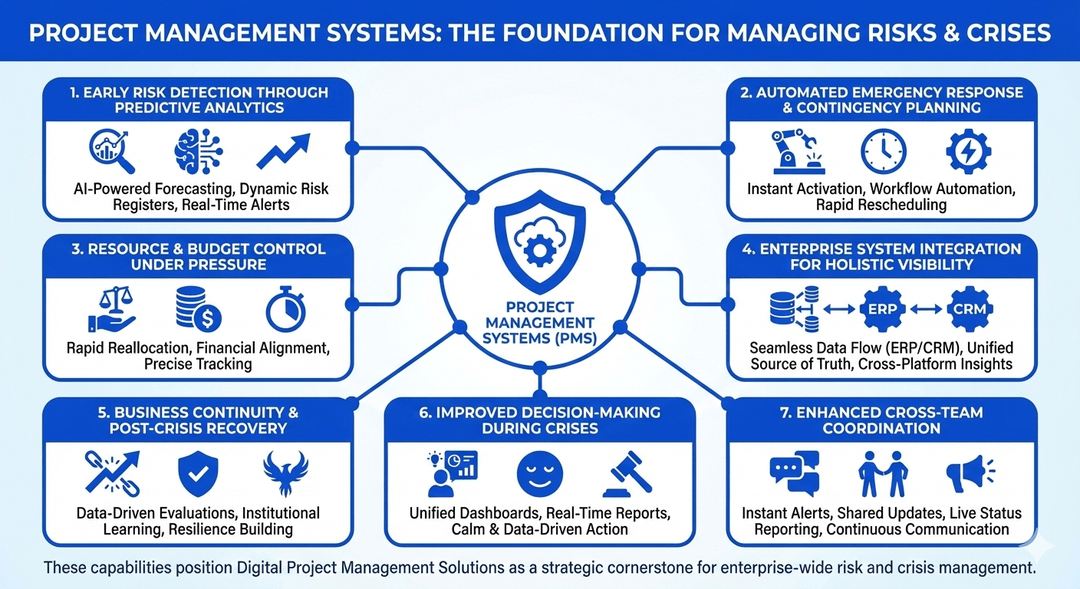
ومعًا، تجعل هذه القدرات حلول إدارة المشاريع الرقمية ركيزة استراتيجية لإدارة المخاطر والأزمات على مستوى المؤسسة بأكملها.
المجالات الرئيسية التي تُحوّل فيها أنظمة إدارة المشاريع إدارة المخاطر والأزمات
- الاكتشاف المبكر للمخاطر من خلال التحليلات التنبؤية
- تحسين اتخاذ القرار أثناء الأزمات
- تعزيز التنسيق بين الفرق
- الاستجابة الطارئة الآلية وتخطيط الطوارئ
- التحكم في الموارد والميزانية تحت الضغط
- استمرارية الأعمال والتعافي بعد الأزمة
- تكامل أنظمة المؤسسة لتوفير رؤية شاملة للمخاطر
1. الاكتشاف المبكر للمخاطر باستخدام أنظمة إدارة المشاريع، تحليل استباقي قبل وقوع الأزمة
تمكّن حلول إدارة المشاريع الرقمية الحديثة المؤسسات من اكتشاف المخاطر في مرحلة مبكرة من خلال سجلات المخاطر الديناميكية والتحليلات التنبؤية المدعومة بالذكاء الاصطناعي، مما يحمي المشاريع قبل أن تتصاعد المشكلات إلى أزمات كاملة.
تراقب هذه الأنظمة باستمرار التغيرات الآنية في الموارد والميزانيات والجداول الزمنية، وتطلق تنبيهات تلقائية عند تجاوز حدود المخاطر. ومن خلال تحليل البيانات التاريخية والحية باستخدام الذكاء الاصطناعي في إدارة المشاريع، وتعلم الآلة، ومعالجة اللغة الطبيعية، يمكن للمنصات توقع الاضطرابات المحتملة، مثل تأخر الموردين أو الارتفاع غير المتوقع في التكاليف، والتوصية بإجراءات وقائية لضمان استمرارية الأعمال.
من أبرز القدرات التي تجعل هذه الأنظمة أدوات فعالة لإدارة المخاطر الاستباقية:
- سجل المخاطر الديناميكي: يُحدَّث تلقائيًا مع أي تغيير في المشروع، ويرتب التهديدات حسب الأثر والاحتمالية.
- التحليل التنبؤي المبكر: يكتشف إشارات المخاطر الخفية غير الظاهرة في التقارير التقليدية باستخدام الذكاء الاصطناعي ومعالجة اللغة الطبيعية.
- سيناريوهات عملية: يقيّم الأثر المالي للتأخيرات أو تقلبات الأسعار ويقترح إجراءات بديلة.
- المراقبة اللحظية: تتيح التدخل الفوري قبل تصاعد المخاطر إلى أزمات.
2. تحسين اتخاذ القرار أثناء الأزمات، بيانات دقيقة عندما تكون كل ثانية مهمة
تعزز أنظمة إدارة المشاريع بشكل كبير اتخاذ القرار أثناء الأزمات من خلال توفير بيانات دقيقة وآنية تقلل الذعر التشغيلي وتوجه الموارد بكفاءة.
تعرض لوحات القيادة الموحدة مؤشرات الأداء الرئيسية المتعلقة بالأزمة، مدعومة بـلوحات تحكم أداء المشاريع والتقارير الآنية التي تتيح لفرق القيادة اتخاذ قرارات مدروسة مبنية على الحقائق لا على الافتراضات. كما توثق هذه الأنظمة مسارات القرار، مما يدعم لجان إدارة الأزمات ويضمن الشفافية والمساءلة.
من أبرز الميزات التي تدعم اتخاذ القرار الفعال وقت الأزمات:
- لوحات التحكم التنفيذية الموحدة: تجمع البيانات من مصادر متعددة لتحقيق إدراك سريع للموقف.
- مؤشرات الأداء المرتبطة بالأزمات: تُفعّل مؤشرات إضافية عند تشغيل خطط الطوارئ.
- تقارير آنية تفصيلية: تتيح تحليل الأسباب الجذرية واتخاذ إجراءات تصحيحية سريعة.
- تقليل الذعر التشغيلي: تحل الرؤى المبنية على البيانات محل التخمين، مما يسرّع أوقات الاستجابة.
3. تعزيز تنسيق الفرق أثناء الأزمات، تواصل وسيطرة مستمرة
تعزز أنظمة إدارة المشاريع المتكاملة التنسيق بين الفرق أثناء الأزمات من خلال ضمان تواصل غير منقطع وسيطرة مركزية.
توحّد هذه المنصات قنوات التواصل بين الفرق التشغيلية والمالية والتنفيذية، وتوفر إشعارات فورية وتقارير حالة حية تمنع فقدان المعلومات وتسرّع إجراءات الاستجابة. وتقلل بيئة التعاون الموحدة من الالتباس وتعزز سرعة التنفيذ تحت الضغط.
من أبرز القدرات التي تعزز التنسيق:
- منصات تعاون موحدة: مساحة عمل واحدة لجميع الفرق لمواءمة الإجراءات والقرارات.
- إشعارات فورية: تنبيهات آنية للانحرافات أو الحوادث الحرجة.
- تقارير الحالة الحية: رؤية مستمرة لتقدم المهام وأنشطة الاستجابة.
- حالات استخدام واقعية: تنسيق خطط الطوارئ بين الفرق لتجنب التأخير والفوضى.
4. الاستجابة الطارئة الآلية وتخطيط الطوارئ، أتمتة تتفاعل أسرع من البشر
تتيح الأتمتة داخل برنامج إدارة المشاريع استجابات أسرع وأكثر دقة من التدخل اليدوي، مما يحد من تصاعد الأزمات ويحمي استمرارية الأعمال.
ومن خلال تحويل الخطط التقليدية إلى مسارات عمل ذكية، تنفذ هذه الأنظمة تلقائيًا إجراءات محددة مسبقًا، تتراوح بين التنبيهات الطارئة وإعادة جدولة المهام والتوجيه البديل، مما يبقي المؤسسات في موقف استباقي دائمًا.
من أبرز القدرات المعتمدة على الأتمتة:
- تفعيل الاستجابة التلقائي: ربط المهام الحرجة بخطط الطوارئ التي تُشغّلها مؤشرات المخاطر.
- التنبيهات وإعادة الجدولة الآلية: إشعارات فورية وإعادة توزيع ديناميكي للمهام.
- مسارات الطوارئ: إعادة توجيه الموارد ومسارات العمل عند تعطل المشاريع الفرعية.
- احتواء الأزمات: مراقبة مستمرة وإجراءات وقائية تلقائية لوقف التصاعد.
5. التحكم في الموارد والميزانية أثناء الأزمات، ذكاء يبقي المشاريع حية
يُعد التحكم الفعال في الموارد والميزانيات أثناء الأزمات ضروريًا للحفاظ على الاستقرار التشغيلي والمالي.
توفر أنظمة التحكم في تكاليف المشاريع رؤية آنية للإنفاق واستخدام الموارد والطاقة الاستيعابية، مما يتيح إعادة تخصيص سريعة بناءً على أولويات الأزمة. ومن خلال ربط الموارد بسيناريوهات الطوارئ، تقلل المؤسسات الخسائر وتحافظ على استمرار العمليات الحيوية حتى في أصعب الظروف.
من أبرز قدرات إدارة الموارد والمالية:
- تتبع دقيق للميزانية: مقارنة آنية بين الميزانية والفعلي مع تنبيهات فورية للانحرافات.
- إدارة الموارد البشرية واللوجستية: إعادة جدولة ديناميكية للفرق وتفعيل المهام الاحتياطية.
- إعادة تخصيص الميزانية حسب الأثر: توجيه الأموال وفقًا لشدة المخاطر والأهداف.
- ربط الموارد بالسيناريوهات: مواءمة الأصول الحيوية مع خطط الطوارئ لتحقيق الاستخدام الأمثل.
6. ضمان استمرارية الأعمال بعد الأزمة: التعافي بعد الأزمة يبدأ بالبيانات
يعتمد ضمان استمرارية الأعمال بعد الأزمة بشكل كبير على التقاط بيانات دقيقة والاستفادة منها لتقييم الأداء، واستخلاص الدروس المستفادة، وتعزيز الاستعداد المستقبلي.
توفر أنظمة إدارة المشاريع الرقمية للمؤسسات أدوات منظمة لتقييم النتائج الفعلية مقابل الأهداف المخططة، ومراجعة القرارات المتخذة أثناء الأزمة، وتحويل البيانات التشغيلية إلى رؤى قابلة للتنفيذ.
يتيح هذا النهج المبني على البيانات للمؤسسات تحويل كل أزمة إلى فرصة للتعلم، وتعزيز المعرفة المؤسسية، والتحسين المستمر لأطر الحوكمة واستراتيجيات المرونة.
من أبرز القدرات التي تدعم استمرارية الأعمال بعد الأزمة:
- تقييم الأداء بعد الأزمة: تقارير مفصلة توثق الإجراءات المتخذة، والنتائج المحققة، والانحرافات المحددة لإبراز نقاط القوة ومجالات التحسين.
- تحسين الخطط المستقبلية بناءً على البيانات: تحليل سرعة الاستجابة، ودقة القرارات، وفعالية النماذج التنبؤية لتحسين استراتيجيات الطوارئ المستقبلية.
- تمكين التعلم المؤسسي: توثيق مسارات القرار والتنفيذ لإعادة استخدام الرؤى وتعزيز نضج المؤسسة وحوكمة المشاريع.
- مواءمة الحوكمة: تحديث السياسات ومعايير الجودة وبرامج التدريب بناءً على تقييمات ما بعد الأزمة لضمان جاهزية أقوى مستقبلًا.
7. التكامل مع أنظمة المؤسسة: ERP وإدارة المشاريع كدرع موحد للمخاطر
يعزز دمج أنظمة إدارة المشاريع مع منصات المؤسسة مثل ERP وCRM وأنظمة سلسلة الإمداد بشكل كبير قدرة المؤسسة على اكتشاف المخاطر مبكرًا والاستجابة بحزم أثناء الأزمات.
وعندما تُربط أنظمة إدارة المشاريع المتكاملة بتطبيقات المؤسسة الأساسية، تتدفق البيانات بسلاسة عبر الأقسام، مما يخلق رؤية موحدة واحدة للمخاطر والأداء. ويقلل هذا التكامل من تضارب البيانات، ويسرّع وقت الاستجابة، ويوفر إشارات إنذار مبكر تعزز مرونة المؤسسة وسرعة تكيفها.
من أبرز فوائد تكامل الأنظمة:
- رؤية موحدة للمخاطر: لوحة تحكم مركزية لأداء المشاريع تجمع مؤشرات الأداء الرئيسية والمؤشرات التشغيلية من جميع الأنظمة في رؤية آنية واحدة.
- وقت استجابة أسرع: تتيح المزامنة الآنية بين الأنظمة إشعارات فورية عند حدوث تأخيرات، أو تجاوز التكاليف، أو اضطرابات في الإمداد.
- تقليل تضارب البيانات: يعزز إنشاء مصدر موحد وموثوق للمعلومات الثقة في القرارات ويقلل الأخطاء التشغيلية في المواقف عالية الضغط.
- حالات استخدام عملية: تنعكس تأخيرات الموردين أو مشكلات الشحن تلقائيًا على منصة مكتب إدارة المشاريع، مما يُشغّل سيناريوهات بديلة وإجراءات تصحيحية قبل تصاعد الاضطرابات.
كيف تختار نظام إدارة المشاريع المناسب لإدارة المخاطر والأزمات
يتطلب اختيار حل إدارة المشاريع الرقمي المناسب أكثر من مجرد تتبع أساسي للمهام. ينبغي على المؤسسات التركيز على المنصات التي تجمع بين المراقبة الاستباقية للمخاطر، ودعم القرار المبني على البيانات، والتعاون السلس، والأتمتة الذكية.
ينبغي أن يدعم النظام المثالي كلًا من التنفيذ التشغيلي والتوافق الاستراتيجي، مما يمكّن المؤسسات من إدارة المخاطر بشكل شامل مع دعم أهداف التحول الرقمي والحوكمة طويلة المدى.
معايير الاختيار الرئيسية:
- الوظائف الأساسية: سجلات مخاطر ديناميكية، وتحليلات تنبؤية، وتنبيهات آلية، وأتمتة سير العمل، ولوحات تحكم أداء قابلة للتخصيص.
- سهولة الاستخدام وإمكانية الوصول: واجهات بديهية وقابلة للتخصيص مع دعم متعدد اللغات (بما في ذلك العربية) وتوافق عبر الويب وسطح المكتب والجوال.
- التكامل مع أنظمة المؤسسة: تكامل أصلي مع أنظمة ERP وCRM والموارد البشرية والأنظمة المالية لضمان تبادل سلس للبيانات.
- الأمان والدعم الفني: موثوقية المورد، وتشفير قوي للبيانات متوافق مع متطلبات ISO 27001 وPDPL، ودعم فني مستمر.
- الذكاء الاصطناعي والتحليلات المتقدمة: رؤى تنبؤية للمخاطر، وآليات إنذار مبكر، ومساعد مشاريع بالذكاء الاصطناعي لدعم اتخاذ القرار التنفيذي.
- التوافق الاستراتيجي: دعم مبادرات التحول الرقمي، وحوكمة مكتب إدارة المشاريع، والتوافق مع البرامج الوطنية مثل إدارة المشاريع في إطار رؤية 2030.
- التكلفة والاستدامة: تكاليف ترخيص وتدريب وصيانة شفافة، مع تفضيل الحلول السحابية (SaaS) لتقليل الأعباء التقنية.
من خلال تطبيق هذه المعايير، يمكن للمؤسسات تبني نظام إدارة مشاريع شامل من البداية إلى النهاية يعزز المرونة، ويقلل عدم اليقين، ويمكّن من إدارة الأزمات بشكل استباقي.
الخاتمة: بناء المرونة المؤسسية من خلال إدارة المشاريع الرقمية
أثبتت أنظمة إدارة المشاريع الرقمية أنها ركيزة أساسية لحماية المؤسسات من المخاطر والأزمات. فمن خلال الجمع بين أتمتة سير العمل، وحلول إدارة المشاريع المدعومة بالذكاء الاصطناعي، والتكامل العميق مع أنظمة المؤسسة، تمكّن هذه المنصات من الاكتشاف المبكر للمخاطر، واتخاذ قرارات أسرع، وتنسيق أقوى بين الفرق، واستجابة آلية للأزمات بسرعة تفوق القدرة البشرية.
كما تمنح المؤسسات تحكمًا دقيقًا في الموارد والميزانيات، وتضمن استمرارية الأعمال، وتحوّل التحليل بعد الأزمة إلى تعلم مؤسسي يعزز الأداء المستقبلي.
في نهاية المطاف، يعزز تبني منصات إدارة المشاريع المتقدمة سرعة تكيف المؤسسة، ونضج الحوكمة، والاستدامة طويلة المدى، مما يضع المؤسسات في موقع يمكّنها من مواجهة تحديات المستقبل بثقة وسيطرة.
الأسئلة الشائعة
1. كيف يدعم الذكاء الاصطناعي اتخاذ القرار أثناء الأزمات في إدارة المشاريع؟
يحلل الذكاء الاصطناعي البيانات التاريخية والآنية لتحديد إشارات المخاطر المبكرة، والتنبؤ بالاضطرابات المحتملة، والتوصية بخطط طوارئ ديناميكية وتخصيص آلي للموارد لدعم اتخاذ قرارات سريعة ودقيقة.
2. ما الفرق بين أدوات إدارة المشاريع التقليدية والأنظمة الحديثة الجاهزة للأزمات؟
تعتمد الأدوات التقليدية على جداول زمنية ثابتة وتحديثات يدوية، بينما توفر الأنظمة الحديثة سجلات مخاطر ديناميكية، وتحليلات تنبؤية، وأتمتة، وتكاملًا كاملًا مع أنظمة ERP وCRM لاتخاذ القرار في الوقت الفعلي.
3. ما الميزات التي يجب أن يتضمنها نظام إدارة المشاريع لاكتشاف المخاطر مبكرًا؟
تتضمن أكثر المنصات فعالية سجلات مخاطر ديناميكية، ولوحات تحكم آنية، وتنبيهات آلية، وتكاملًا مؤسسيًا، وأدوات تعاون، وتحليلات تنبؤية مدعومة بالذكاء الاصطناعي لتقليل أثر الأزمات.