
🚀 تخيّل أن فريقك يعمل على عشرات المهام والمشاريع، لكنك ما زلت تعتمد على ملفات متناثرة، ورسائل بريد إلكتروني متأخرة، وتقارير تصل بعد فوات الأوان!
في عالم تُدار فيه المشاريع اليوم بسرعات غير مسبوقة، لم تعد الأساليب التقليدية قادرة على مواكبة متطلبات التنفيذ والمراقبة واتخاذ القرار.
تشير دراسات حديثة إلى أن أكثر من 70% من المشاريع تفشل، ليس بسبب ضعف الفرق، بل بسبب غياب أنظمة رقمية مرنة قادرة على التكامل والمراقبة والتحكم في الوقت الفعلي. ومع دخولنا عصر التحول الرقمي الكامل، أصبحت الحوسبة السحابية القوة الدافعة التي تعيد تعريف إدارة المشاريع من الأساس.
☁️ تعتمد المؤسسات الرائدة اليوم على أنظمة إدارة المشاريع المتكاملة لإدارة المهام، وتتبع التقدم، والتحكم في التكاليف، وتوحيد المعلومات في لوحة تحكم واحدة، بدلاً من الغرق في التعقيد والتشتت. والنتيجة؟
✔ تنفيذ أسرع
✔ شفافية كاملة في الأداء
✔ تحكم أفضل في الوقت والتكاليف
✔ قرارات ذكية مبنية على بيانات في الوقت الفعلي
💡 امنحني بضع دقائق فقط، وستكتشف كيف تُحدث الحوسبة السحابية ثورة حقيقية في إدارة المشاريع، ولماذا أصبحت الأساس لأي مؤسسة تريد التحكم في مشاريعها بدلاً من ملاحقتها.
ما هي الحوسبة السحابية؟
الحوسبة السحابية هي تقنية تتيح استخدام موارد حوسبة متصلة بالإنترنت (مثل الخوادم وقواعد البيانات والتطبيقات) بدلاً من الحاجة إلى بنية تحتية خاصة داخل المؤسسة.
يعني مفهوم الحوسبة السحابية أن بإمكان الشركات والأفراد تخزين البيانات وتشغيل البرمجيات عبر الإنترنت، دون الحاجة إلى شراء أجهزة أو خوادم فعلية.
وبدلاً من استضافة البيانات محلياً، تعتمد الخدمات السحابية على مراكز بيانات ضخمة تديرها شركات متخصصة. توفر هذه التقنية للمستخدمين إمكانيات عند الطلب لاستئجار الخوادم ومساحات التخزين حسب الحاجة، إلى جانب نموذج الدفع بحسب الاستخدام. وتحسّن هذه المرونة الكفاءة والإنتاجية وتخفض التكاليف، إذ لا تحتاج المؤسسات إلى استثمارات كبيرة في بنية تحتية ثابتة، بل يمكنها استخدام الموارد بحسب احتياجاتها الفعلية.
بالإضافة إلى ذلك، توفر الحوسبة السحابية مستوى عالياً من المرونة في العمل. إذ يمكن للشركات زيادة أو تقليل موارد الحوسبة بسرعة استجابة لتغير أعباء العمل، ما يسهّل مواكبة المتطلبات المتغيرة لمشاريعها. وبحسب OceanX، تمكّن الحوسبة السحابية الشركات من تبسيط سير العمل، وتعزيز تعاون الفرق، وتوفير رؤى في الوقت الفعلي دون الحاجة إلى استثمارات أولية كبيرة في البنية التحتية.
كيف تُحدث الحوسبة السحابية ثورة في إدارة المشاريع في العصر الرقمي
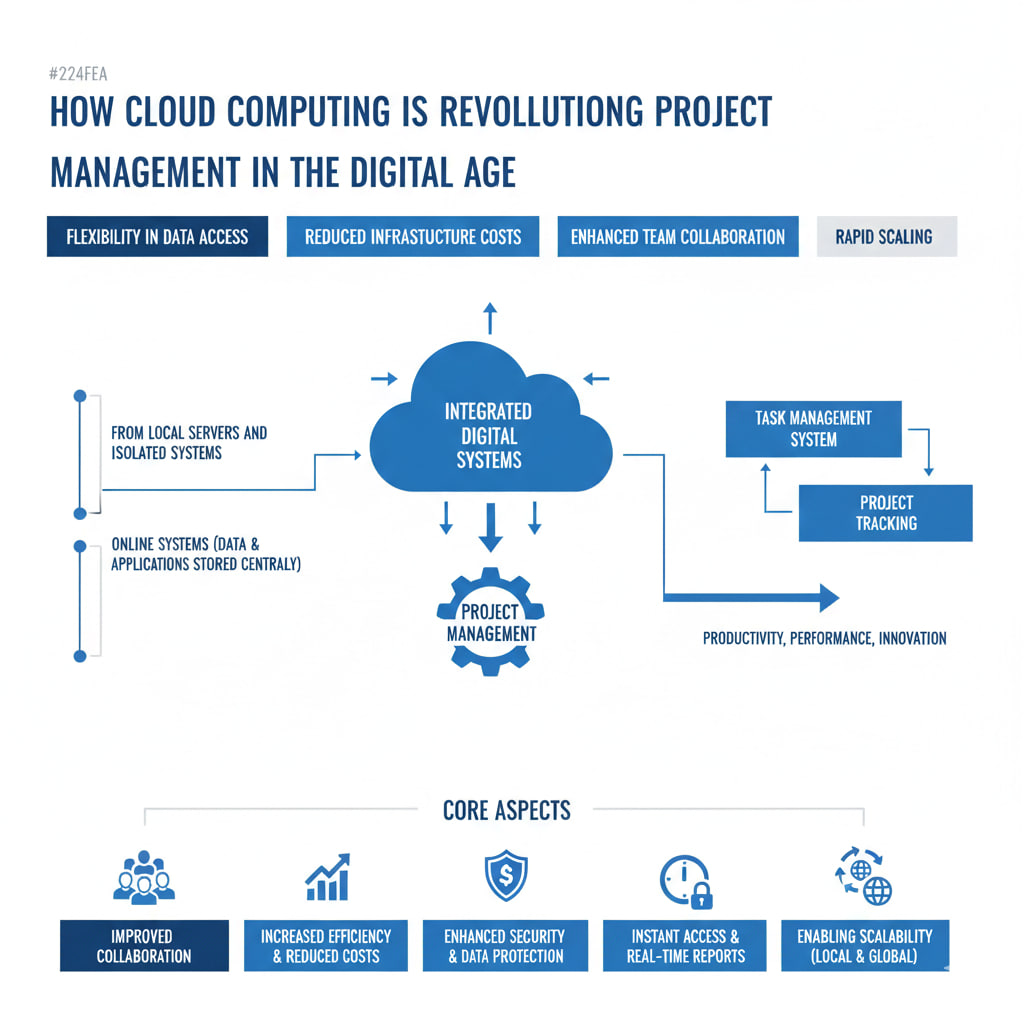
تُحدث الحوسبة السحابية ثورة في إدارة المشاريع من خلال تمكين المؤسسات من إدارة مشاريعها عبر أنظمة رقمية متكاملة تعمل في الوقت الفعلي. فهي توفر مرونة عالية في الوصول إلى البيانات، وتخفض تكاليف البنية التحتية، وتعزز تعاون الفرق، وتدعم التوسع السريع دون قيود تقنية.
في عالم الأعمال اليوم، لم يعد الاعتماد على الخوادم المحلية والأنظمة المعزولة فعالاً لإدارة المشاريع المعقدة وسريعة الوتيرة. تتيح الحوسبة السحابية تشغيل أنظمة إدارة المشاريع عبر الإنترنت، حيث تُخزَّن البيانات والتطبيقات مركزياً وتُتاح للفرق في أي وقت ومن أي مكان.
من خلال نظام إدارة مشاريع متكامل، يمكن للمؤسسات إدارة المهام باستخدام نظام إدارة المهام وتتبع التقدم باستخدام أدوات تتبع المشاريع بدقة وفورية. ويتيح هذا التحول إعادة توجيه الاستثمار من البنية التحتية التقليدية نحو تحسين الإنتاجية وتعزيز الأداء وتشجيع الابتكار، ما يجعل المؤسسات أكثر استعداداً لمتطلبات العصر الرقمي.
تتجلى ثورة الحوسبة السحابية في إدارة المشاريع في عدة جوانب أساسية غيّرت طريقة تخطيط المشاريع وتنفيذها ومراقبتها، منها:
- تحسين التعاون بين الفرق المتنقلة والمتنوعة
- زيادة الكفاءة وخفض التكاليف التشغيلية
- تعزيز أمن وحماية بيانات المشاريع
- الوصول الفوري إلى البيانات والتقارير في الوقت الفعلي
- تمكين قابلية التوسع للمشاريع المحلية والعالمية
1. تحسين تعاون الفرق عبر الإنترنت: مفتاح السرعة والانسجام في تنفيذ المشاريع
تتيح الحوسبة السحابية للفرق المتنقلة والموزعة جغرافياً التعاون بسلاسة من خلال منصات عمل مشتركة عبر الإنترنت، حيث يمكن لأعضاء الفريق تبادل الملفات والتحديثات والتواصل في الوقت الفعلي، بغض النظر عن مواقعهم.
من أبرز مزايا الحوسبة السحابية قدرتها على تعزيز التعاون بين أعضاء الفريق في أي وقت ومن أي مكان. فمن خلال استخدام أدوات إدارة المشاريع السحابية (مثل أنظمة إدارة المهام وأنظمة إدارة المشاريع)، يمكن للفرق الوصول إلى ملفات المشروع وتحديث تقدمهم بشكل جماعي. على سبيل المثال، تتيح هذه الأدوات لأعضاء الفريق العمل معاً على مستندات المشروع وتقديم ملاحظات فورية على المهام، ما يقلل التأخير ويضمن أن جميع أعضاء الفريق على اطلاع متزامن. وبهذه الطريقة، تُعزَّز بيئة عمل تعاونية، ما يرفع سرعة إنجاز المهام وفعالية التواصل.
تشير دراسات حديثة إلى أن الفرق التي تستخدم الحوسبة السحابية للتواصل ومشاركة المعرفة تحقق أداءً أعلى. إذ تتيح الموارد السحابية في الوقت الفعلي للفرق الوصول الفوري إلى بيانات المشروع وأدواته من أي مكان. وهذا يعني أن المدراء والمهندسين والموظفين يمكنهم تتبع تقدم المشروع، وتبادل الملاحظات والقرارات بسرعة، دون الحاجة إلى انتظار الاجتماعات التقليدية أو نقل الملفات يدوياً. وباختصار، فإن تسريع التعاون بين أعضاء الفريق يؤدي إلى إنجاز المشروع بشكل أسرع بشكل عام.
2. زيادة الكفاءة وخفض التكاليف بالحوسبة السحابية
تخفض الحوسبة السحابية التكاليف بشكل كبير وتحسّن كفاءة إدارة المشاريع من خلال إلغاء الحاجة إلى استثمارات كبيرة في الأجهزة والصيانة، واعتماد نموذج مرن للدفع بحسب الاستخدام.
توفر الحوسبة السحابية نموذج خدمة قائماً على الاشتراك، ما يلغي الحاجة إلى خوادم محلية باهظة الثمن. تتيح المنصات السحابية (مثل برامج إدارة المشاريع المؤسسية) للشركات الدفع شهرياً أو سنوياً فقط مقابل الموارد التي تستخدمها فعلياً، مثل التخزين والتطبيقات وقدرة المعالجة. ويساعد هذا النموذج المرن المؤسسات على خفض النفقات الرأسمالية (CAPEX) وتحويلها إلى نفقات تشغيلية يمكن التحكم بها بحسب مستويات الاستخدام.
بالإضافة إلى ذلك، يتيح هذا النهج للشركات إدارة ميزانياتها بفعالية أكبر. فبدلاً من الالتزام بمعدات باهظة الثمن قد تظل معطلة لفترات طويلة، يمكن زيادة الموارد أو تقليلها في الوقت الفعلي استجابة لاحتياجات العمل. علاوة على ذلك، تؤتمت الأنظمة السحابية كثيراً من المهام الإدارية، مثل إدارة المهام، وجدولة العمل، والتقارير الفورية حول مؤشرات الأداء الرئيسية (KPIs). وينتج عن كل ذلك توفير وقت الموظفين، وتقليل الأخطاء البشرية، وبالتالي رفع إنتاجية الفريق بشكل عام.
تُظهر الأبحاث في مجال إدارة المشاريع أن الانتقال إلى الحلول السحابية يساعد على تقليل عبء صيانة البنية التحتية ودعمها. فبدلاً من إنفاق الأموال على صيانة الخوادم وتحديثات البرمجيات والترقيات، يمكن للشركات تخصيص هذه الميزانية لتعزيز قدراتها التنفيذية وتحسين جودة العمل. وباختصار، يضمن نظام إدارة المشاريع القائم على السحابة توفيراً كبيراً في التكاليف مع زيادة سرعة إنجاز المهام وكفاءتها.
3. الأمن وحماية البيانات في الحوسبة السحابية: أساس استمرارية المشاريع
توفر الحوسبة السحابية مستويات عالية من الأمن وحماية البيانات من خلال استخدام تقنيات تشفير متقدمة، وضوابط صارمة للوصول، والامتثال لمعايير الأمن الدولية.
يُعد الأمن من أعلى الأولويات في البيئات السحابية، حيث يستثمر مزودو الخدمات السحابية مثل AWS وGoogle Cloud استثمارات كبيرة في حماية بنيتهم التحتية. وتشمل إجراءات الأمن تشفير البيانات أثناء النقل والتخزين، بالإضافة إلى أنظمة إدارة الهوية والوصول (IAM) التي تمنح صلاحية الوصول للمستخدمين المصرح لهم فقط. وتأتي كثير من أدوات إدارة المشاريع السحابية بميزات أمنية مدمجة، مثل التشفير الشامل والتحديثات الأمنية المنتظمة.
علاوة على ذلك، يلتزم مزودو الخدمات السحابية بمعايير وشهادات أمنية عالمية صارمة. فعلى سبيل المثال، تدعم خوادم Amazon مجموعة واسعة من معايير الأمن مثل PCI-DSS وHIPAA وGDPR، ما يساعد المؤسسات على تلبية متطلبات الامتثال التنظيمي بسهولة.
كما توفر هذه المنصات آليات للنسخ الاحتياطي للبيانات واستمرارية الأعمال من خلال مراكز بيانات متعددة حول العالم، ما يقلل مخاطر فقدان البيانات أو تعطلها خلال حالات الطوارئ.
باختصار، توفر الحوسبة السحابية بيئة آمنة تضمن سلامة معلومات الشركة والمشاريع الحساسة. وتزيد الإجراءات الأمنية المتكاملة من ثقة المؤسسات في استخدام الخدمات السحابية، ما يعزز حماية البيانات ويقلل مخاطر الاختراقات أو فقدان البيانات.
4. تسهيل الوصول إلى البيانات والتقارير في الوقت الفعلي
توفر الحوسبة السحابية وصولاً سريعاً وآمناً إلى البيانات والتقارير في الوقت الفعلي، ما يمكّن المدراء من مراقبة تقدم المشروع واتخاذ قرارات فورية بناءً على معلومات محدّثة.
تتميز الحلول السحابية بقدرتها على تحديث البيانات تلقائياً وعرضها على لوحات تحكم رقمية في الوقت الفعلي. على سبيل المثال، يمكن لمدراء المشاريع الذين يستخدمون منصات متقدمة مثل +P الوصول إلى تقارير الأداء ولوحات التحكم التي تعرض مؤشرات الأداء الرئيسية (KPIs) في أي لحظة.
وهذا أمر أساسي لاتخاذ قرارات سريعة ومستنيرة، إذ تتيح المراقبة المستمرة لحالة المشروع تحديد نقاط الاختناق فوراً وإعادة تخصيص الموارد بسرعة عند الحاجة.
وتؤكد مصادر متخصصة أن المنصات السحابية تزوّد مدراء المشاريع ببيانات وتحليلات في الوقت الفعلي، ما يعزز الشفافية داخل الفرق ويرفع مستويات المساءلة. ومن خلال استخدام نظام إدارة معلومات المشروع القائم على السحابة، يمكن للفرق تتبع كل تفصيلة من عملها مباشرة عبر الإنترنت.
وبفضل هذه الآلية، تُحدَّث تقارير الحالة والأداء فورياً بعد أي تغيير، ما يسرّع عملية اتخاذ القرار ويحسّن جودة النتائج النهائية.
5. توسيع نطاق المشاريع من خلال الحلول السحابية
تمكّن الحوسبة السحابية الشركات من إدارة المشاريع الكبيرة والمعقدة عبر فرق موزعة عالمياً بسهولة، بفضل قابليتها الاستثنائية للتوسع ومرونتها في الموارد.
غالباً ما تتطلب المشاريع الكبرى موارد تقنية كبيرة وجهود تنسيق مكثفة بين فرق متعددة. وهنا تظهر قوة الحوسبة السحابية بوضوح؛ إذ تتيح توسيع الخدمات التقنية بلا حدود لتتناسب مع حجم المشروع.
وبدلاً من القلق بشأن قيود الأجهزة أو الحاجة إلى شراء معدات جديدة، يمكن للشركات زيادة الموارد (مثل الخوادم وسعات التخزين) في لحظات عبر بوابة إلكترونية. ويُعرف هذا بقابلية التوسع عند الطلب، حيث يمكن توسيع النظام أو تقليصه دون أي انقطاع في العمل.
تتيح هذه المرونة للشركات إدارة المشاريع الكبرى بكفاءة أكبر. فعلى سبيل المثال، تمكّن المنصات السحابية من دعم الفرق الموزعة في مناطق جغرافية مختلفة دون الحاجة إلى إعدادات معقدة في كل موقع.
علاوة على ذلك، يمكن لفرق العمل التعاون على البيانات نفسها في الوقت الفعلي، ما يبسّط تنسيق الجهود بين الفروع والمكاتب حول العالم. وتجعل الحوسبة السحابية من الممكن تنفيذ مشاريع كبرى تتطلب موارد حوسبة عالية أو كميات هائلة من البيانات، دون قيود النماذج التقليدية.
الخلاصة: أثر الحوسبة السحابية على مستقبل إدارة المشاريع
من الواضح أن الحوسبة السحابية تمثل تحولاً محورياً في كيفية إدارة المشاريع عبر مختلف القطاعات. فقد وفرت هذه التقنية أدوات ومنصات تعزز التعاون والكفاءة والأمن، مع تمكين الشركات من توسيع عملياتها بتكاليف أقل. ومن خلال الاستفادة من الحوسبة السحابية، يمكن للمؤسسات تبسيط عملياتها، وتحديث سير عملها، والحفاظ على تنافسيتها في سوق سريع التغير.
باختصار، تمثل الحوسبة السحابية العمود الفقري التقني الأساسي الذي يحسّن التعاون، ويسرّع اتخاذ القرار، ويخفض النفقات، ويفتح آفاقاً جديدة للتوسع التجاري. ومع تزايد الاعتماد على هذه الحلول، تصبح إدارة المشاريع أكثر مرونة وفعالية من أي وقت مضى.
ندعوك لاستكشاف خدمات Master Team المتخصصة في الحلول الرقمية وإدارة المشاريع السحابية. يقدم فريق خبرائنا منصات متكاملة مثل حل P+ الرقمي لمكتب إدارة المشاريع، وحل S+ الرقمي للاستراتيجية، وحل ديوان للمكاتب التنفيذية لتبسيط سير العمل ودفع النجاح. تواصل معنا للحصول على استشارة مجانية حول كيفية تطبيق الحوسبة السحابية في مشاريعك والاستفادة من خبرتنا لضمان أعلى مستويات الأداء والجودة.
الأسئلة الشائعة:
1- كيف تسهم الحوسبة السحابية في تعزيز التعاون بين الفرق وإنجاز المشاريع بشكل أسرع؟
تتيح الحوسبة السحابية لأعضاء الفريق الوصول إلى الموارد والأدوات نفسها في أي وقت ومن أي مكان. ويمكن للمهندسين والمدراء مشاركة وتحديث ملفات المشروع فورياً عبر الإنترنت، ما يلغي الحواجز الجغرافية والزمنية. كما تتيح المنصات السحابية عقد الاجتماعات، وتحديث الجداول الزمنية، وإرسال الإشعارات في الوقت الفعلي. ويقلل هذا التواصل السريع من التأخير في التكيف مع التغييرات ويسرّع إنجاز المهام، ما يسهم في إنجاز المشروع بشكل أسرع.
2- هل يمكن للحوسبة السحابية خفض تكاليف إدارة المشاريع؟ وكيف؟
نعم، تخفض الحوسبة السحابية التكاليف لأنها تتبع نموذج الدفع بحسب الاستخدام ولا تتطلب استثمارات كبيرة في شراء الأجهزة أو صيانتها. فبدلاً من شراء خوادم جديدة أو ترقية البنية التحتية مع توسع المشروع، تتيح الخدمات السحابية زيادة الموارد رقمياً حسب الحاجة. كما يتحمل مزودو الخدمات السحابية تكاليف الصيانة والأمن والتحديثات، ما يخفف العبء المالي عن المستخدمين. وبهذه المرونة، يمكن للشركات توجيه ميزانياتها نحو الابتكار وتحسين العمليات بدلاً من البنية التحتية.
3- كيف تضمن الحوسبة السحابية أمن المعلومات وخصوصية البيانات؟
تستخدم المنصات السحابية آليات أمنية قوية لحماية البيانات، مثل تقنيات التشفير لتأمين المعلومات أثناء النقل والتخزين، وتوفر ضوابط دقيقة للهوية والوصول. بالإضافة إلى ذلك، يلتزم مزودو الخدمات السحابية بمعايير الأمن العالمية (مثل ISO وGDPR وHIPAA) ويحافظون على بنية تحتية محدّثة باستمرار، ما يعزز حماية البيانات وخصوصيتها. لذلك، تكون البيانات المخزنة في السحابة آمنة من الاختراقات أو الفقدان عند اتباع الممارسات الأمنية السليمة.